
Purdue and Carmel to test AI-powered digital twins for safer roundabouts
Purdue University's Lyles School of Civil and Construction Engineering is partnering with the City of Carmel, Indiana, to test whether AI-powered digital twins can help prevent crashes at roundabouts. The work is part of a $3.52 million project funded through the U.S. Department of Transportation's Safe Streets and Roads for All (SS4A) program.
Known as the “Roundabout Capital of the United States,” Carmel has more than 150 roundabouts, giving researchers a place to study safety under everyday traffic conditions. Roundabouts reduce vehicle speeds and eliminate high-speed crossing conflicts, but pedestrians and cyclists still face risks when drivers fail to yield. Beyond studying the safety perspective, the team will also examine how roundabouts affect emergency response compared with intersections controlled by traffic signals.
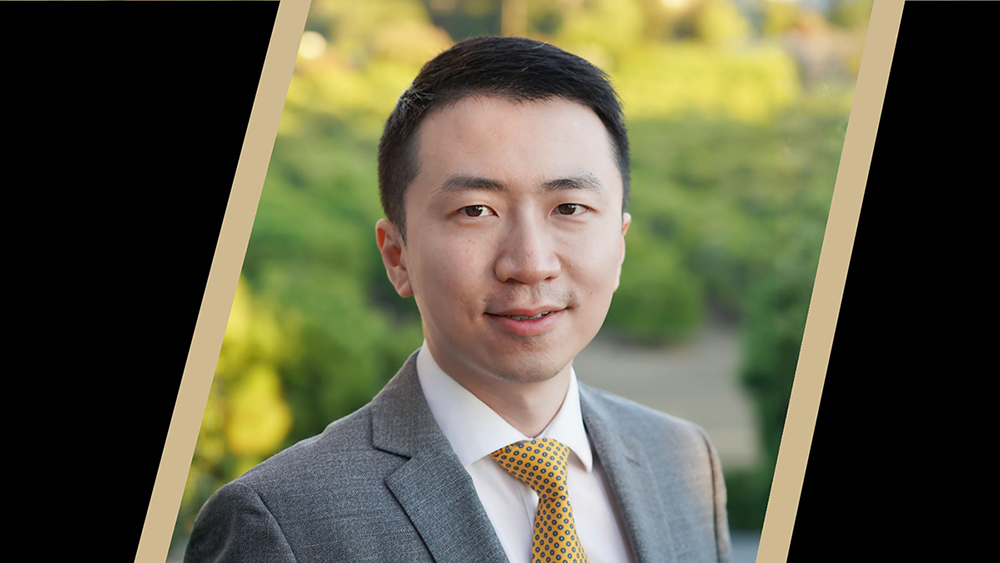
“Working with the City of Carmel, we can move beyond lab demonstrations to deploy and evaluate technologies that could prevent crashes and save lives,” said Ziran Wang, Assistant Professor in the Lyles School of Civil and Construction Engineering and Director of Purdue Digital Twin Lab. Prof. Wang will make his contribution not just as Purdue’s lead PI on this project, but also as a Carmel resident.
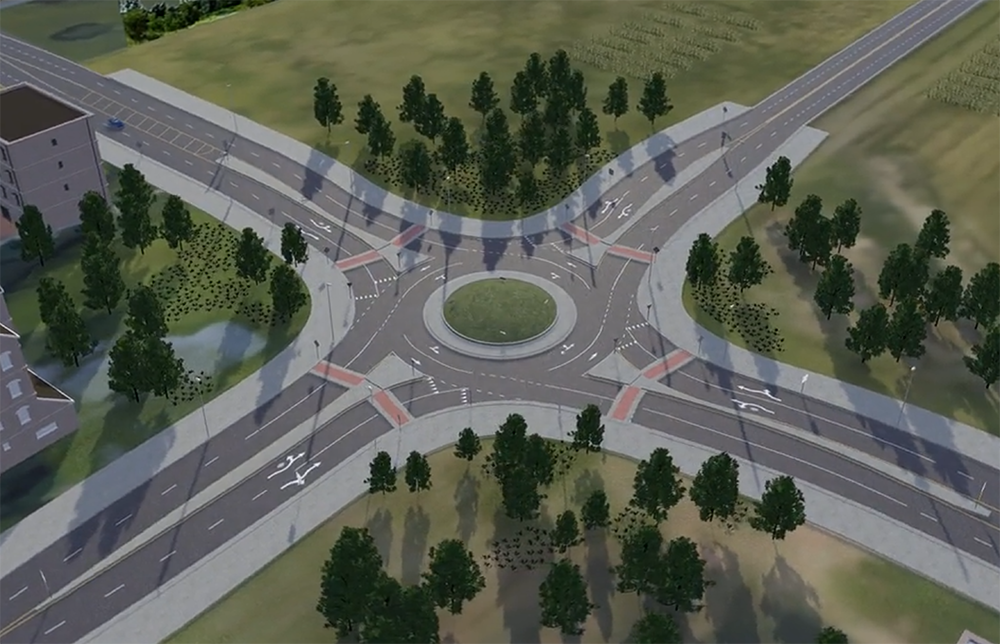
Prof. Wang will develop digital twins as virtual representations of Carmel roundabouts and update them as traffic moves through. Using data from roadside cameras and connected infrastructure, the team will test whether AI can identify potential conflicts among vehicles, pedestrians, and cyclists and send warnings in real time to connected vehicles and emergency responders.
More information about the USDOT SS4A program can be found at https://www.transportation.gov/grants/ss4a/2026-awards.