
2026-08-05 11:30:00 2026-08-05 12:30:00 America/Indiana/Indianapolis 2026 YESS Seminar A System of Systems Approach to Evaluating Human-Machine Teaming Architectures for Extended Lunar Surface Exploration Arthur Middlebrooks, Ph.D. Student, Draper Scholar, Major, US Army GRIS 102
2026 YESS Seminar
A System of Systems Approach to Evaluating Human-Machine Teaming Architectures for Extended Lunar Surface Exploration
Abstract
The growth of Artificial Intelligence has intensified interest in Human-Machine Teaming (HMT) across robotics, vehicle operations, and space exploration. NASA calls for robust, reliable, and efficient human-robot interaction and task coordination, including joint crew-robot teams operating collaboratively (NASA ESDMD 2025, 434). On the lunar surface this is difficult because the crew and the systems it depends on are separately built and operated, so joint performance emerges from a shifting web of information dependencies rather than a single controller. Delayed communication, rugged terrain, regolith, and extreme thermal, illumination, and radiation conditions further stress crew and equipment, forcing continual re-balancing of autonomy against oversight. Existing HMT assessments largely rely on discrete, task-specific metrics such as tasks completed (Cooke et al. 2000; Feitosa et al. 2020), which neither quantify human-machine interdependence nor reveal how operability holds up as teammates degrade, the robustness/resilience properties governing mission outcomes. This research's novel contribution is a System of Systems evaluation of HMT architectures using the graph-theoretic System Operational Dependency Analysis (SODA) method, parameterized through an original three-stage pipeline: Goal-Directed Task Analysis (GDTA) characterizes situation-awareness requirements, an Observe-Orient-Decide-Act (OODA) decomposition allocates cognitive functions, and SODA evaluates the resulting architecture. Scoped to NASA Design Reference Mission 5, the analysis examines two lunar-surface functions, imagery capture and sub-surface sample recovery, across three phases and four Levels of Autonomy, yielding twenty-four network instances compared on operability, robustness, and resilience. This yields evidence-based guidance on autonomy allocation for lunar operations, identification of architectural fragility, and a domain-agnostic pipeline transferable to other safety-critical human-machine teams.
Biography
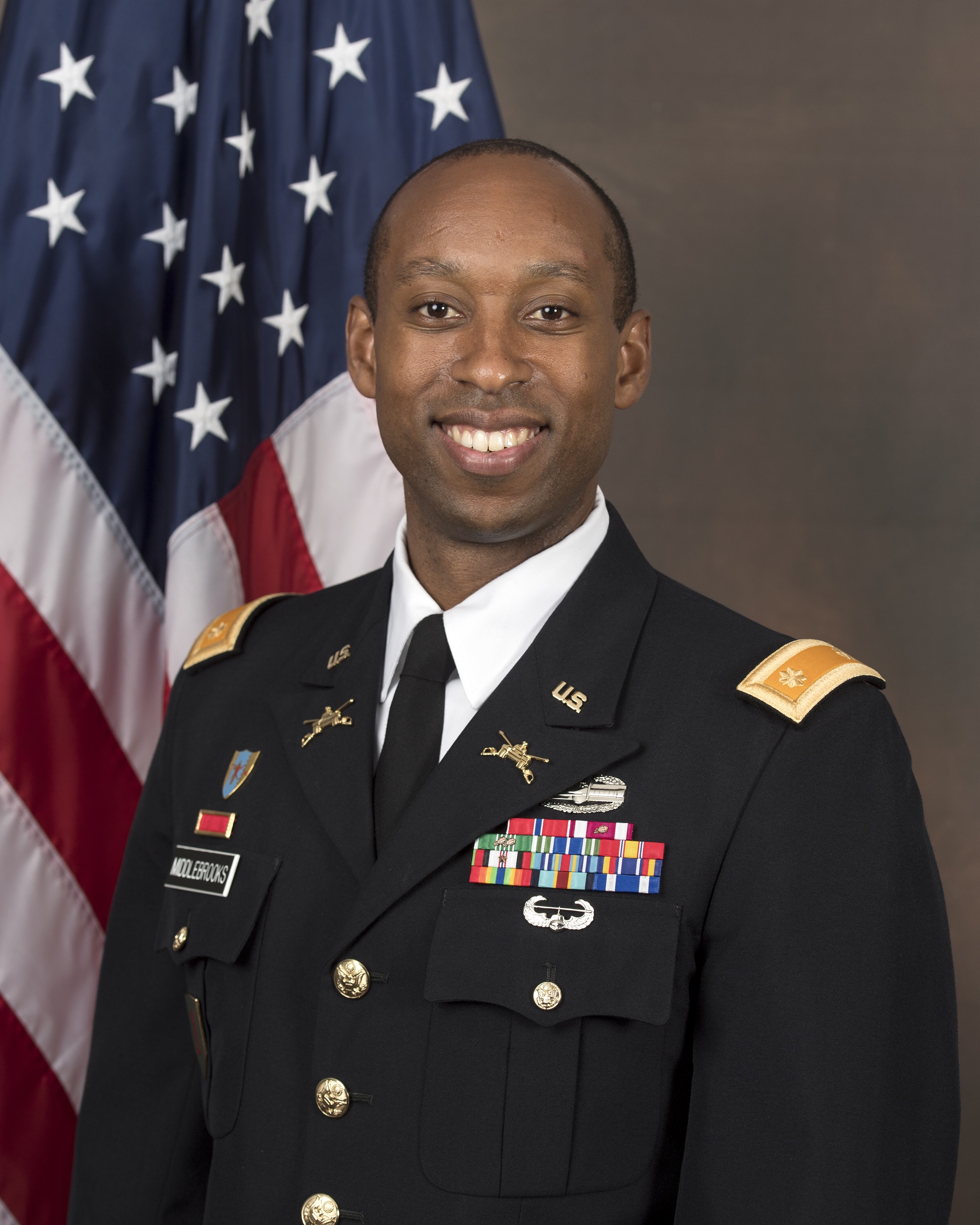
Arthur Middlebrooks is an Operations Research and Systems Analyst in the United States Army and a PhD student in the Edwardson School of Industrial Engineering at Purdue University. Concurrently, he is a Draper Scholar in the Human Systems and Visualizations Group. He holds a B.S. in Systems Engineering from the United States Military Academy at West Point and an S.M. in Engineering and Management from the Massachusetts Institute of Technology. His analytical and research interests include human systems engineering, resilient systems modeling and design, defense acquisitions and resourcing, and system dynamics. Following the completion of his PhD, he will re-join the Department of Systems Engineering as an Academy Professor at the United States Military Academy at West Point.