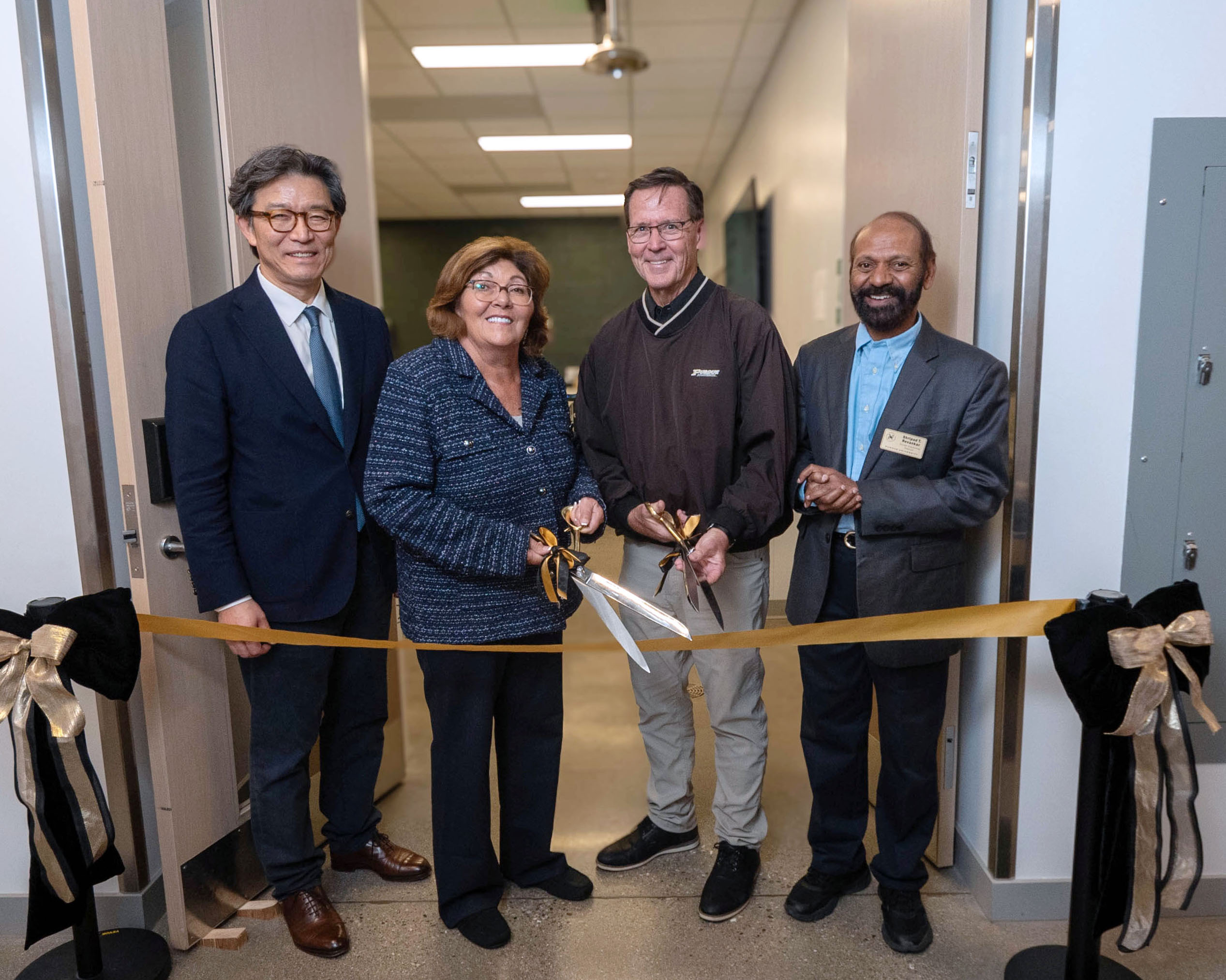
Purdue Nuclear Engineering dedicates new Nuclear Fusion and Plasma Laboratory
The laboratory, located in the basement of the Dudley-Lambertus Building on Purdue’s West Lafayette campus, was made possible through a generous gift from Nuclear Engineering alumnus Jerome W. “Jerry” Blattner (BSNE ’78) and his wife, Brenda. The facility was developed by Allen Garner and Shripad Revankar, professors of nuclear engineering, with assistance from graduate students Andrew Romes and Thomas Price.
The new laboratory provides students with an opportunity to move beyond classroom instruction and gain practical experience with experimental plasma science and fusion-related technologies.
“This laboratory represents the kind of educational experience that prepares our students to lead in emerging areas of nuclear engineering,” said Seungjin Kim, the Capt. James F. McCarthy, Jr. and Cheryl E. McCarthy Head of the School of Nuclear Engineering. “By giving students the opportunity to work directly with plasmas, diagnostics and experimental systems, we are helping them connect fundamental concepts with the technologies that could shape the future of energy.”
Fusion energy is attracting growing interest as researchers and industry work to develop new approaches to producing abundant, carbon-free energy. The new laboratory gives students rare, hands-on experience with fusion energy, one of the fastest-growing areas of nuclear engineering. It also complements existing nuclear fusion coursework.
“One of the big things that’s going on in nuclear engineering right now is the development of fusion for power,” Garner said. “Plasma physics is one of the foundational parts of a fusion reactor.”
Students use the laboratory to conduct experiments and learn plasma diagnostic techniques — tools that allow researchers to measure and characterize plasma behavior as it relates to nuclear fusion. These skills are essential for developing a deeper understanding of plasma systems and advancing fusion technology.
“The lab exposes students to key plasma diagnostics methods,” Revankar said. “Diagnostics are critical to understand, measure, control and optimize plasmas and are crucial to converting plasma science into commercial fusion power.”
For Purdue Nuclear Engineering, the laboratory also represents an investment in the educational infrastructure needed to support a growing interest in fusion and plasma science.
“The goal is not simply to teach students about fusion, but to give them the experimental skills and perspective they need to contribute to the field,” Kim said. “Hands-on learning is an important part of preparing engineers to tackle complex energy challenges, and this laboratory gives our students a strong foundation on which to build.”
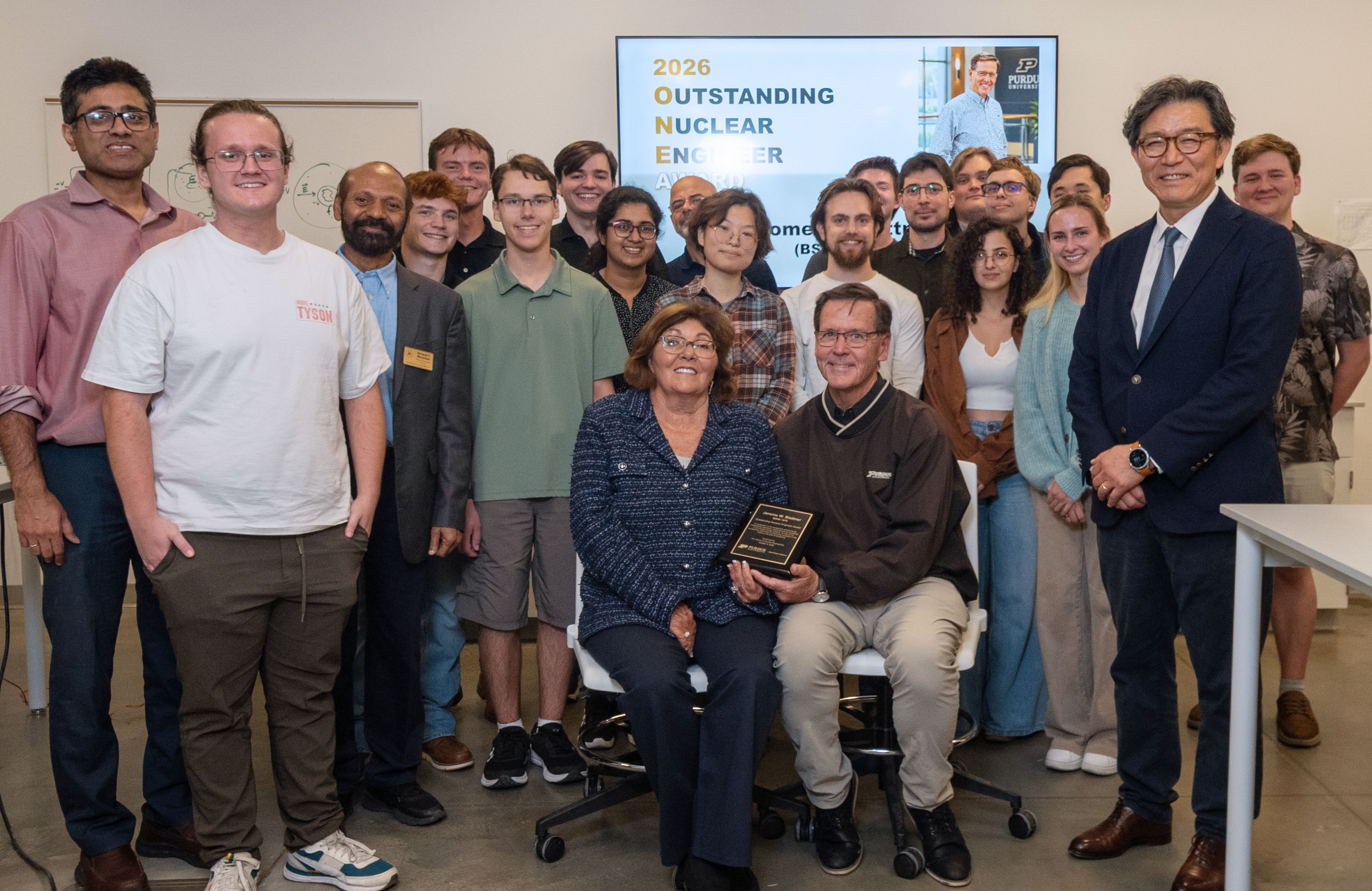
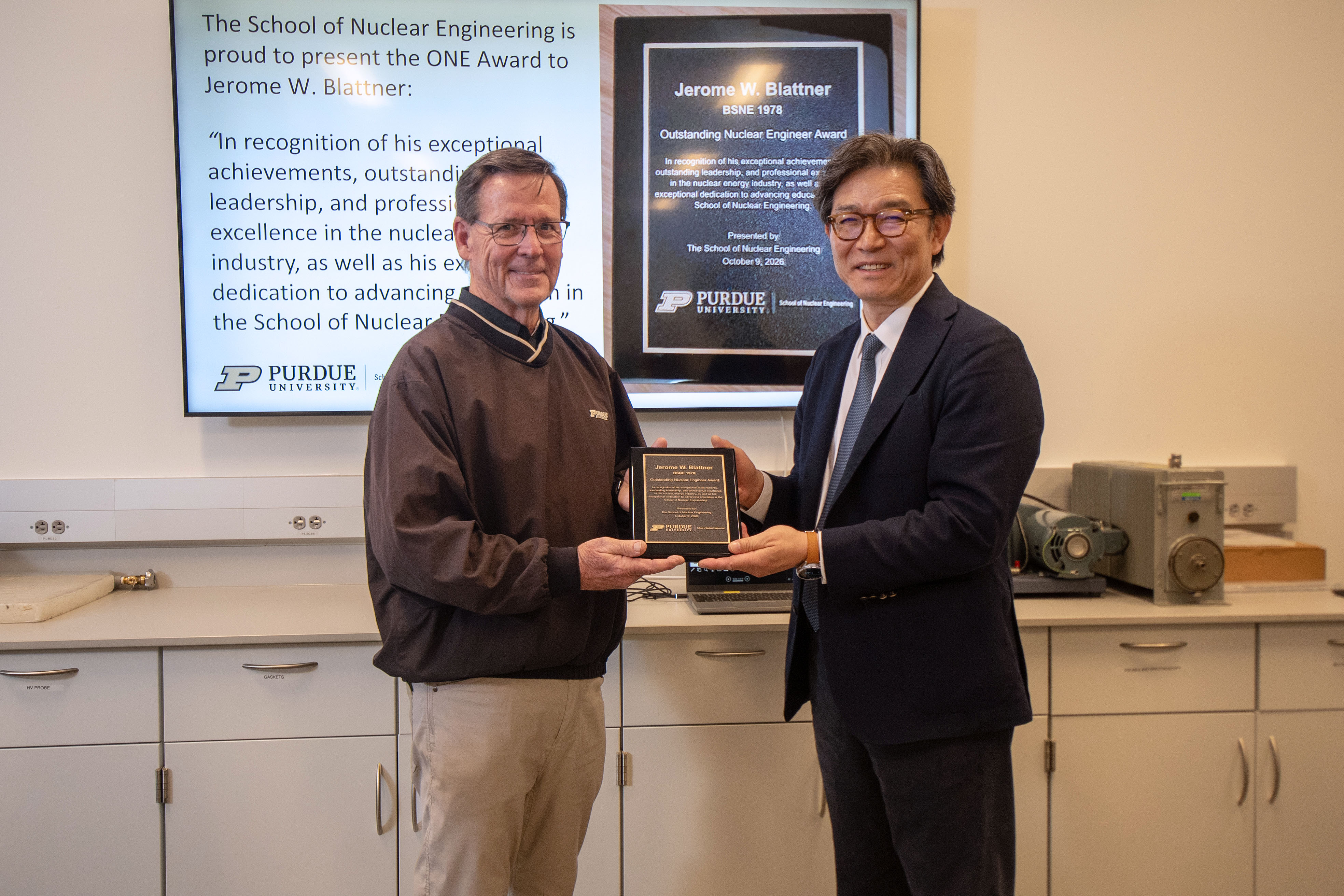
During the dedication ceremony, Blattner received the Outstanding Nuclear Engineer (ONE) Award, which recognizes alumni whose leadership and professional achievements have made a lasting impact on the nuclear field. He was honored for his exceptional leadership and professional excellence across the nuclear energy industry, as well as his commitment to advancing education in Purdue’s School of Nuclear Engineering.
Speaking about the new laboratory, he said, “As a student at Purdue, I was inspired by the opportunities to explore new ideas and push the boundaries of what’s possible. Supporting this lab is a way to give back and help provide students with hands-on experiences in a field that has the potential to shape the future of energy.”
The laboratory builds on Purdue Nuclear Engineering’s broader commitment to hands-on education, research and workforce development. As fusion technology continues to advance, Purdue students will have opportunities to develop experience with plasma science and experimental techniques that can prepare them for careers in fusion, nuclear energy, national laboratories, industry and related fields.