
New nuclear fusion and plasma lab gives Purdue students hands-on experience in an emerging field
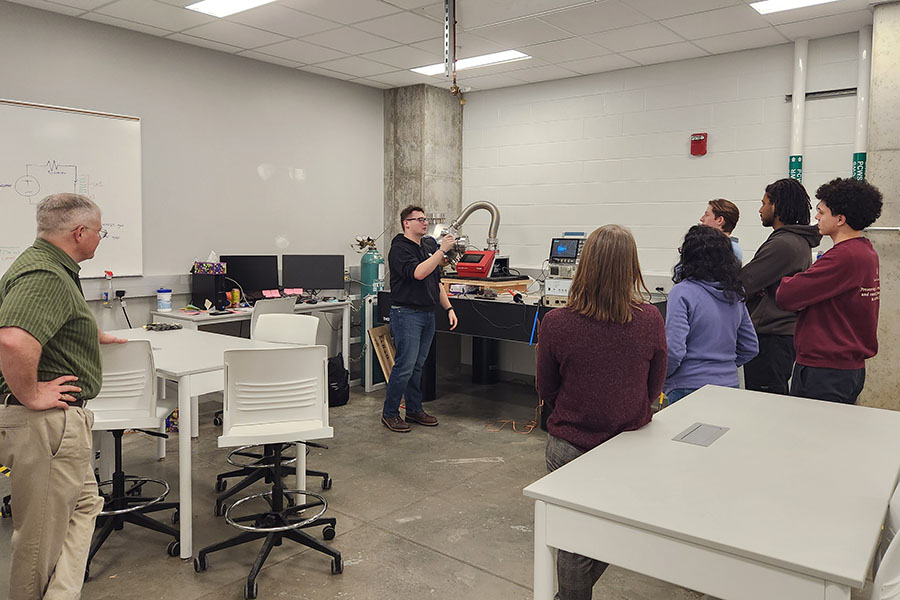
A new Nuclear Fusion and Plasma Teaching Laboratory at Purdue is giving students rare, hands-on experience in fusion energy—one of nuclear engineering’s fastest-growing fields. Developed by faculty and supported by alumni giving, the lab introduces a new course blending experimental plasma science with real-world applications, preparing students to help advance the future of carbon-free energy.
A new nuclear fusion and plasma teaching laboratory offers Purdue University students hands-on experience in one of nuclear engineering’s fastest-growing areas: fusion energy.
Located in the basement of the Dudley-Lambertus Building on Purdue’s West Lafayette campus, the Nuclear Fusion and Plasma Teaching Laboratory was developed by Allen Garner, professor of nuclear engineering, together with Shripad Revankar, professor of nuclear engineering, and with assistance from nuclear engineering graduate students Andrew Romes and Thomas Price.
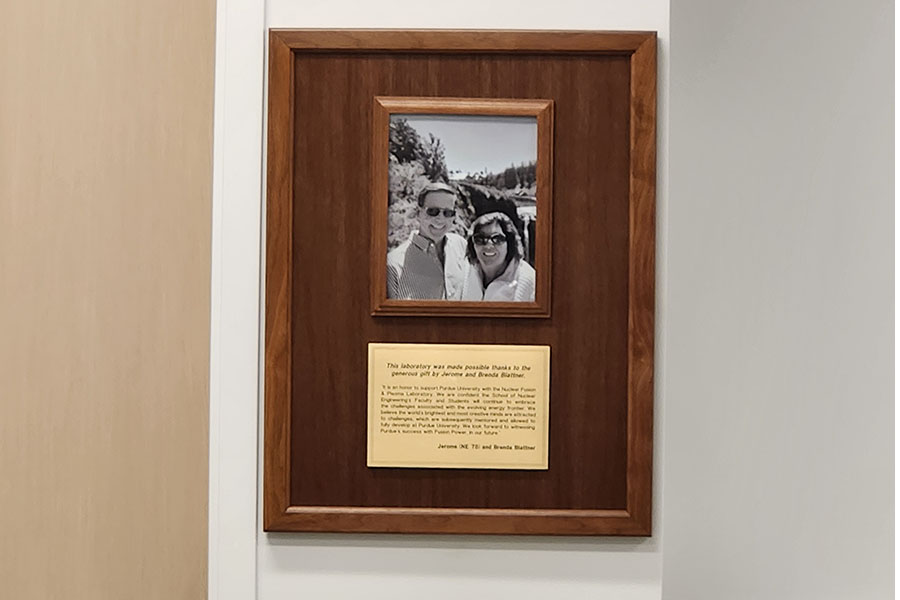
In development since summer 2024, the lab was made possible through a donation from Nuclear Engineering alumnus, Jerry Blattner, and his wife, Brenda. Blattner was senior vice president at Sargent & Lundy LLC, one of the leading architect-engineering firms specializing in power generation, including nuclear energy. The Blattners' gift provides students with critical exposure to experimental plasma and fusion concepts, which represent the next frontier in abundant, carbon-free energy.
“As a student at Purdue, I was inspired by the opportunities to explore new ideas and push the boundaries of what’s possible,” said Blattner, who graduated from Purdue with a Bachelor of Science degree in Nuclear Engineering in 1978. “Supporting this lab is a way to give back and help provide students with hands-on experiences in a field that has the potential to shape the future of energy.”
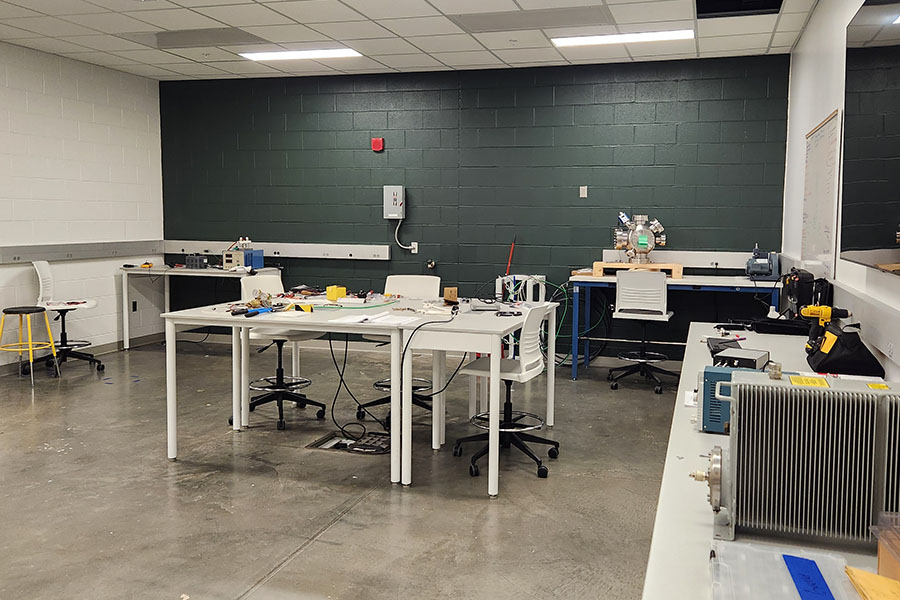
While the university offers fusion-related courses, this lab enables Purdue to offer its first plasma lab course from a nuclear engineering perspective. “One of the big things that’s going on in nuclear engineering right now is the development of fusion for power,” Garner said. “Plasma physics is one of the foundational parts of a fusion reactor.”
Revankar added, “The lab exposes students to key plasma diagnostics methods. Diagnostics are critical to understand, measure, control, and optimize plasmas and are crucial to converting plasma science into commercial fusion power.”
Taught for the first time this spring, the course “NUCL 59700: Plasma and Fusion” includes both graduate and undergraduate students. This semester, 13 students are enrolled, including students from disciplines such as electrical and computer engineering and aeronautics and astronautics.
“For some undergraduates, that exposure could help shape future academic plans in plasma physics or fusion,” Garner said. “For graduate students, the course broadens their background, especially for those whose research isn’t primarily experimental.”
The course introduces students to the experimental side of plasma science, combining established teaching methods with new experimental labs developed based on Purdue research in areas such as microscale gas breakdown, pulsed power and electron emission. Garner said these are experiments “no one else does” in the same way.
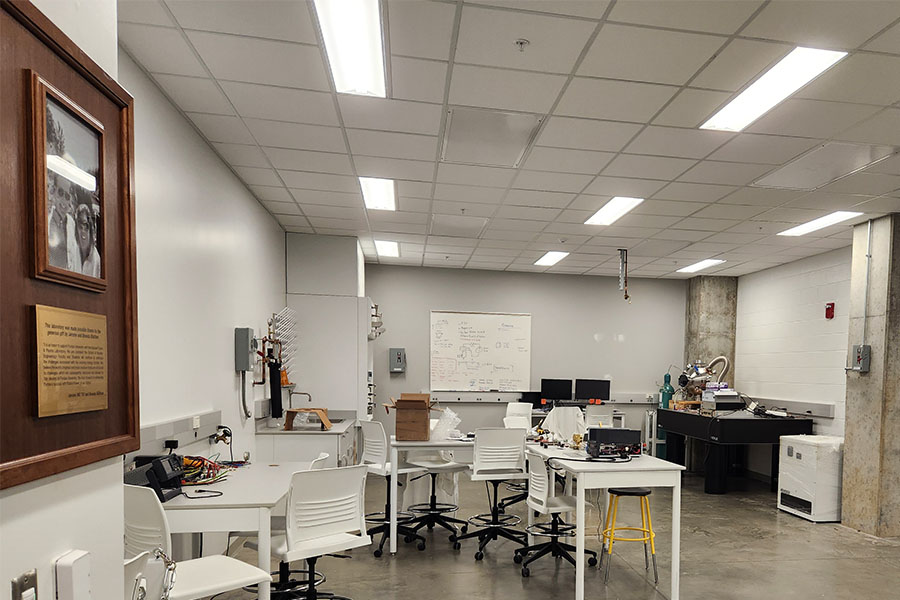
Looking ahead, Garner hopes to expand the course with additional fusion-focused experiments. One long-discussed goal is to incorporate a “fusor,” a demonstration device that uses deuterium gas and high voltage to produce a fusion reaction that releases neutrons. Because that experiment requires additional radiation safety steps, it may not be fully in place this semester, but Garner said he expects it to be part of the lab in the future.
Laboratory Wall Plaque: This laboratory was made possible thanks to the generous gift of Jerome and Brenda Blattner.