
DOE Nuclear Energy University Program grant expands Purdue’s advanced nuclear manufacturing capabilities
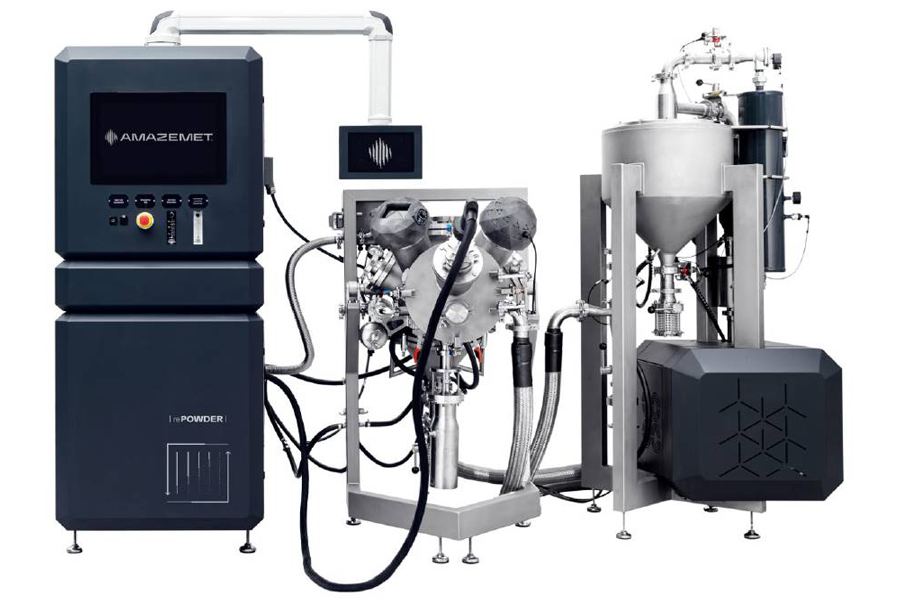
The Purdue University School of Nuclear Engineering is enhancing its nuclear research capabilities with a grant from the U.S. Department of Energy (DOE). The project, “Powder Manufacturing Infrastructure to Support Advanced Nuclear Manufacturing and Materials,” funds the acquisition of an ultrasonic powder atomizer, a system that produces spherical metal powders essential to advanced manufacturing technologies in the nuclear industry. Total project cost is approximately $280,000, funded by the DOE's Nuclear Energy University Program (NEUP) with Purdue University providing matching support.
NEUP supports university-led research, infrastructure development and student training to advance civilian nuclear energy technologies. Through NEUP, DOE invests in capabilities that strengthen the nation’s nuclear workforce, enhance domestic supply chains, and accelerate innovation in next-generation reactor systems.
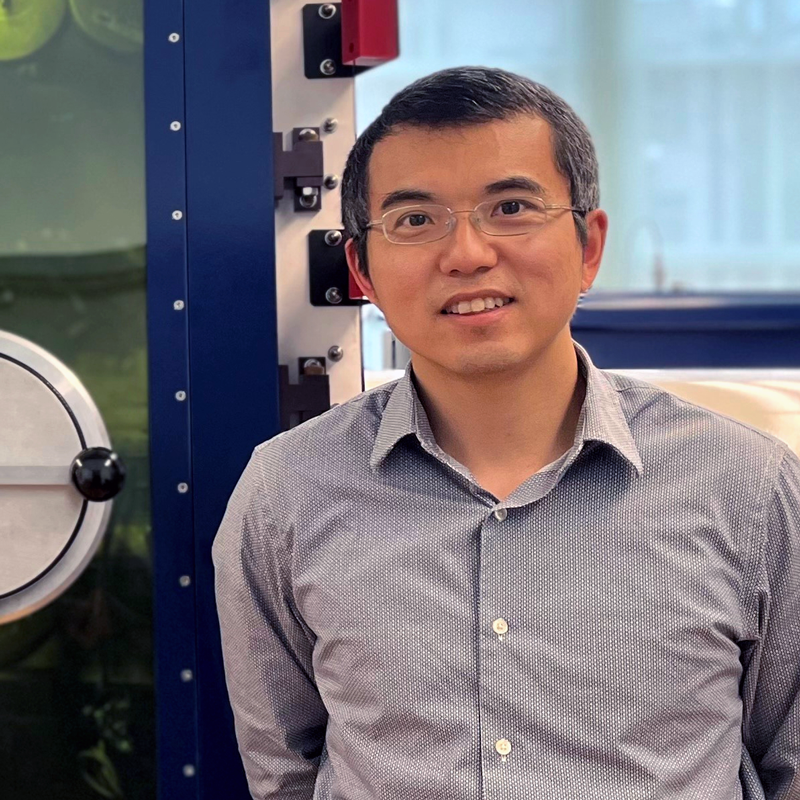
“Powder is the starting point for almost every advanced nuclear manufacturing process,” said Xiaoyuan Lou, associate professor of nuclear engineering and principal investigator on the project. “With this equipment, we can produce spherical metal powders in-house and feed them directly into machines that work like 3-D printers for metal. That makes it much faster to experiment, innovate, and train students on the technologies shaping tomorrow’s nuclear components.”
Advanced manufacturing methods — including laser powder bed fusion, electron beam melting, laser direct energy deposition, cold spray, and powder metallurgy with hot isostatic pressing — rely on spherical metal powders to build complex structures for nuclear fuels, structural components, claddings and sensors. Until now, Purdue researchers depended on commercially available powders, which often have long lead times, high costs and limited customization.
“Custom powders can take six to nine months to obtain from vendors, and small R&D orders are often not feasible,” Lou said. “Having the ability to produce our own powders removes that bottleneck and allows us to pursue new materials and designs much more rapidly.”
The ultrasonic powder atomizer will be integrated across Purdue’s research landscape, supporting not only nuclear engineering but also broader manufacturing studies in materials science, mechanical engineering, and additive manufacturing. Researchers can explore new alloys, investigate microstructural properties, and accelerate innovations in energy, aerospace, and other industries that rely on precision metal components.
The Purdue project team includes Lou and Assistant Professor of Nuclear Engineering Stylianos Chatzidakis, who serves as the School’s associate reactor director, and director of its Nuclear Engineering Radiation Laboratory; as well as Materials Engineering faculty Xinghang Zhang, professor; Maria Okuniewski, associate professor; and Michael Titus, associate professor; along with Salil Bapat, a research assistant professor in Mechanical Engineering. Together, they will oversee equipment installation, develop experimental protocols, and integrate the technology into education and outreach programs.
Beyond research, the new powder atomizer will enhance Purdue’s educational mission. Students at all levels — from community college programs to graduate courses — will gain hands-on experience with powder-based manufacturing, additive processes, and advanced materials testing. Faculty will develop new lab modules, teaching materials, and outreach activities to train the next generation of nuclear engineers and materials scientists.
The project builds on Purdue’s existing Nuclear Science User Facilities (NSUF), which provide access to specialized nuclear research infrastructure for internal and external users. By adding in-house powder fabrication capabilities, the university reduces dependence on commercial vendors and positions itself as a hub for advanced nuclear materials and manufacturing research.