
Research project led by Dr. George Zhou wins AAEES excellence award
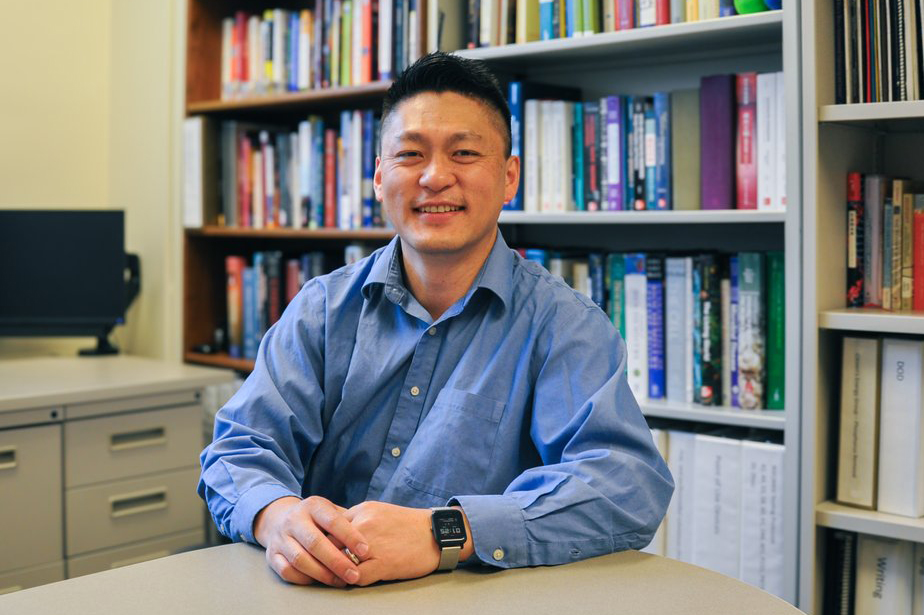
A research project led by Dr. Zhi (George) Zhou, Associate Professor of Civil and Construction Engineering and Sustainability Engineering and Environmental Engineering, is the winner of the American Academy of Environmental Engineers & Scientists (AAEES) 2026 Excellence in Environmental Engineering and Science Awards Competition. The title of the project is, "AI-Driven Machine Learning Frameworks for Optimizing Biomimetic Algal Biofuel Production."
Dr. Zhou served as the Principal Investigator and Lead Researcher for this multi-phase research project. He conceptualized the biomimetic approach of harnessing natural processes to disrupt algal cells without energy-intensive sonication or chemicals and pioneered the integration of artificial intelligence (AI) methods to address longstandingbottlenecks in algal biofuel production. In this capacity, Dr. Zhou oversaw experimental design, supervised data collection, and directed the development of AI-driven machine learning frameworks to optimize lipid productivity. This project represented a collaborative, multidisciplinary effort at Purdue University.
Dr. Zhou and his former Ph.D. student, Zhe Sun, developed a novel algal cell disruption technique that achieved lipid yields comparable to sonication while reducing energy requirements by 91.7%. His Ph.D. student, Amanda M. Lopez, led single-cell phenotypic analyses, developed unsupervised machine learning models (including PCA and K-means clustering), and created a random forest AI framework based on 38 cultivation variables and over 12,000 data points, predicting high lipid productivity with 95.2% accuracy. Undergraduate research assistant Yoonjung Choi supported algal cultivation experiments and metabolic data acquisition, contributing to a 165.2% relative increase in triacylglycerol accumulation. Additionally, collaborator and Ph.D. student Sean Savage provided expertise in data analysis, refining the predictive performance of ensemble decision tree algorithms.
Together, this team bridged environmental engineering and machine learning to advance the state-of-the-art in sustainable biofuel production. Their collective efforts yielded a patent, multiple peer-reviewed publications, and a comprehensive, data-driven framework for cost-effective, environmentally friendly renewable energy.
Source: American Academy of Environmental Engineers & Scientists