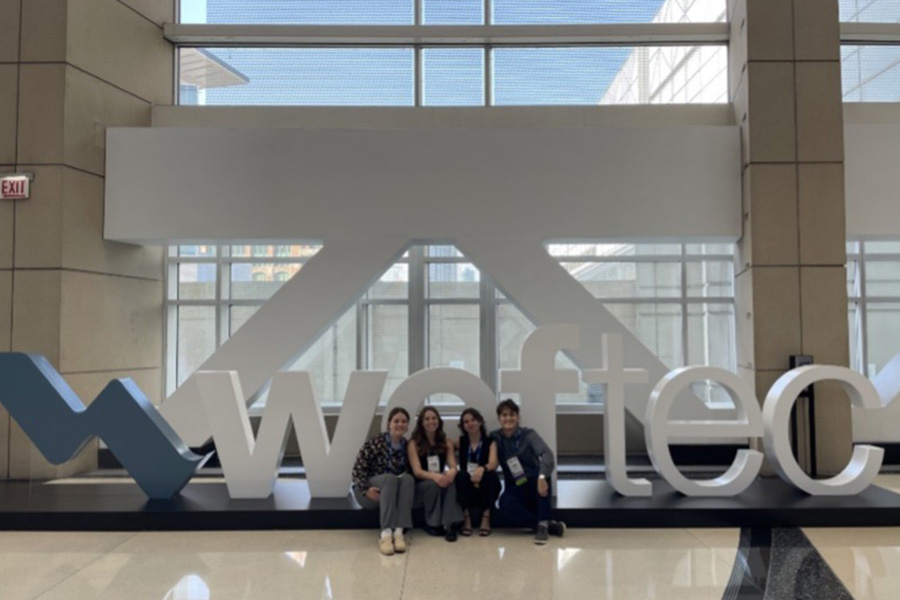
Purdue Team Places Fourth in the Circular Water Economy Category of the WEFTEC Student Competition
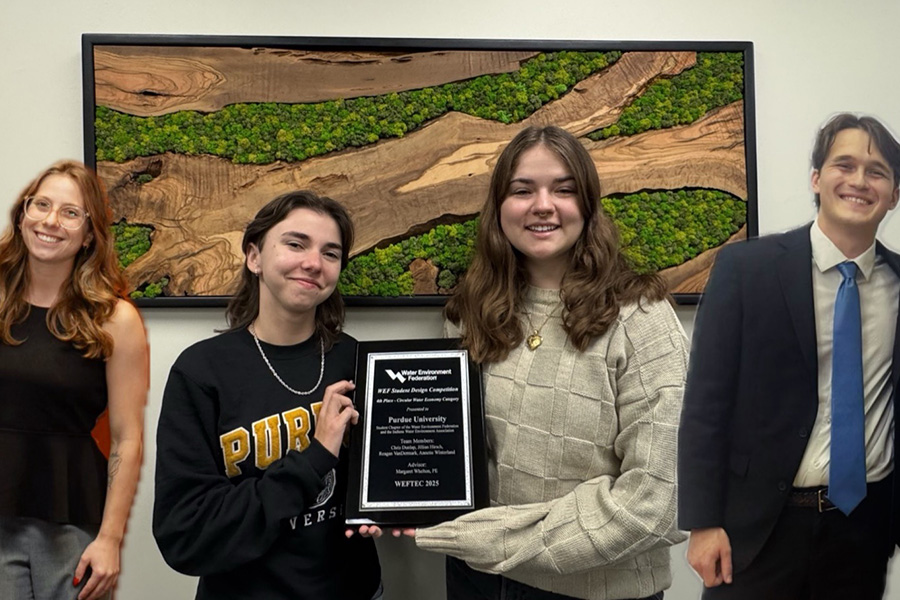
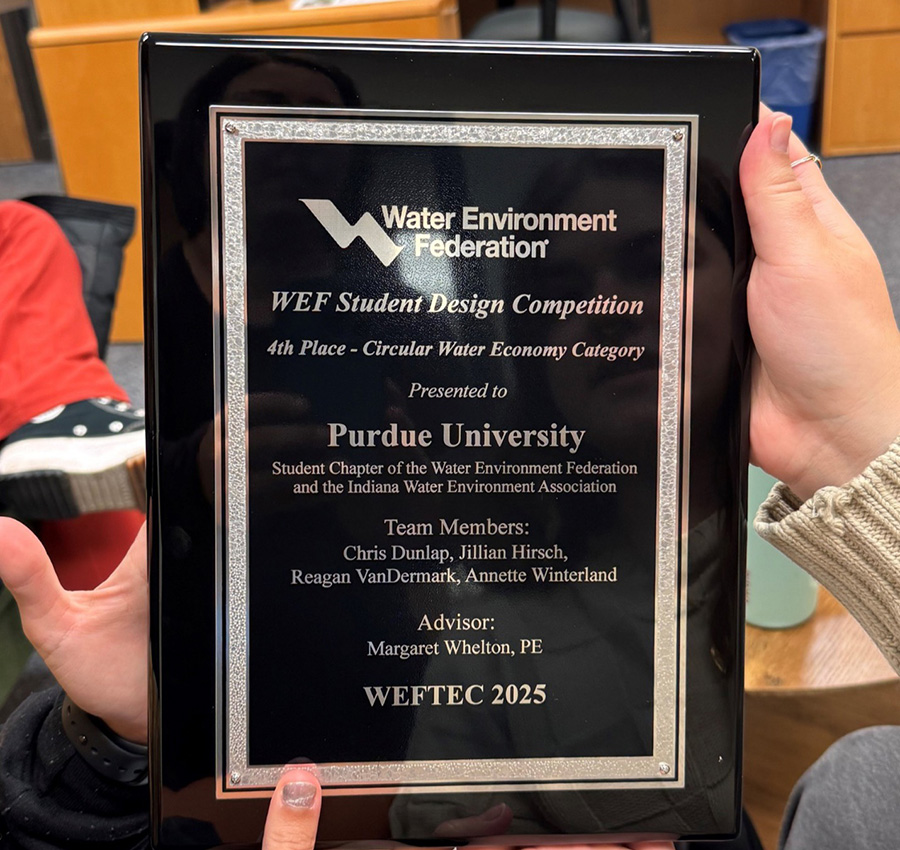
Purdue School of Sustainability Engineering and Environmental Engineering (SEE) alums Christopher Scott Dunlap and Reagan VanDermark, and teammates Jillian Hirsh and Annette Winterland recently earned fourth place in the Circular Water Economy category of the Water and Environment Federation’s Technical Exhibition and Conference (WEFTEC) student competition.
The WEFTEC conference is an “immersive experience designed to equip attendees with the tools, knowledge, and connections needed to shape the future of water quality and environmental sustainability.”
The conference provides opportunities to explore cutting-edge solutions, discover the latest technologies, innovations, and services revolutionizing the water and environmental sectors, connect with sector leaders, and drive sustainable change with the aim to not only help attendees address current issues, but also become a leader in innovating future solutions.
“WEFTEC is the largest global exhibition of professional water treatment in North America” said Christopher Scott Dunlap, who earned his Bachelor’s degree from EEE in 2025 and is currently pursuing a Master’s in Environmental and Ecological Engineering. WEFTEC is a technical conference for water quality professionals.
“It is a large multi-day opportunity where companies, students, and professionals come to share new technology, practices and findings related to water and wastewater treatment. There is an international student design competition, recruiting events, social opportunities, and a variety of lectures regarding issues and findings in the field. This allows environmental engineers to connect and relate new findings and ideas across the world in one common place and time.”
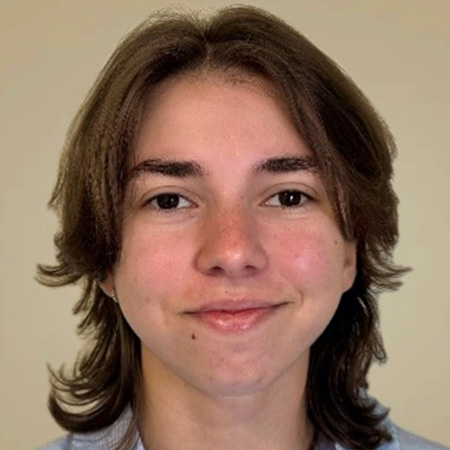
“Competing in CSWEA, let alone winning 4th place in our category, was a huge academic achievement,” said Jillian Hirsch. “We were up against other top-notch projects, so I am very proud that our commitment and performance paid off.”
“I am so proud of the effort our team put into our senior design project!” Annette Winterland added.
“It felt very rewarding to share that work with other students and professionals in the field.”
“This is the first time Purdue participated in the WEFTEC student competition and we were told that it is the best a team from Indiana has ever done at the national competition,” said Margaret Whelton, PE, who serves in a dual role in SEE as both staff and instructor. Margaret was the lead instructor for the senior design course where this project originated.
“IWEA is very excited about how well Purdue did this year!”
Megan Obernesser, IWEA Young Professionals Chair and Water Resources Engineer with Crawford, Murphy & Tilly shared:
“Being the Young Professionals Chair for the Indiana Water Environment Association has been very rewarding. I have personally implemented many volunteering opportunities with young professionals throughout Indianapolis helping plant trees and picking up litter to keep our waterways clean. Having been able to mentor a team for the Central States Water Environment Association Student Design competition and then see that team excel at WEFTEC would not have been possible if I was not a part of this leadership team…The Purdue team was truly one of a kind. Their passion for their project and to share what they studied with water professionals around the county is so motivating. Their ability to accept feedback on their project is what helped them place at WEFTEC. Having a student team as motivated, well-rounded, and passionate about everything they do make the student design competition rewarding for me. I have no doubt that every single one of them will go on to do great things in the professional industry.”
Dylan Buechler, PE, Water Resources Project Engineer with Crawford, Murphy & Tilly and the IWEA Young Professionals Chair who selected the Purdue team added.
“My experience as the current Chair of the INAWWA Young Professionals (YP) Committee has been incredibly rewarding. The YP Committee is a joint effort between the Indiana Section AWWA (INAWWA) and the Indiana Water Environment Association (IWEA), which means we operate with two co-chairs and maintain separate budgets for each organization.
Serving in this role has shown me that the value you gain is directly tied to the effort you invest. If you're committed to creating opportunities for professional growth and fostering meaningful engagement through events, the impact can be significant. This is exactly what we’ve been striving for. I’ve had the chance to meet amazing people, enjoy the work, and grow both personally and professionally.
From the very first meeting with the 2025 Purdue team, it was clear they had something special. It felt like their story was already set in motion, and it was just up to them to bring it to life. Their enthusiasm, professionalism, and thoughtful approach to their project stood out immediately.
They explored five different alternatives as potential solutions for their client, demonstrating both technical depth and a strong commitment to delivering value. What impressed me most was how well they carried themselves throughout the process. It was evident that, with time and focus, they were going to produce something great. And they did just that!
This sentiment extends beyond the team as a whole to each individual member. As they transition into full-time roles, I believe the companies that hire them are incredibly fortunate. They are bright, driven, and poised for success. Who knows, maybe one of them will be a future Young Professionals Chair!”
Twenty-nine student teams from across the U.S and four other countries competed in the 2025 WEFTEC conference competition across three categories: Wastewater, Water Environment, and Circular Water Economy. WEFTEC stated that their presentations “demonstrated practical, real-world solutions to some of the most pressing water quality challenges facing communities today. From forward-thinking treatment strategies to circular economy approaches, the competition served as a powerful reminder of the value that fresh perspectives bring to the sector.”
The Purdue team’s project focused on the Lebanon Wastewater Treatment Plant.
“We worked with Wessler Engineering to develop an excel spreadsheet model for the plant,” said Christopher.
“Its goal was to model the daily power consumption and peak demand based on which equipment was turned on at a given time. Peak demand is an additonal fee charged by power companies based on usage when a specific user has a very high power demand. We developed this model using plant power and equipment data, and set it up such that it would model power based on which equipment was selected on, what season it was, and what time equipment was turned off/on. All calculations are run on individual spreadsheet pages based on the given treatment process (UV disinfection, bar screens, pumping, etc.) and then grouped together on a singular main page that accepts all inputs and outputs (thus simpfilfying it for operator use). This gave a daily output of energy usage and peak demand, in 15-minute intervals, that can be used by operators to determine where equipment is using the most power throughout the day. Thus, if treatment standards are being met, operators can turn off equipment that may be using extra power. We also researched treatment alternatives to the current systems at the plant to reduce peak demand energy charges. We looked at a Bioloop system, Aeration Adjustment, Operational Strategies, Mixing Adjustments, and Switching to Anaerobic Digestion. When evaluating these solutions we looked at their monetary costs and buyback period, as well as their ease of implementation.”

Annette’s biggest takeaway from the project was the progress being made every day in the water and wastewater fields.
“It was really exciting to hear about the work other students from all over the country and world are doing to improve the sustainability and circularity of these fields.”
Jillian added that “it was very eye opening to see all the different design projects, and how many of them used interdisciplinary approaches. One group utilized Arduino programming, others were completed on AutoCAD, and like ours some used excel exclusively. While a few teams had similar water-based engineering systems that their project focused on, no two teams used the same approach in their solution.”
Christopher’s favorite parts of the project centered on the people he and his team had the opportunity to work with.

“My team has been the most outstanding, hardworking, and fun people to work with throughout the whole process. Our project client, Mr. Robert Holden, PE, the SEE faculty, and the IWEA members that worked with us to complete the project and get us all the way to WEFTEC have been so helpful and supportive the whole way. Without their assistance and great attitude, I don’t think this would have been nearly as fun or engaging. I once again want to shoutout my group members as they made this most meaningful it could have been, and I was so lucky to work with all them.”
When considering what they value most about the Purdue SEE, the team shared a lot of pride about their school.
“In general, SEE has the best community of students and faculty that I have encountered at Purdue (no bias of course),” said Christopher.
Annette expanded on the sentiment, sharing, “what I appreciate most about being a part of SEE is the application to real life projects. It is really unique that we worked with two clients on this project, Wessler Engineering and the Lebanon Wastewater Treatment Plant. We learned so much from the engineers and wastewater treatment plant operators we worked with on this project. I really enjoyed being able to apply what I learned in class to a real-life engineering problem. I also appreciate the support we received through our professors in SEE; they truly go out of their way to put their students first!”
For more information about Purdue’s School of Sustainability Engineering and Environmental Engineering, please visit: https://engineering.purdue.edu/SEE.