
Linda Lee: Leading with Science, Supported by Animals
During this Spring of Giant Leaps, the Purdue School of Sustainability Engineering and Environmental Engineering (SEE) is minimizing environmental impacts across the entire life cycle of products and processes and celebrating our natural world by exploring the connection of SEE faculty and staff with animal companions.
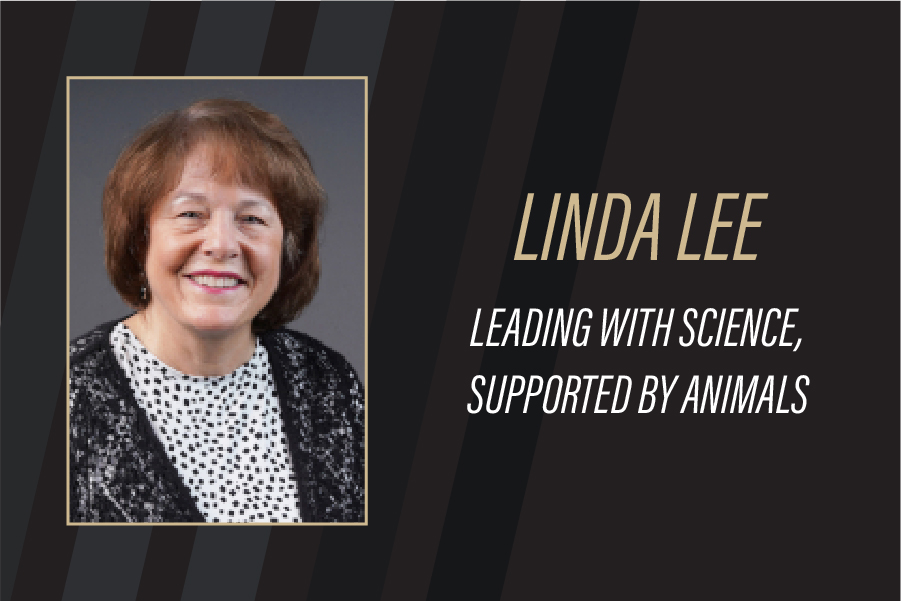
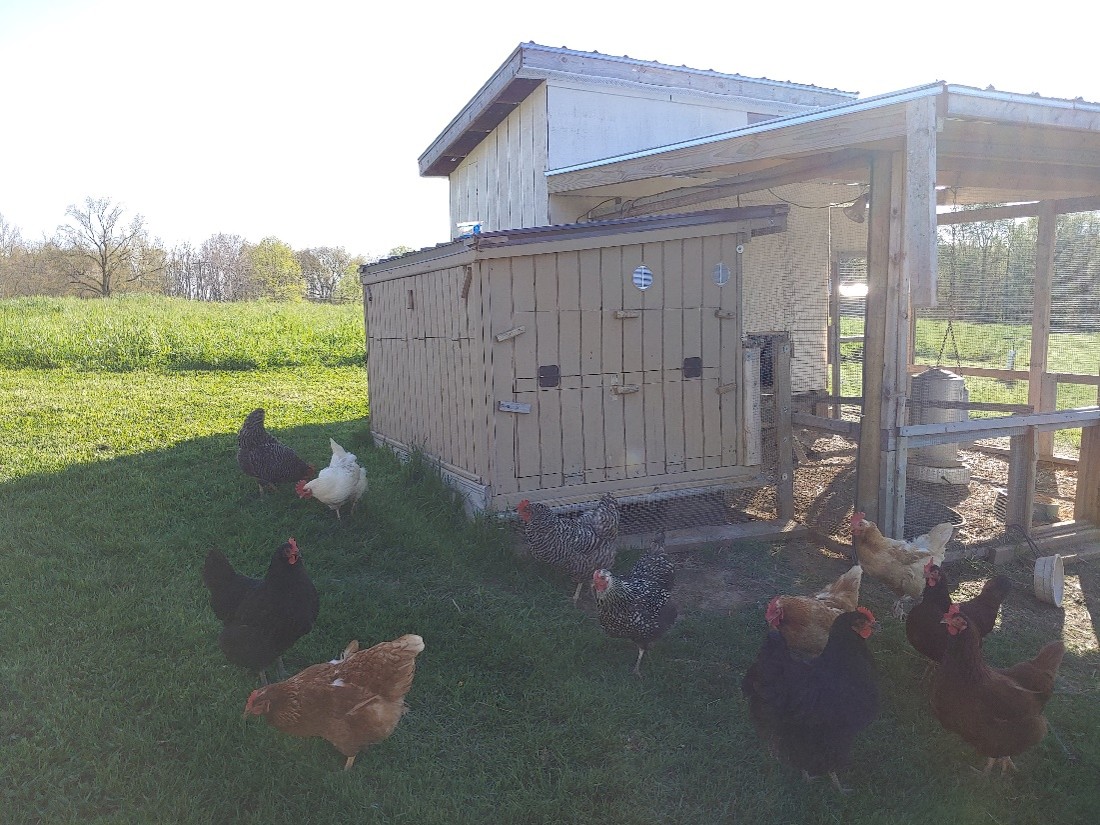
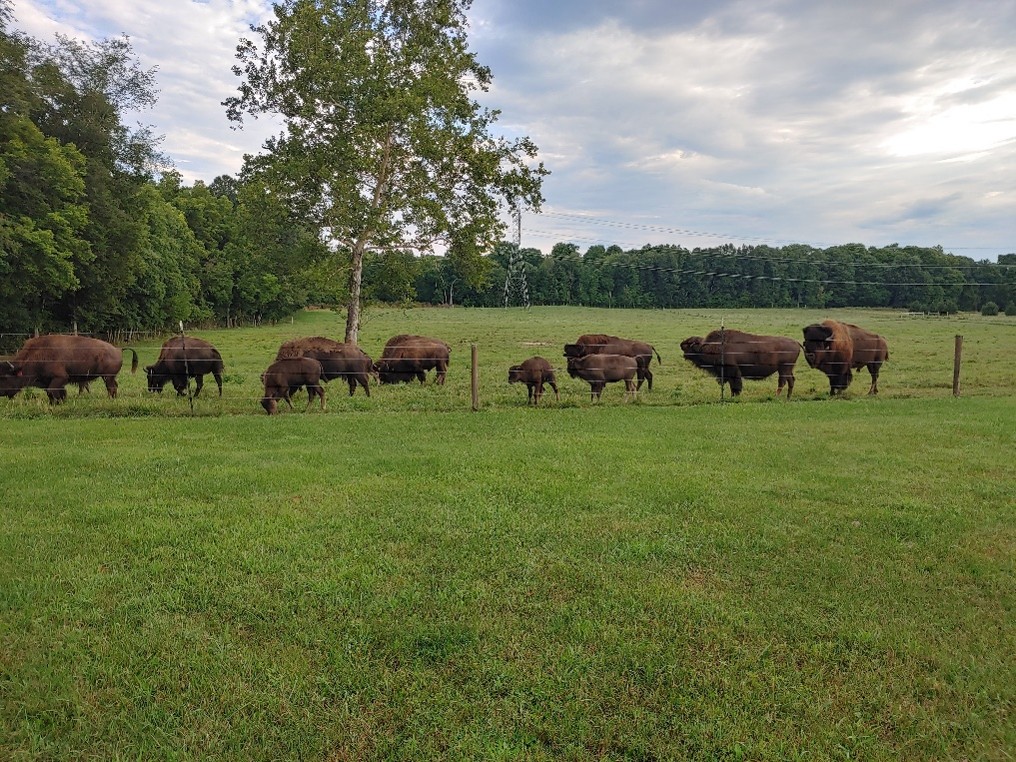
Professor of Sustainability Engineering and Environmental Engineering and Ecological Science and Engineering Program Head Dr. Linda Lee credits four dogs, a chicken herd, and even a small bison herd with helping keep her company throughout years of her work wearing many different hats for Purdue.
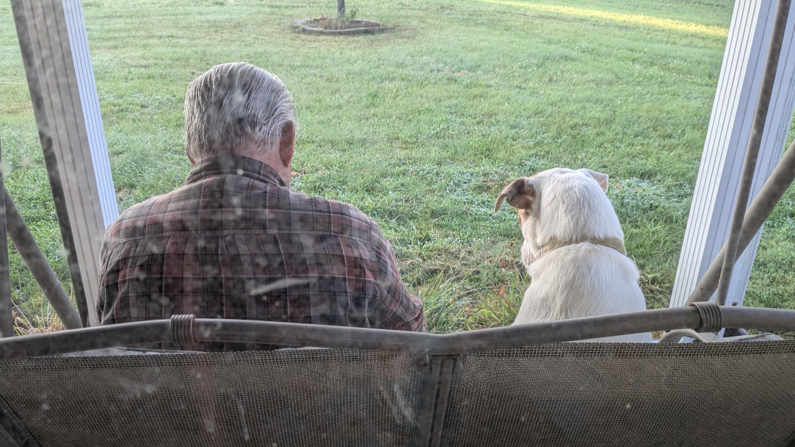
In addition to also serving as the Assistant Dean of Graduate Education, Research and Faculty Development, Linda conducts research to understand the “processes leading to the occurrence, mobility, transformation, plant uptake, and remediation of PFAS “forever” chemicals and unregulated organic chemicals in wastewater and biosolids to develop decision tool and management guidelines for industry and agriculture.”
“Loving my pets and being loved by them with so much excitement definitely keeps spirits high in our house and keeps my husband company while I am busy doing Purdue activities,” Linda shared. Her animal companions’ enthusiasm and unique personality traits help keep her motivated in her roles.
“Magpie (my white mixed breed labrador) jumps up and down like a jellybean when I get home until she can kiss me on the face. She also sits with us at the kitchen table – she literally sits on her butt with her feet sticking out like a human.”
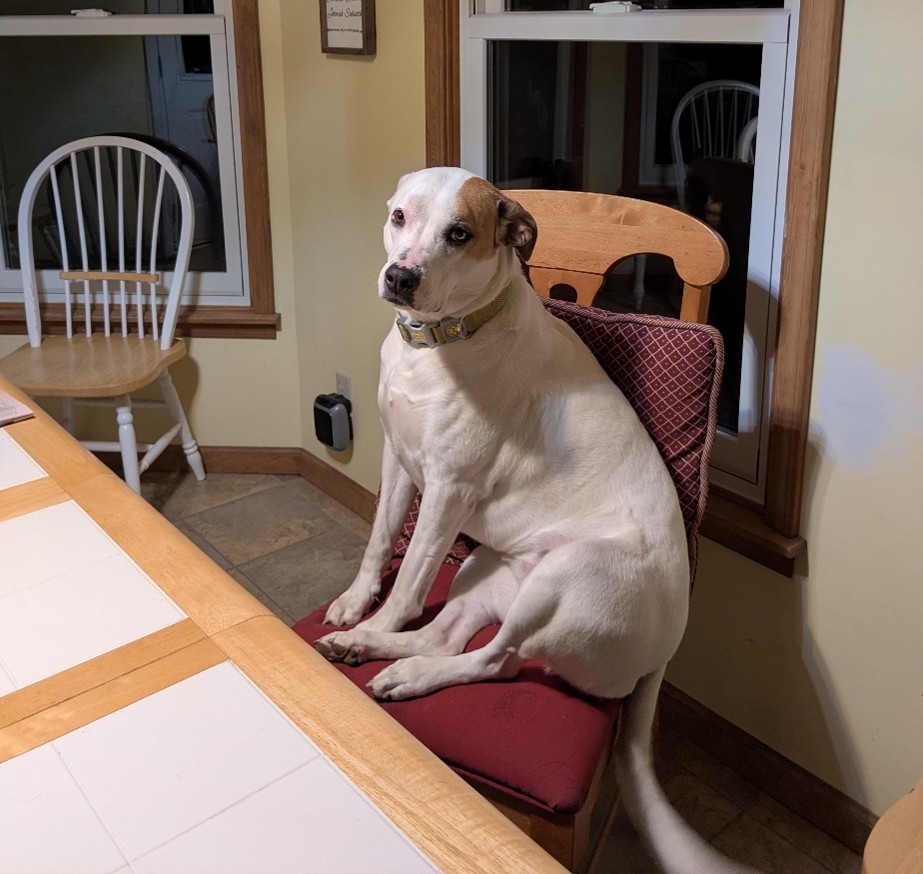
Linda expanded on the story, adding:
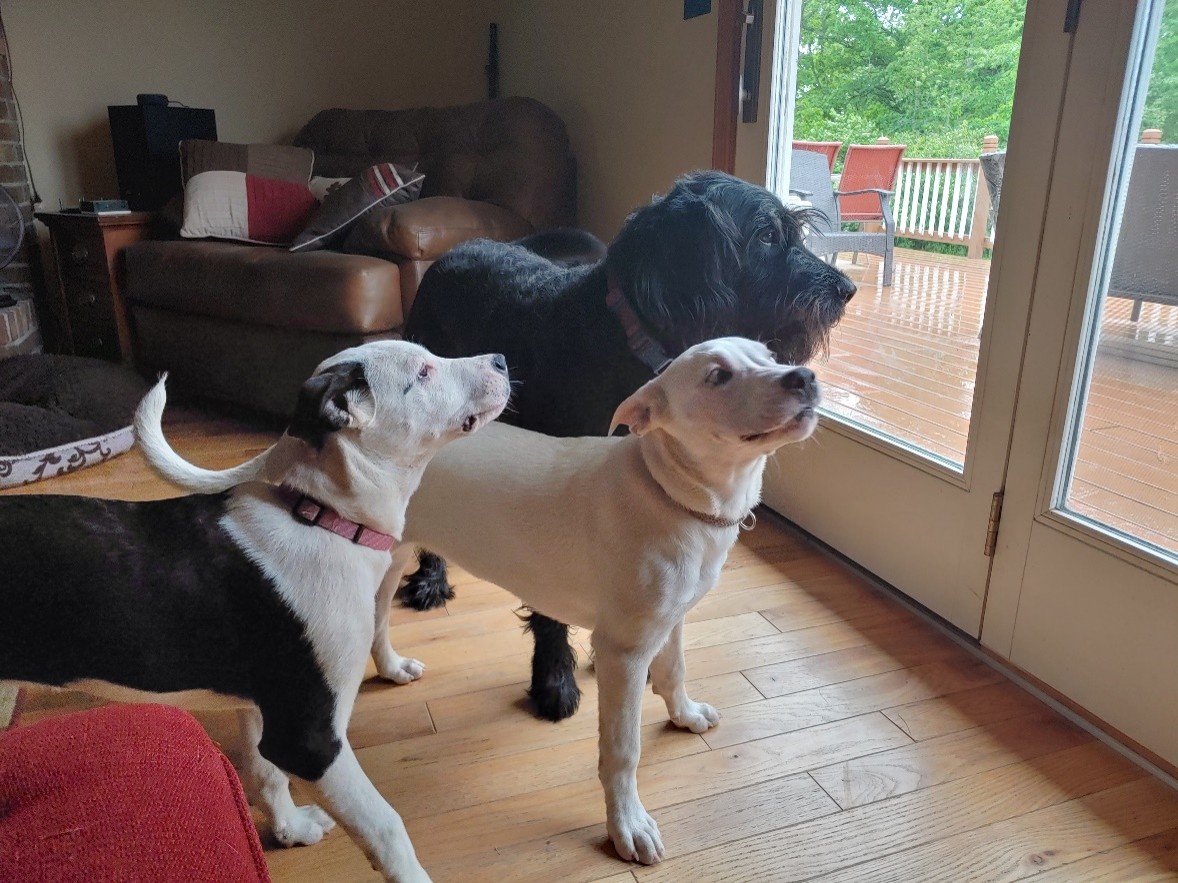
“Her last cute and unusual habit is when it is time to get up in the morning, she refuses to get up until I rub her belly and let her kiss me on the face…Riley (my black labradoodle) wags his backend so hard in excitement when he sees you, he looks like he is going to break in half. He also has a bedtime routine, he wants to have his head to be petted for several minutes before he will settle – if I am too tired, he has no mercy and keeps hitting me with his paw until I deliver…”
Linda went on to share about the rest of her crew.
“My chickens – well, whoever said you can’t love chickens was wrong! While it is true they are not so bright, they have so much personality – each one a little different. When I come home, they like to run after my car until I get to the house and then they just wait for me to appear out of the car. One loves to ride on my husband’s lap when he is mowing the lawn!... Lola (my Aussie who passed recently) was the best herd dog you would ever get – we would tell her to go find the chicken, which mean one strayed from the group, and when she did, she would just hold her down with her paw until we got there to pick her up. Then there was Molly, Magpies’ sister (we rescued them both together). She was such playful thing, but unfortunately inherently wanted to wander. I miss her playful spirit!
Lastly, we had a bison herd right here in West Lafayette at our house and farm. They teach you so much about community; they never do anything without everyone doing it, from going to the watering trough and running in large circles as if they were in the wild again, and even welcoming a new baby into the world.”
Linda earned the Purdue Seed for Success award in 2017 and 2018, the Purdue Graduate Student Government Faculty Mentor Award in 2013, and the Purdue Outstanding Graduate Educator in Agronomy in 2008, 2009 and 2010. She loves each of the many hats that she wears at Purdue and still has future goals for Giant Leaps.
“In the future, I am considering developing a graduate course for Purdue’s online engineering degree, because when giving invited talks focused on contaminant behavior and environmental fate around the country to a variety of stakeholders, I often get asked if there is an online course they could take to help them understand concepts in this space. I also will likely continue to limit the graduate students I serve as chair to four and train more postdocs to help them strategically navigate this current job market.”
The resilience and humorous antics of Linda’s pets help her maintain an innovative mindset.
“Once when my husband and I were leaving for travel, Lola wanted to go with us so bad – when all my dogs see suitcases, they go into pout mode, but this time they could see we were both leaving them…This time, Lola tried to follow us down the driveway, so we had to go back and tell her to stay. After we left, the sitter could not get her to move [from the driveway]. It was a hot day so I told the sitter to put a bowl of water next to Lola to make sure she had access. She still did not move. Twelve hours later, the sitter called and said she no longer knew what to do. She had tried everything to get her to come into the house. She said a storm was on its way. I tried via phone to get her to move, but it was a no-go… That is the last time I told her to stay when I was leaving town!”
Comparable to the persistence Lola demonstrated, Linda applies innovative and strategic thinking to solving challenges in SEE that lead to rewards for the campus community. “As a Division, SEE has had to put substantial effort into both our primary appointments and our partial SEE appointments so that our program can operate and grow well.”
The faculty and staff are a big part of what makes SEE’s impact meaningful.
“Even though faculty are from all over campus, we have an unexpected and warm camaraderie that many departments and schools do not have,” said Linda.
“SEE is a great academic venue for students who care about the environment and sustainability. It offers students the opportunity to gain strength in areas that will allow them to participate in solutions and management strategies associated with various phases in the processes of achieving sustainable practices that meet urban needs and accommodate our growing populations with environmentally stewardship attitude. They can then apply the principles learned on anything from restoring ecological land to optimizing wastewater and industrial treatment processes, to helping companies in optimizing their processes and products, to minimizing environmental impacts from cradle to grave, whether associated with contaminants, greenhouse gases, or energy and water consumption. While there are a subset of foundational courses, there is flexibility with guidance for meeting the rest of the total curse requirements to achieve their degrees.”
To learn more about the Purdue School of Sustainability Engineering and Environmental Engineering (SEE), visit: https://engineering.purdue.edu/SEE