
From Concept to Prototype: Building an Engineering Solution
Then I started paying attention to engineers who tackled far bigger problems than mine, and it clicked: every serious piece of engineering, no matter how polished it looks today, was built through iteration, trial, error, and some more engineering. The iPhone's early prototypes were a pale concept of what the product became. ASML spent 30 years failing expensively before shipping one of the most advanced machines on the planet.
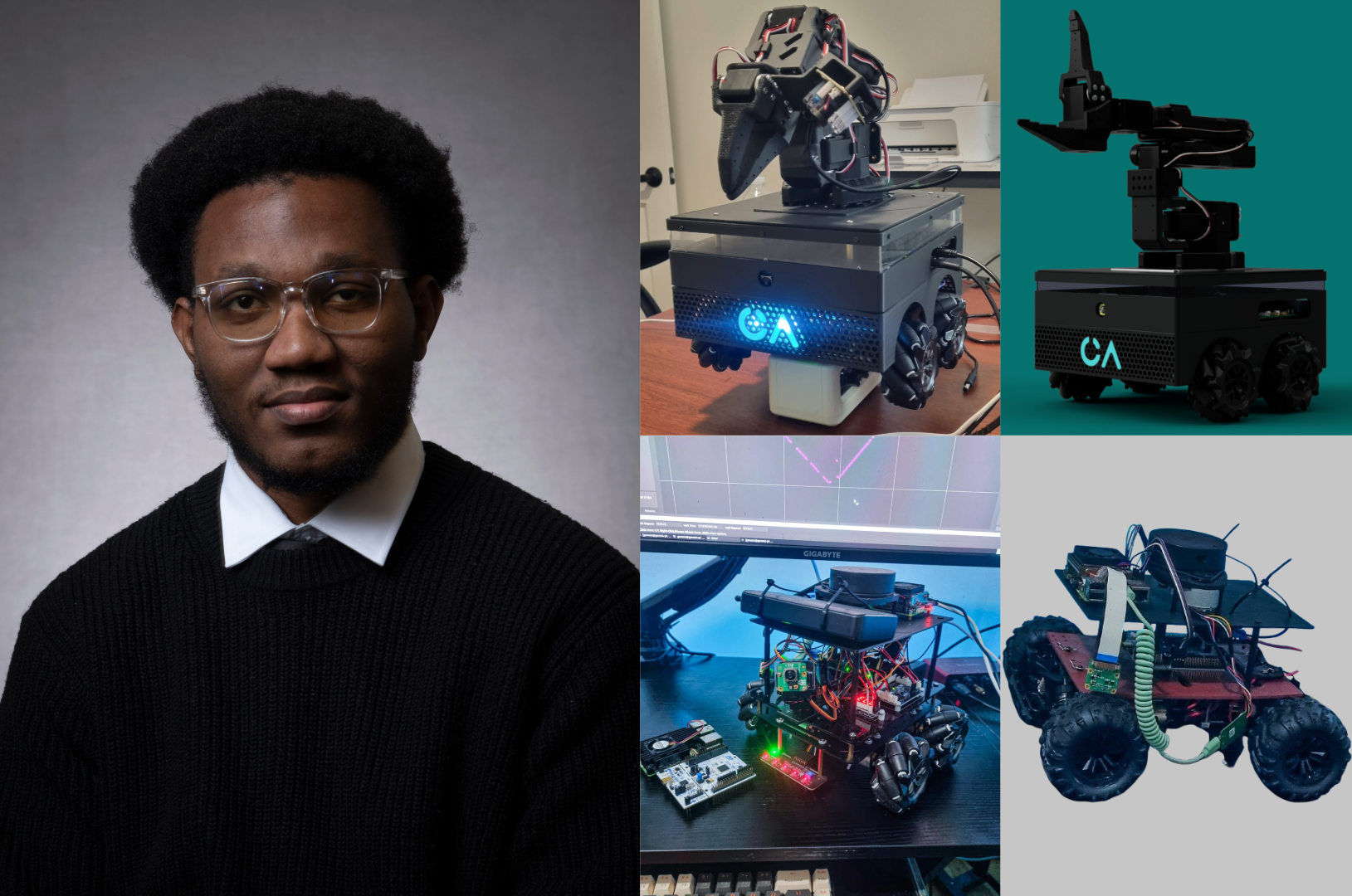
My own project follows the same pattern, just on a much much smaller scale. I built an autonomous mobile robot from scratch, a mecanum-wheeled base paired with a robotic arm, meant to navigate a room, find an object, and pick it up on its own. Almost no part or line of code from the first version is still in use today. Getting to its current, still unfinished state took constant redesigning, rebuilding, and adding to it throughout my studies, as each semester gave me a better understanding of structure, design limitations, and what could actually be improved. It now runs "reliably," unsupervised, and can do tasks I wouldn't have known how to begin implementing when I started.
What I take from that: just get started, fail quickly and often, and let trial and error, paired with informed direction, carry you through each step. Eventually, what was just an idea evolves into a piece of engineering.
Practical advice:
- Have clear goals, not to avoid frustration when you miss them, but to give yourself a constant reference point that guides your choices.
- Look for examples, references, papers, anything, and use the knowledge that's already out there. Reach out to people who've worked on similar problems; most engineers love talking about their work.
- Consistency and compounding effort are real. Working on something regularly, even briefly, adds up.
- Document, for your future self as much as for anyone else.
- You're the first user of your own project. Make it easy to test and modify. If it's physical, you'll open it up more times than you'd like, so design for that. If it's software, make testing effortless, since tests frame every improvement.