
Purdue Students Finish Third in AIAA Design/Build/Fly Competition
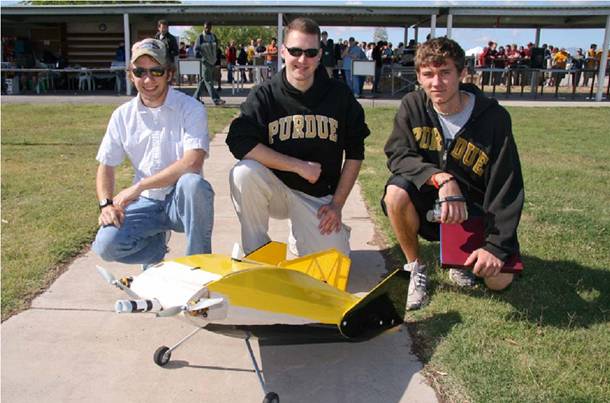
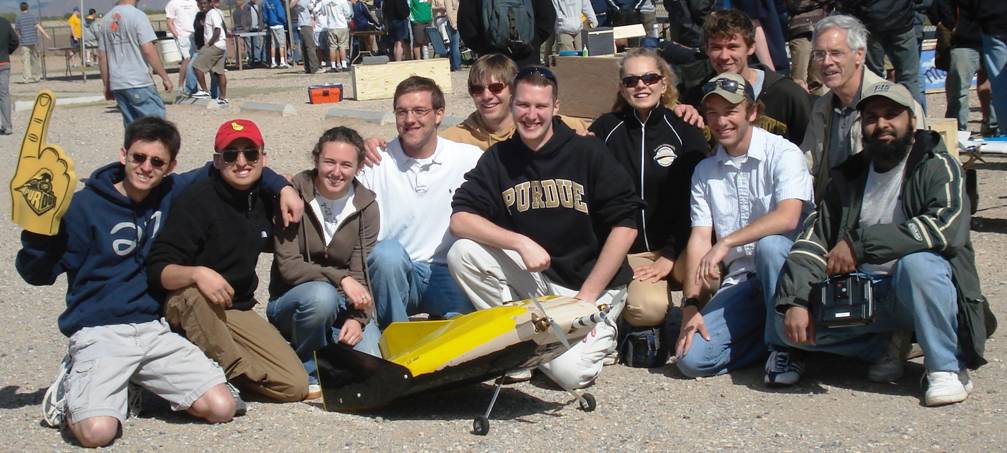
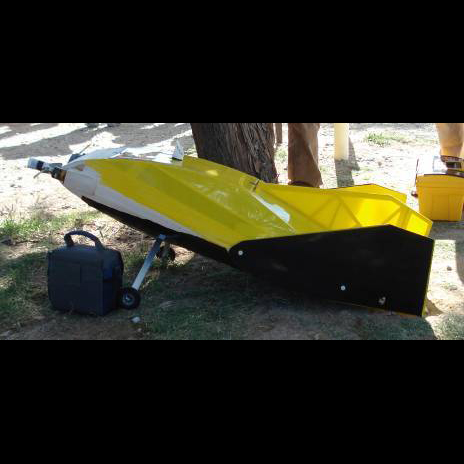
Since 2004, students from Purdue University have competed in the annual AIAA Design, Build, and Fly competition. During this, the 2006/2007 and eleventh year of the contest, the team of students representing Purdue placed 3rd out of 49 teams from universities around the world. This year's competition was hosted in Tucson, Arizona by Raytheon Missile Systems.
The American Institute of Aeronautics and Astronautics annually sponsors an undergraduate/graduate student competition in which students design, build and fly (DBF) an unmanned, electric powered, radio controlled aircraft that best meets the specified mission. This year, the team of students representing Purdue placed 3rd out of 49 teams from universities around the world
The overall team score is a combination of the design report, the rated aircraft cost, representing the complexity and manufacturing costs of the design and the flight scores. The design requirements and performance objective are changed every year to give students a real-world aircraft design experience and give them the opportunity to validate their analytic studies. The competition gives students hands on experience by realizing their design as and actual aircraft and demonstration it’s flight performance.
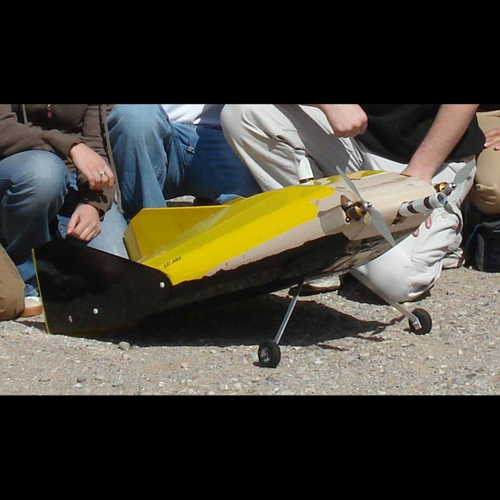
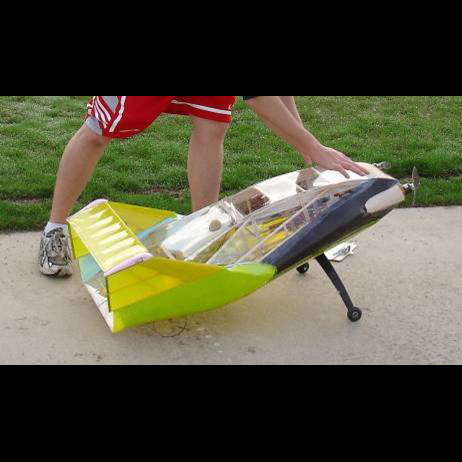
The 2007 Design/Build/Fly competition was held in Tucson Arizona over the weekend of 20-22 April. Teams from the United States, Israel, Scotland and Turkey attended the contest fly-off weekend. This years mission was to create an airplane that would fit in a 2 x 4 x 1.5 foot shipping container, be quickly deployable and fly a simulated Air Sampler System task and a simulated Surveillance System task. The air sampler mission was a speed mission, with a three pound payload and the Surveillance mission was a four minute loiter mission with a five pound payload. The overall scoring equation favored light-weight aircraft with short wingspans. Therefore, the Purdue team chose a lifting-body configuration with a wingspan of 22.75 inches, the shortest wingspan at the competition.

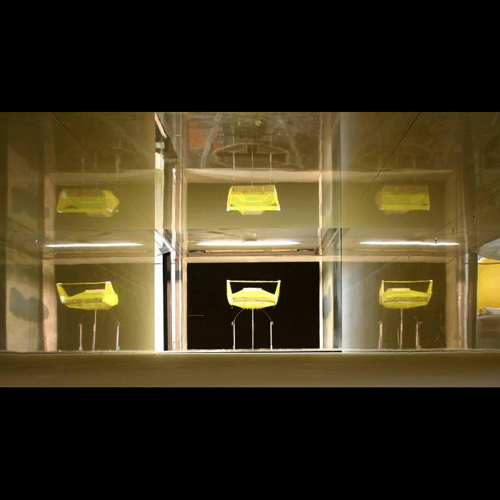
The ten member team of Purdue students began working in the fall semester under the direction of Professor John P. Sullivan. The design process began by analyzing the missions & rules and developing initial aircraft. The team investigated and built three initial designs; a lifting body, a faceted lifting body, and a box-wing. All three aircraft were extensively wind tunnel tested. The two lifting body designs were also flight tested multiple times. Advanced design methods, that included finite element analyses and computational flow dynamics, were used to optimize the lifting body configuration along with other design tools. Purdue's aircraft was the only lifting body to successfully fly at the competition. In addition to scoring third overall, the team's scored a 93/100 on the design report.
The ten member team consisted of five seniors, four juniors, and one sophomore. Each student brought a variety of different skills to the team. Several team members had extensive RC aircraft experience, but most of the team learned a great deal about transitioning from an aircraft design to an actual flying aircraft. The team's success would not have been possible without the hard work and dedication of each member. Students were expected to devote twelve hours per week on the project, but thirty, to even sixty, hour weeks were not uncommon. While the project was demanding at times, all team members would agree that the experience gained during the two semesters was invaluable.

The team hopes to continue its success and is looking for students who would be interested in joining the competition team for the 2007/2008 year. Interested students should contacted either Prof. Sullivan at sulivan@purdue.edu or Aaron Wypyszynski awypyszy@purdue.edu
Pritesh Mody
Aerodynamics/CFD
Matt Conrad
Flight Testing/Mission Analysis
Laura Markee
Aerodynamics/CFD
Kyle Noth
Performance Analysis
Mark Kannen
Construction/Editing
Aaron Wypyszynski
Team Leader/CAD/Constraint Analysis
Paulina Rabczak
Stability
Stefan Oechsner
CAD/Optimization Coding
Jonathan Huseman
Construction/Propulsion
Professor Sullivan
Liaquat Iqbal
Graduate Student Mentor
Jessica Schoenbauer (not pictured)
Structures