Professional Practice at Purdue University started in 1954 with the first co-op student from the School of Mechanical Engineering. Co-op programs quickly spread across the campus and other innovative programs were created, leading to Purdue’s reputation as one of the best universities for providing academically relevant professional experiences. That is proudly reflected in Purdue University continuously ranking among the top 10 institutions for internships and co-ops by U.S. News and World Report.
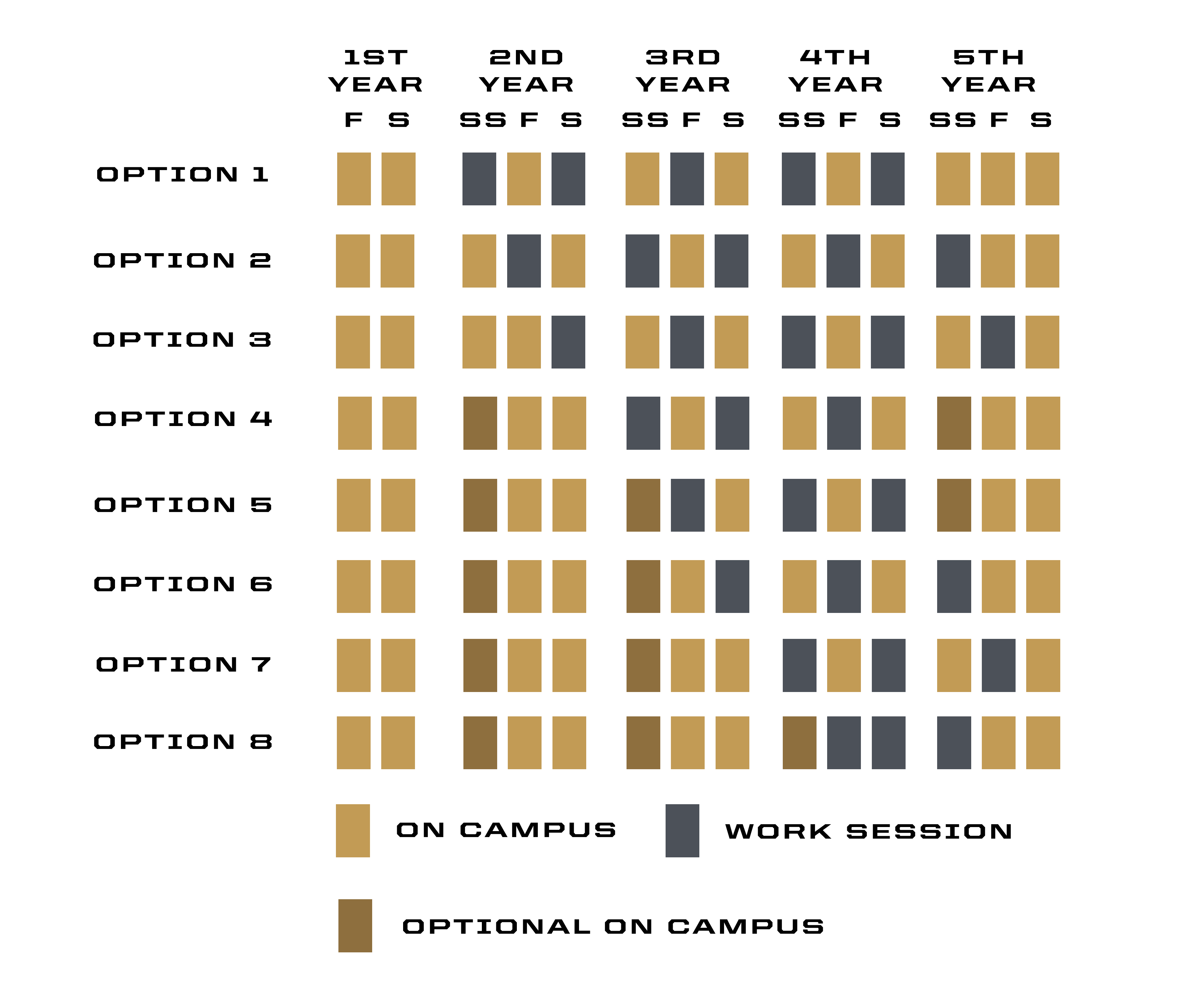
Cooperative Education (co-op) programs offer numerous benefits for students looking to gain real-world experience before they graduate. In addition to gaining anywhere from 12-22 months of practical experience prior to graduation, students can also earn a significant and competitive salary while on their co-op sessions. Unlike many other co-op programs around the nation, the co-op programs at Purdue typically involve students completing three-to-five work sessions with the same employer, which allows students to gain a long relationship with their employer, work on more projects and take on increasingly responsible roles in their work sessions. Students who complete a Purdue Co-op Program are distinguished from other recent graduates and are highly sought-out for jobs.
While participating in a co-op work rotation, students will enroll in a zero-credit course designed to maximize the student experience and aid in professional development and career readiness. The course verifies the co-op experience on transcripts and maintains the student's full-time enrollment status with the university. Full-time status helps with matters related to insurance, student loans, etc. The course is free.
Co-op students only pay fees when enrolled in credit-based courses. Due to taking on full-time work experiences during academic semesters, most co-op students take four-and-a-half or five years to graduate. However, students still will pay only for eight semesters of tuition. While time to the degree may be longer, nearly 100 percent of co-op students find full-time job placements before graduation and report higher starting salaries than peers who did not participate in co-op.
Industry Co-op
The Industry Co-op Certificate is awarded to students who have gained about one year of full-time work (at least one fall/spring semester) experience related to their academic field of study. Students will register for a cooperative education course during each academic term for which they are engaged in full-time work with an employer. Students are required to complete a minimum of three work terms. Students should have a progressive experience, with a minimum of two work terms occurring with the same employer. Students must complete all necessary requirements specific to their academic discipline.
Extensive Industry Co-op
The Extensive Industry Co-op Certificate is awarded to students who have gained 18 months or more of full-time work experience related to their academic field of study. Students will register for a cooperative education course during each academic term for which they are engaged in full-time work with an employer. Students are required to complete five work terms. Students should have a progressive experience, with multiple work terms occurring at the same employer. Students may change employers one time. Students must complete all necessary requirements specific to their academic discipline.
Learning While Working
The Learning While Working (LWW) certificate provides a formal option for work-integrated experiential learning, allowing students to gain one year of professional experience while still being able to graduate in four years. Students learn to balance academics with work while also learning how to participate in a hybrid working model with exposure to both in-person and remote working experiences.
Learn more about the requirements and possible work schedules for the LWW Certificate!
Sample Work Schedule