Suborbital Bioelectronics Patch showcases Purdue BME innovation for spaceflight
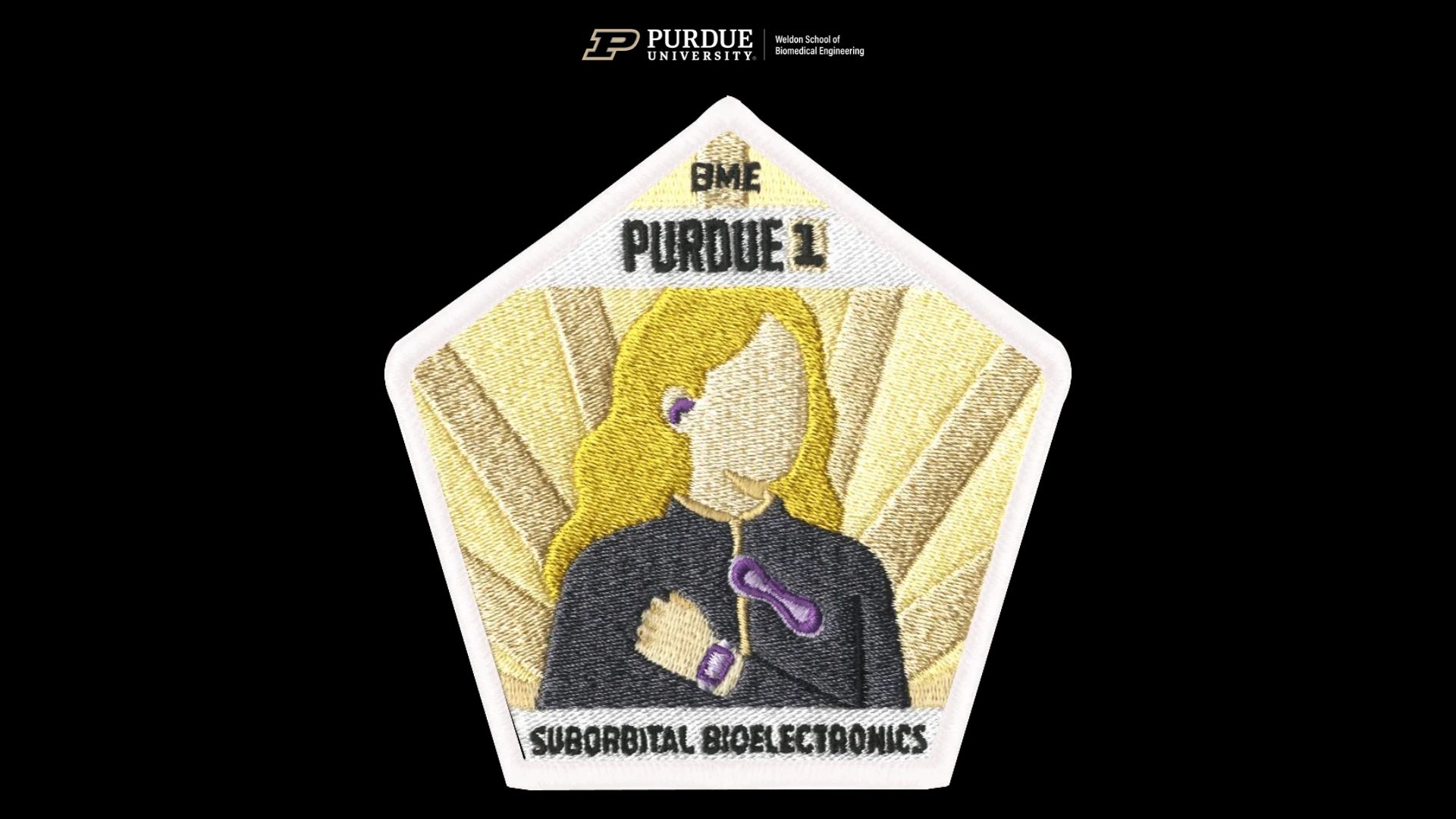
As Purdue prepares for the historic Purdue 1 mission to space in 2027, the Weldon School of Biomedical Engineering is helping tell the story through a mission patch designed to represent research that could transform human health during future space exploration.
The biomedical engineering patch highlights the Suborbital Bioelectronics Patch, a wearable technology project led by Purdue researchers. Designed to monitor physiological responses in real time, the technology explores how wearable bioelectronics can enable health monitoring in challenging environments, including spaceflight.
The patch design reflects the intersection of engineering, medicine and discovery that defines biomedical engineering at Purdue. As researchers continue developing innovative approaches to health monitoring, projects like the Suborbital Bioelectronics Patch demonstrate how biomedical engineers are addressing challenges that extend beyond Earth.
The Purdue 1 mission, scheduled to launch aboard a Virgin Galactic research flight, will carry multiple Purdue research investigations that showcase the university's leadership in space-related research and innovation. The biomedical engineering mission patch serves as a visual representation of the Weldon School's contribution to that effort and its commitment to advancing technologies that support human health in extreme environments.
While the BME patch highlights a biomedical engineering research payload, it is one of several mission patches created to represent the diverse research projects participating in Purdue 1.
Read more about all Purdue 1 mission patch designs and the stories behind the university's 2027 mission to space in the College of Engineering article, here.
Image Gallery