
Professional Practice Hall of Fame inductee: Tamara Markey
Tamara Markey is convinced.
Without participating in Purdue University’s Cooperative Education Program, she may not have been able to stay and earn a bachelor’s degree.
“I would have been a retention number,” Markey said.
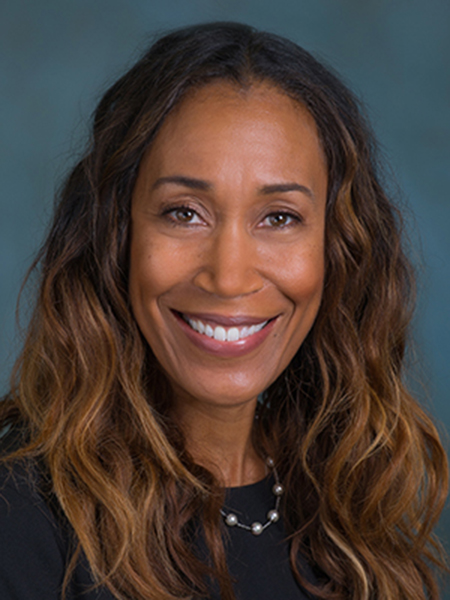
But armed with a Purdue degree in industrial engineering (BS ’94) and industry experience, Markey was primed to impact the corporate world.
And she did, almost immediately.
At Amoco Oil, Markey started in supply and logistics in natural gas liquids and before moving to BP Pipelines in business development doing joint venture work. She was interacting with individuals in the field that managed the pipeline, legal teams and business development teams from other major oil companies.
For 10 years, Markey carved a path in industry. Until she took a break to raise children. When she was ready to work again, she’d shifted to teaching (a true passion) and, ultimately, landed back at her alma mater in a staff position in the College of Engineering.
At every turn in the journey, Markey was intent on shaping future generations of professionals, including by highlighting the benefits of experiential education. For that, Markey will be inducted in the Professional Practice Hall of Fame on Oct. 23. She is one of eight alumni who will be honored at the event, hosted by the Office of Professional Practice, for demonstrating unparalleled excellence in their field to serve as shining ambassadors of the opportunities that experiential education grants.
“To be honored is an opportunity for me to really reflect and share how important co-opping was to my educational journey,” Markey said.
The journey began with a hallway conversation early on at Purdue. Markey was stopped by professor James Barany, IE’s co-op advisor. The message: You need to do a co-op. Barany explained it’d take longer to graduate, but the valuable work experience and salary would more than make up for that. He directed Markey to a career fair, and she got connected with Delco Remy, a division of General Motors.
Markey was assigned to the Anderson, Indiana, location. At the time, she was dating a recent Purdue Engineering graduate (now-husband Maurice) whose parents lived in the area. At Maurice’s parents’ insistence, Tamara switched for an Idaho address to their in-state one. The gesture was not a small one. At the time, Indiana residents had free tuition to Purdue. The tuition break in addition to GM’s $115-a-day salary allowed Markey to support herself, crucial considering loans alone weren’t covering needs.
“To make the money from co-opping and on top of that get in-state tuition, I had hit the jackpot,” said Markey, who used a GM discount to buy her first car, an electric blue Z-24 convertible.
“Co-opping was really a gift, a blessing.”
Markey started with Delco Remy, a division of GM that produced batteries and transmissions. After rotations in Anderson, Indiana, Markey had others near Detroit.
But she almost was done after the first.
Interested in manufacturing, the initial placement was ideal … until Markey was in that environment and quickly realized she had no desire to do manufacturing. So much so, after being on the plant floor for a rotation, Markey came back and told Barany she was ready to change her major to industrial management, which still had a technical aspect but was business focused.
“I don’t think engineering is cut out for me,” she told Barany. “I don’t like the work.”
Barany’s advice: Whatever you want to do, you can do with an engineering degree.
“Engineers can be managers,” he told her. “Managers cannot be engineers.”
So Markey stuck with IE, but instead of taking manufacturing elective courses, she pivoted to courses focused on human integrated systems and organizational behavior. With academics more aligned with her interests, Markey also settled in the rest of her co-op assignments.
During later rotations at Delco Remy, she worked on an electric vehicle battery heat shield. The work involved accelerated life testing and Failure Mode and Effects Analysis (FMEA). Essentially, she collected and analyzed performance and failure data to help evaluate the shield’s reliability. That work took place during a double co-op, which allowed Markey extended time on one project at the GM Technical Center in Warren, Michigan. She also traveled to GM’s proving grounds in Arizona for hot weather testing and to Milford, Michigan, for cold weather testing. Time at a newly built Saturn assembly plant in Spring Hill, Tennessee, put manufacturing in a new light for her.
The opportunities expanded Markey’s understanding of vehicle testing and automotive manufacturing, along with a sense of what a career in engineering could offer.
Which included some perks.
“As a 20-year-old, flying on the company jet, staying in hotels and experiencing new places and technologies was quite an adventure,” Markey said. “The experiences were motivating and gave me practical examples to draw upon in my courses. They helped me connect the coursework to a profession and a sense of purpose.”
All of the knowledge gained through co-op and how it influenced academic life campus are stories Markey shares now, in her current role as director of Engineering Student Success. Markey regularly tells students how beneficial the Co-op Program is — as much for learning what you don’t want to do as what you do.
“What if I’d graduated and gone into manufacturing versus a three-month experience I wasn’t so excited about? It also taught me when you don’t like something, communicate,” Markey said. “GM valued me as a co-op student and found something I would enjoy, and I did. I’m very fond of that experience and encourage students all the time that it may make graduating take longer … (but) you have your entire lifetime to work. I’m a huge fan and proponent of experiential learning. Not only industry, but I love that Purdue has experiential learning courses. It’s part of the educational journey.”