A Medical Copilot for Space
A Purdue biomedical engineering team is taking wearable health technology beyond Earth, exploring how real-time monitoring and personalized neuromodulation could one day help astronauts manage the physiological challenges of deep-space travel.
Purdue has long been known as the Cradle of Astronauts™, a legacy built by the 30 Boilermakers who have gone on to become astronauts. But Purdue’s connection to space extends far beyond the people who have traveled there.
Today, Boilermakers are helping develop the technologies that could make future missions safer, more capable and more sustainable — from the James Webb Space Telescope to efforts supporting humanity’s return to the moon and, eventually, missions to Mars.
For researchers in the Weldon School of Biomedical Engineering, that future begins with a fundamental question:
What happens to the human body when it leaves Earth — and how can we help it adapt?
The Purdue 1 suborbital mission offers a rare opportunity to begin answering that question.
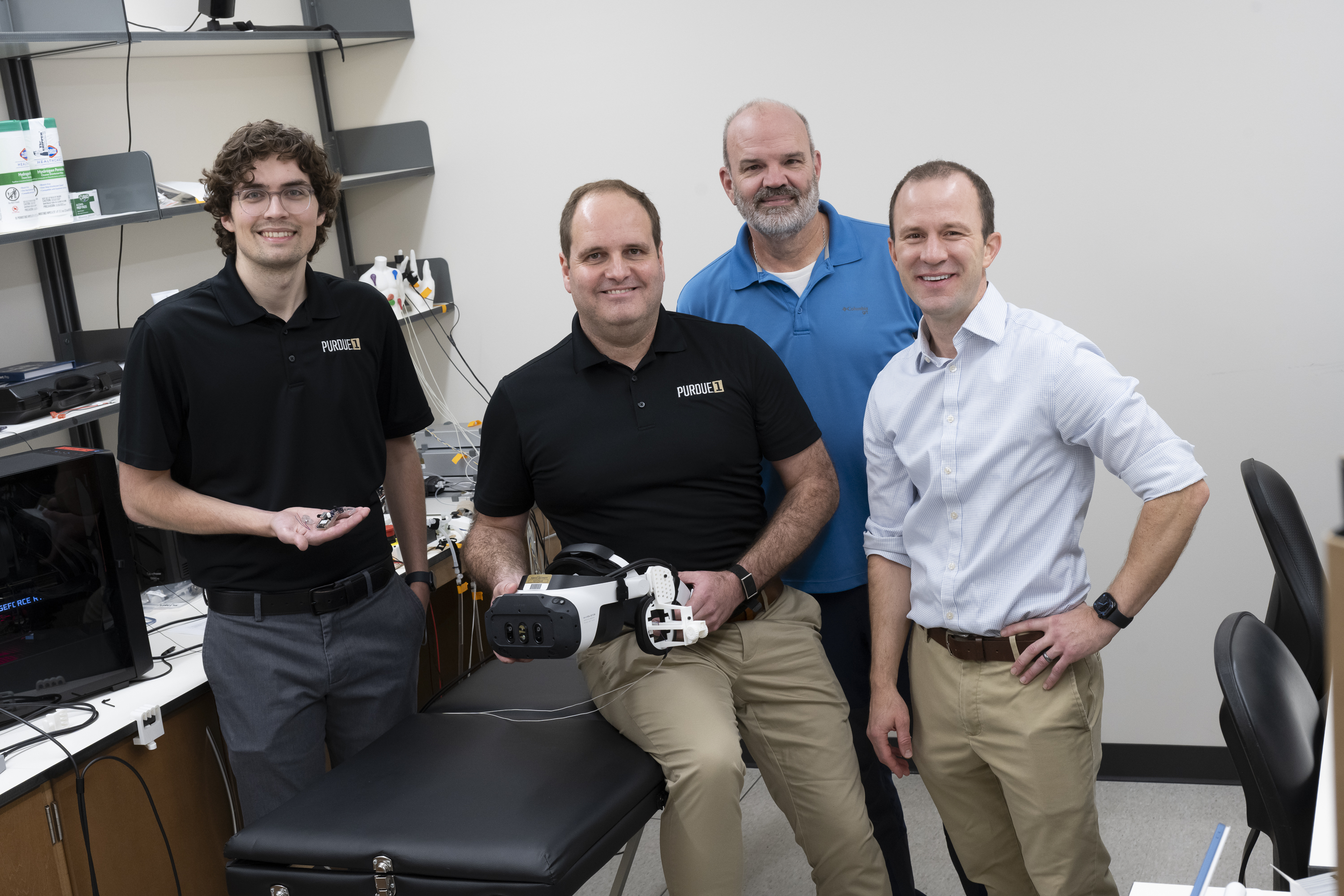
A Purdue biomedical engineering team led by Matthew Ward, with co-investigators Steve Steinhubl and Craig Goergen, will study how the human body responds to the extraordinary sequence of acceleration, microgravity and recovery experienced during spaceflight. The team will work with astronaut and flight test participant Beth Stubbings, who will wear medical-grade sensors before, during and after the flight.
The goal is more than collecting a snapshot of what happens to an astronaut in space. The researchers want to create a continuous picture — a physiological “movie” — that shows how the body changes across each phase of flight and how those changes compare with the individual’s own baseline.
That distinction could become increasingly important as humans travel farther from Earth.
“Space travel presents an unprecedented number of health challenges in a location where treatment options are limited,” Ward said. “Purdue 1 gives us a rare opportunity to move space medicine from occasional measurements toward personalized, autonomous health support.”
Listening to the Body
The human body has its own control system constantly working in the background.
The autonomic nervous system regulates functions such as heart rate, blood pressure, breathing, temperature and digestion. It helps the body respond to stress and return to a state of recovery.
On Earth, that system operates under familiar conditions. In space, it encounters an entirely different environment.
During a suborbital flight, the body experiences rapid changes in acceleration, followed by microgravity and then another transition during descent and recovery. Understanding how an individual responds to those changes could help researchers develop better ways to monitor astronaut health during increasingly ambitious missions.
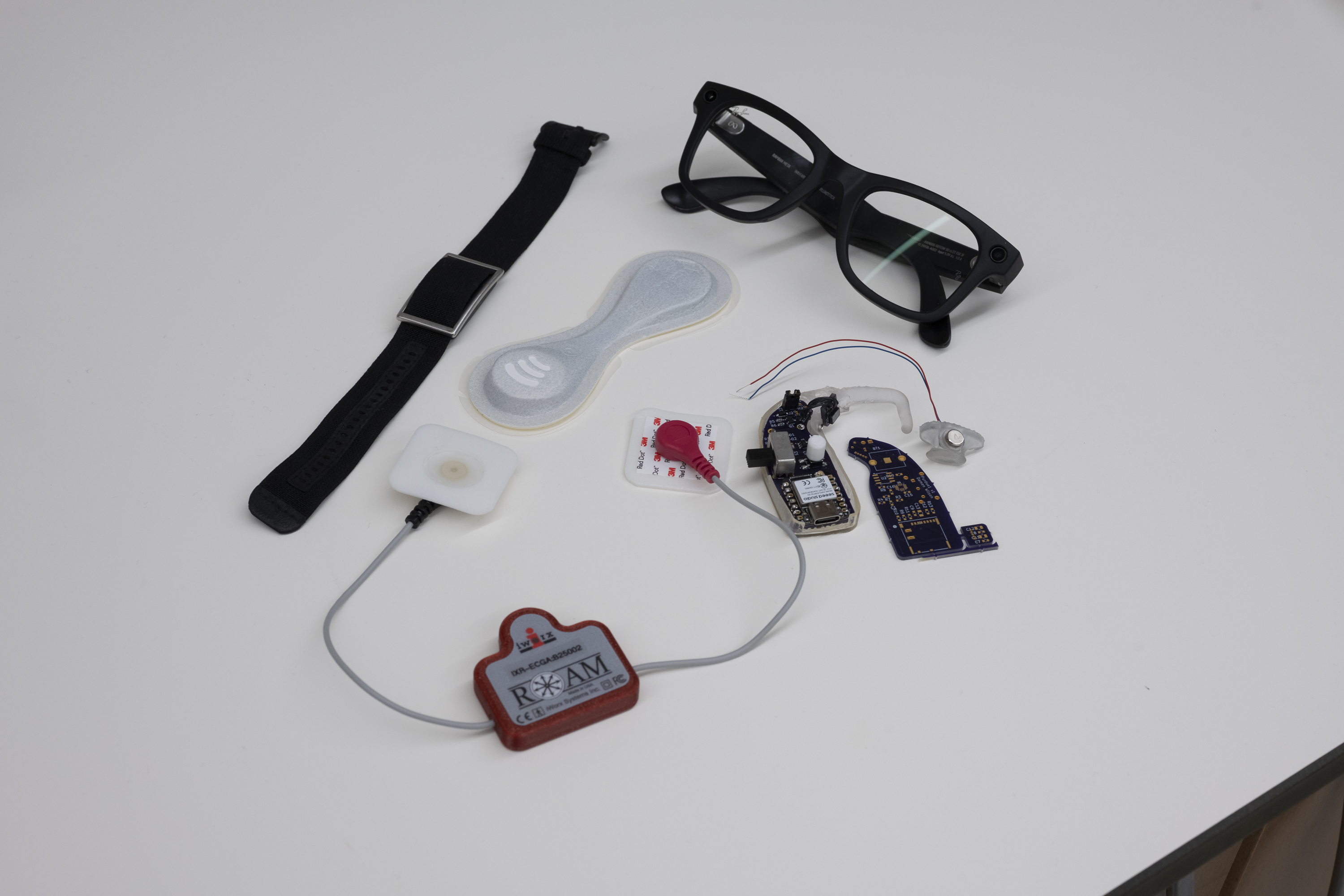
Stubbings will wear sensors on her chest and wrist that can track signals related to cardiac function, breathing, circulation, temperature, activity and stress.
The researchers will compare those measurements with Stubbings’ own preflight baseline.
That personalized approach is important because the future of space medicine may require health systems that recognize what is unusual for an individual astronaut, rather than relying solely on averages derived from a broader population.
The Purdue 1 experiment therefore asks a deceptively simple question:
What is the body doing?
But the team is also exploring a second question.
Can we safely do something about it?
From Measurement to Intervention
That is where TEMPO™ enters the story.
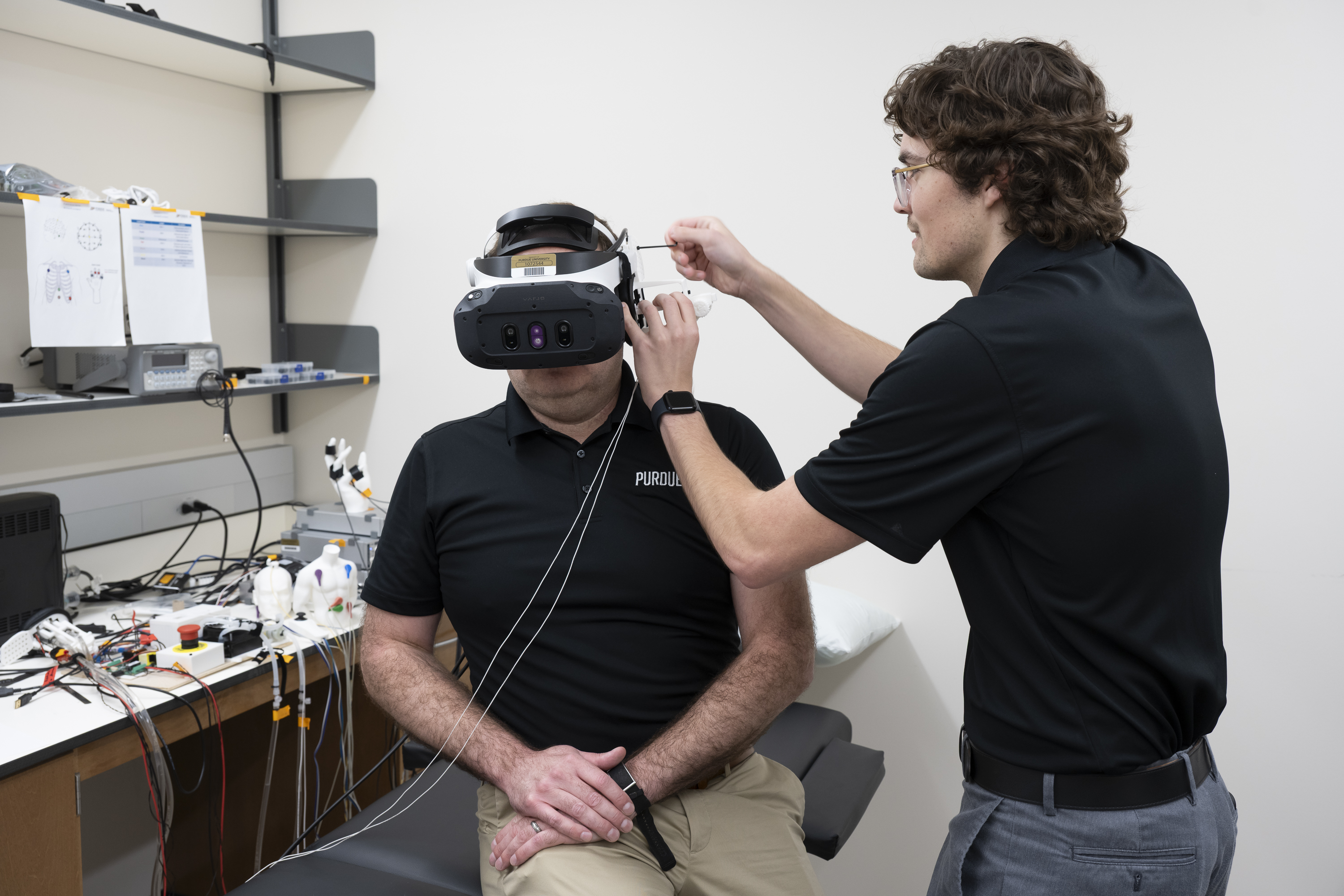
TEMPO is a Purdue-engineered experimental bioelectronic wearable designed to deliver gentle vibrotactile stimulation at the ear. The device will be evaluated to determine whether it can safely and comfortably produce a measurable autonomic response during flight.
The project is led by Ward, with Steinhubl and Goergen as co-investigators. Biomedical engineering doctoral student Damen Wilson, a member of the Ward BioCom Lab, serves as the student lead and designer of TEMPO.
The technology represents an important shift in the way researchers think about wearable health systems.
Traditional wearable devices primarily measure.
TEMPO introduces the possibility of measurement paired with intervention.
The sensors monitor physiological signals to understand what the body is doing. The experimental device explores whether a targeted, noninvasive stimulus can influence the body’s autonomic response in a predictable way.
For this initial mission, the goal is feasibility — determining whether the approach can be used safely and whether measurable physiological responses can be detected.
But the researchers see a much larger possibility beyond the first experiment.
Toward a Medical Copilot
Imagine a future spacecraft traveling millions of miles from Earth.
An astronaut begins showing signs of physiological strain. On Earth, a physician or medical team might evaluate the situation and determine what intervention is needed. During a mission to Mars, that kind of immediate support would not be possible.
A future autonomous system could instead recognize the change, determine an appropriate personalized response, deliver an intervention and then use the astronaut’s physiological signals to determine whether it worked.
That is the concept behind what the Purdue team describes as a “medical copilot.”
The system would combine sensing, intelligent decision-making and intervention into a closed loop:
sense → respond → measure → adjust.
Purdue 1 is not intended to demonstrate that complete system. Rather, it represents an early step toward understanding whether its individual pieces can work together.
The immediate research questions are deliberately focused: Can the team capture meaningful physiological data across the phases of flight? Can the wearable technology operate comfortably in that environment? Can TEMPO produce a measurable autonomic response? And can those responses be characterized well enough to inform future research?
Each answer can help build the next generation of technology.
Engineering for the Journey Ahead
The significance of the work extends beyond spaceflight.
The same challenges that make autonomous health support valuable in space — limited access to medical professionals, constrained resources and the need for personalized intervention — also exist in remote and underserved environments on Earth.
That makes space a powerful test bed for technologies that could ultimately have applications far closer to home.
For Weldon, the project also illustrates the distinctive role biomedical engineers can play at the intersection of human health and exploration.
The team is not simply designing a device. It is integrating physiology, bioelectronics, wearable sensing, data science and engineering to address a problem that becomes increasingly difficult the farther humans travel from Earth.
And a student is helping lead the way.
As the student designer of TEMPO, Wilson is gaining experience developing a technology for an environment in which reliability, safety and human factors take on extraordinary importance. His work demonstrates how Purdue students can move from the classroom and laboratory into research at the edge of what is technologically possible.
The Purdue 1 mission may be measured in minutes of flight, but its implications reach much farther.
Each physiological signal collected, each response measured and each engineering challenge encountered adds another piece to the larger question of how humans will care for themselves when Earth is no longer just a few hours away.
Purdue has helped send Boilermakers into space for generations.
Now, through biomedical engineering, Purdue is helping explore how we might keep them healthy there.
TEMPO™: A Wearable Designed to Listen — and Respond
TEMPO™ is an experimental Purdue-engineered bioelectronic wearable developed by the Ward BioCom Lab.
During Purdue 1, the device will deliver gentle vibrotactile stimulation at the ear while researchers monitor physiological signals from medical-grade wearable sensors.
The experiment will explore whether the stimulation can safely and comfortably produce a measurable autonomic response during flight.
The longer-term vision is a closed-loop health system that could:
1. Sense
Monitor an astronaut’s physiological state continuously.
2. Recognize
Identify changes that may indicate increasing physiological strain.
3. Respond
Deliver a personalized, noninvasive intervention.
4. Verify
Use physiological feedback to determine whether the intervention worked.
The Purdue 1 experiment is an early feasibility step toward that vision — exploring how sensing and intervention might eventually work together to support human health during missions far from Earth.
Image Gallery