Facilities

Description:

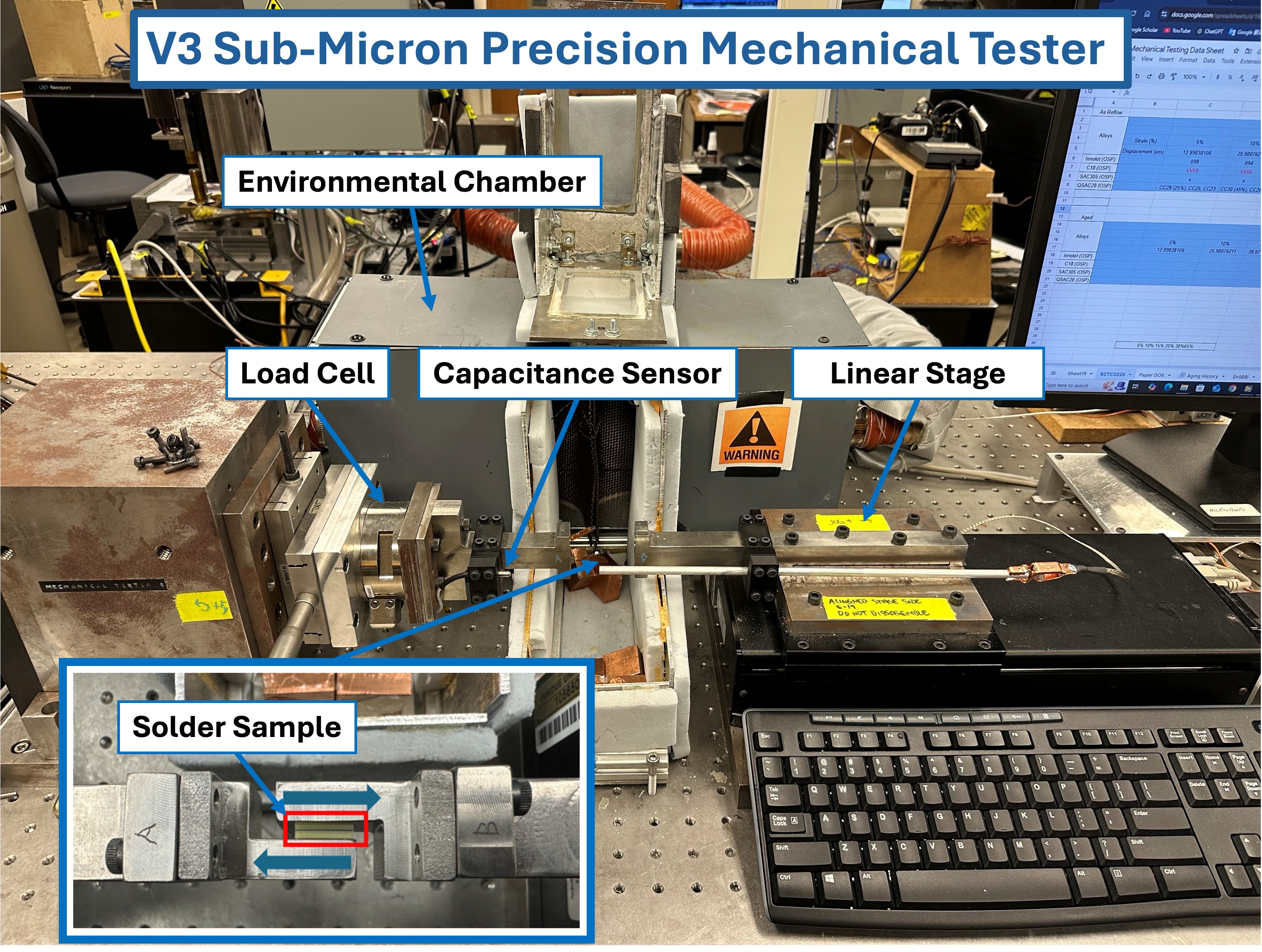
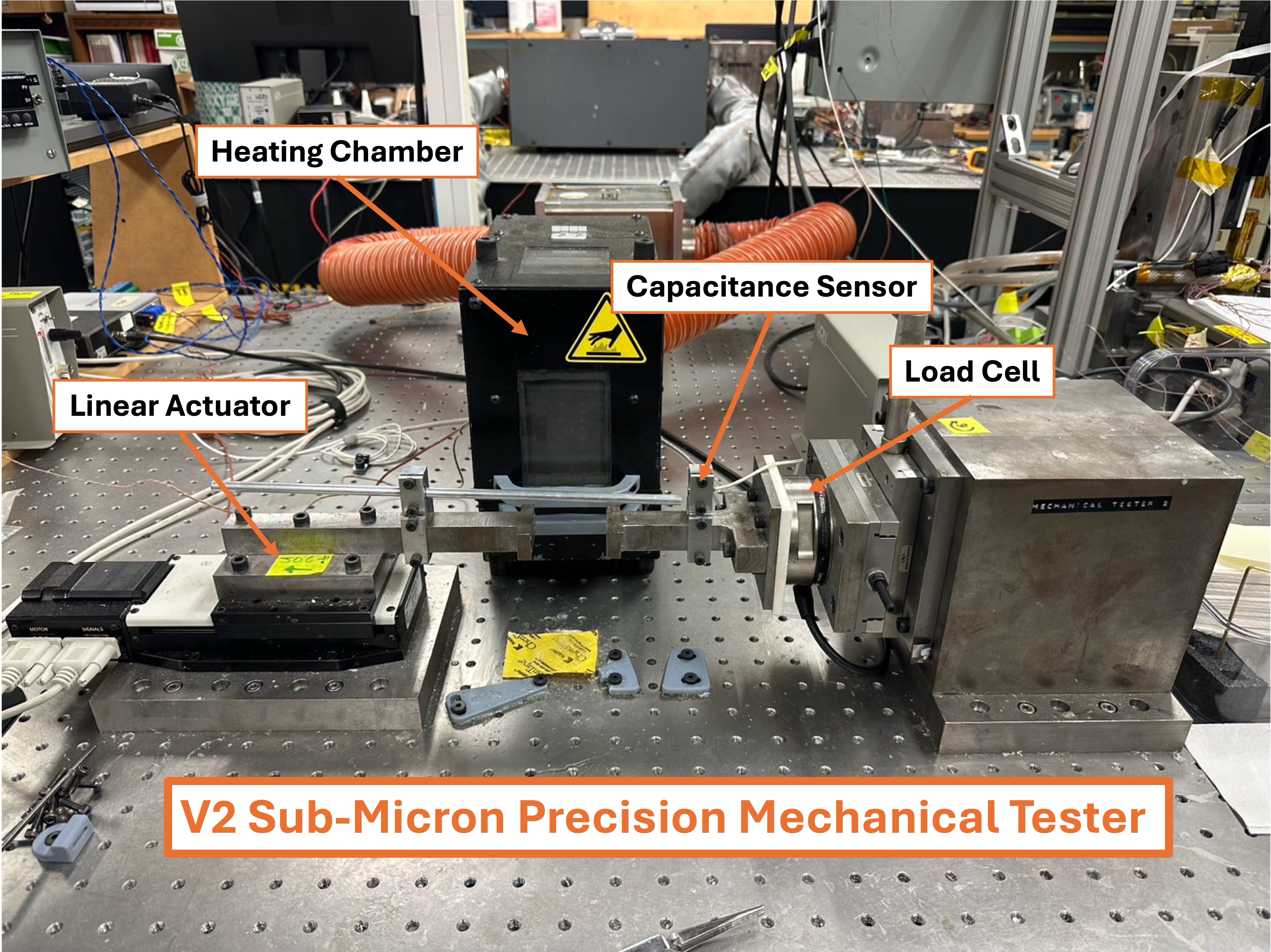
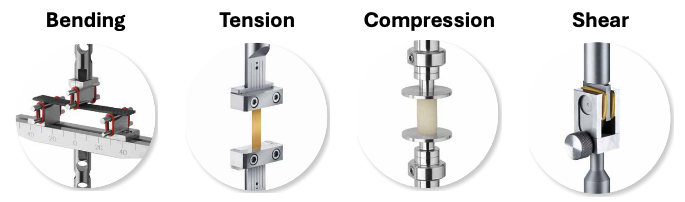
  • V2 and V3 Sub-Micro Mechanical Tester: Due to the complex microstructures of solder alloys and their strong strain-rate dependence, most commercial mechanical testers do not adequately provide (i) sub-micrometer displacement-control precision to avoid load-train compliance problems and (ii) zero-backlash cyclic loading capability. To address these limitations, all experiments in CoSMAP Lab were conducted using the custom-made micro-precision closed-loop mechanical tester. The platform employs closed-loop position control to achieve sub-micrometer precision in specimen displacement, which is critical for joint-scale solder characterization. A capacitance displacement sensor provides real-time feedback for displacement control, mitigating the influence of load-train compliance and enabling stable strain-rate control during monotonic and cyclic loading. Potential loading-axis misalignment is monitored through off-axis force measurements using a six-axis load cell, followed by micro-scale adjustments to minimize parasitic loading.
  • Nano Mechanical Tester: The primary motivation for developing the nano-precision mechanical tester was to improve displacement-control performance for smaller specimen geometries, where the required accuracy increases as solder joint dimensions shrink. The nano-precision mechanical tester also provides (i) sub-micrometer displacement-control precision and (ii) zero-backlash capability for cyclic loading. With its higher resolution, the nano-precision mechanical tester enables testing of microbump specimens with standoff heights as small as 10 µm.​

Specifications: 

Feature​

V3 Mirco Mechanical Tester ​

V2 Mirco Mechanical Tester ​

Nano Mechanical Tester ​

Joint-scale testing​

Captures pad/joint micro-structure effects​

Closed-loop control​

Necessary for joint-scale testing​

Reversed loading​

Zero backlash, cyclic loading capable​

Capacitance sensor​

500 µm range; 10 nm resolution​

250 µm range; 7 nm resolution​

40 µm range; 0.15 nm resolution​

6-axis load cell​

Z (shear direction): ±400 N (0.05 N res)X / Y: ±130 N (0.025 N res)​

Z (shear direction): ±200 N (0.025 N res)X / Y: ±65N (0.013 N res)​

Z (shear direction): 100N to -20N (0.02 N res)​

Thermal chamber​

-70°C to 250 °C​

30°C to 120 °C​

NA​

Software​

Customizable through LabVIEW®​


V3_SubMicron_Precision_Mechanical_Tester

Experimental Setup of the V3: Sub-Micro Mechanical Tester

V2_SubMicron_Precision_Mechanical_Tester

Experimental Setup of the V2: Sub-Micro Mechanical Tester

V1_Nano_Precision_Mechanical_Tester

Experimental Setup of the V1: Nano Mechanical Tester

.

Keyence VK-X3000 Optical Microscope

Advanced 3D optical profiler offering nm-to-mm resolution, and comprehensive surface analysis along with a compatible heat stage for temperature control

Triple-Scan Technology: Combines laser confocal, focus variation, and white light interferometry for nanometer-to-millimeter resolution on any material/shape High Accuracy & Speed: Up to 0.01 nm height resolution, 28,800× magnification, and wide-area scans (up to 50 × 50 mm) with 125 Hz surface scanning Comprehensive Analysis: 292 built-in tools for roughness, thickness, 3D surface/shape, CAD comparison, and automated batch analysis for efficiency

TA Instruments Apex-1 DMA

High-precision, testing system for versatile mechanical and fatigue analysis with environmental control.

Wide Dynamic Range: Performs monotonic, fatigue, and creep testing from ±1000 N dynamic load and 100 mm displacement, with frequencies up to 100 Hz for rapid, precise characterization Precision Motor & Control: Friction-free linear motor and High Accuracy Displacement Sensor (1 nm resolution) ensure accurate motion control and faithful capture of subtle material responses Automated Control: Intelligent tuning, sample protection, and real-time break detection minimize operator input and optimize test repeatability across complex loading conditions

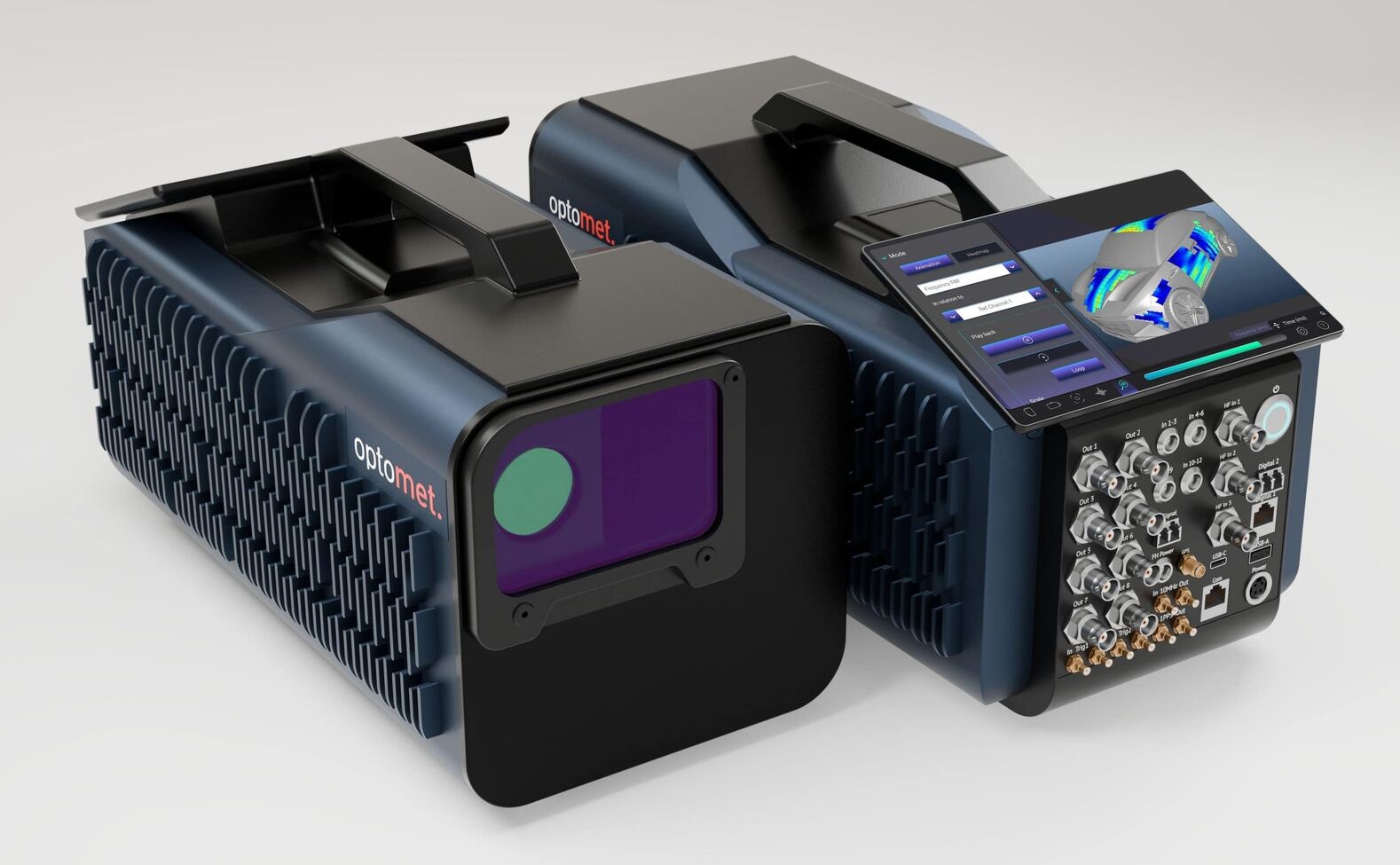
Optomet Smart Scan+3D Laser Vibrometer

High-fidelity 3D vibration measurement system covering quasi-static to 25 MHz with sub-pm to mm precision

Integrated Vibrometry and DAQ: Incorporates a digital laser Doppler vibrometer, signal generator, reference channel, and multi-channel data acquisition into a single synchronized system, ensuring high-fidelity, phase-coherent vibration measurements High-Speed, High-Resolution Sensing: Offers bandwidths up to 25 MHz, velocity ranges up to ±10 m/s, and displacement sensitivity down to sub-picometer levels, making it suitable for both MEMS-level and macro-scale structural analysis Modular Multi-Channel and 3D Capability: Supports flexible configurations and multi-fiber setups for simultaneous measurements on multiple test points or specimens

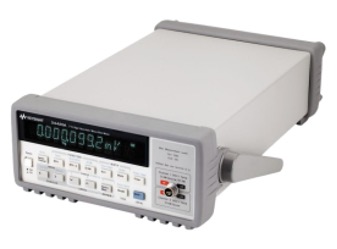
Qualitau Electromigration (EM) Tester

High-precision EM testing platform, multi-mode electrical stressing, and 𝜇s-scale degradation tracking

High-Fidelity Electromigration & Stress Migration Testing: Supports advanced EM and SM testing of both BEoL and FBEoL interconnects using high current density at elevated temperatures. Resistance shifts are monitored to detect voids, hillocks, or shorting caused by ion migration and thermal stress gradients Precision Thermal Control with Modular Oven Designs: Offers rear-load, front-load, and micro-oven options with temperature ranges up to 450 °C and cooling down to –45 °C. Micro ovens provide per-socket heating and sensing for uniform and accurate thermal profiling critical to interconnect reliability Configurable High-Current SMUs for Diverse Test Loads: System supports up to 4 high-current modules per rack with up to 240 DUTs. Modules span 0.3 mA to 8 A current range, with sub-microamp resolution and programmable voltage compliance up to 100 V, ideal for diverse EM stress protocols and silicon photonics devices

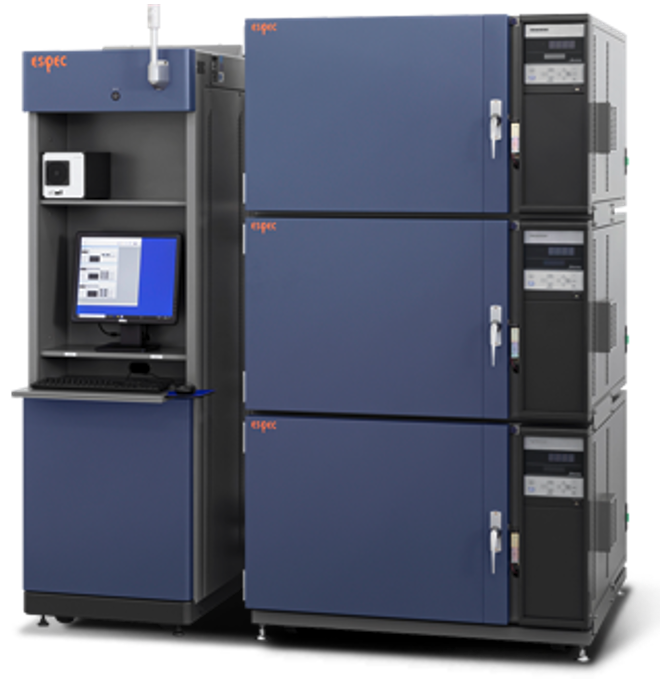
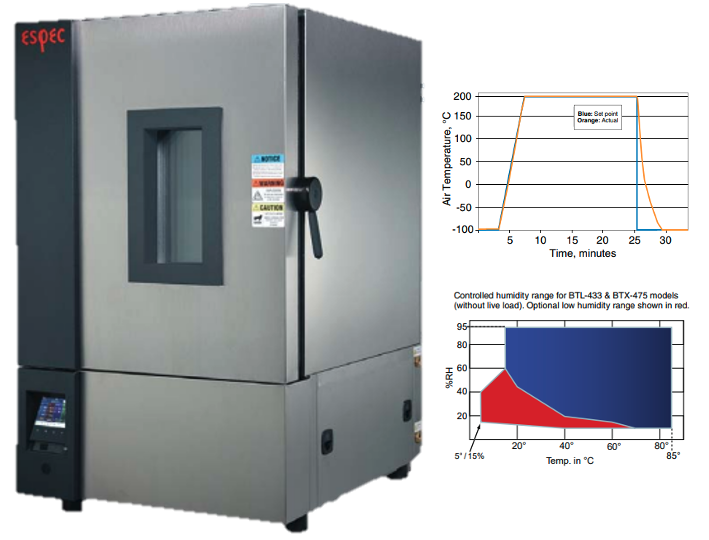
Espec BTX-475 Thermal Chamber

Thermal and humidity chamber for accelerated and repeatable reliability testing

Extended Testing Range: Operates from –70°C to +180°C with 2.5°C/min heating/cooling rate, enabling accelerated thermal cycling without LN2 Precision Humidity Control: Maintains 10–95% RH (optional down to 5% RH) using a wet-bulb system with integrated steam generator and dehumidification coil for stable and repeatable conditioning High-Uniformity Performance: Achieves ±0.5 °C temperature fluctuation and ±1.5 °C spatial gradient, ensuring consistent test conditions for thermal reliability and material durability evaluations

Shimadzu DUH-211S Microhardness Tester

High-precision tester for hardness and modulus testing, with sub-𝜇N resolution and versatile indentation modes.

Precision Micro-Indentation: Measures hardness, elastic modulus, and creep in compliance with ISO 14577-1 using continuous force-depth monitoring Ultra-Wide Load Range & Resolution: Electromagnetic loading from 0.1 mN to 1,961 mN with 0.196 µN resolution and 0.0001 µm depth accuracy enables testing from thin films to ceramics Advanced Testing Capability: Supports multiple indentation modes (load, unload, cyclic, step, depth-set) for detailed analysis of elastic-plastic behavior in micro- and nanostructures

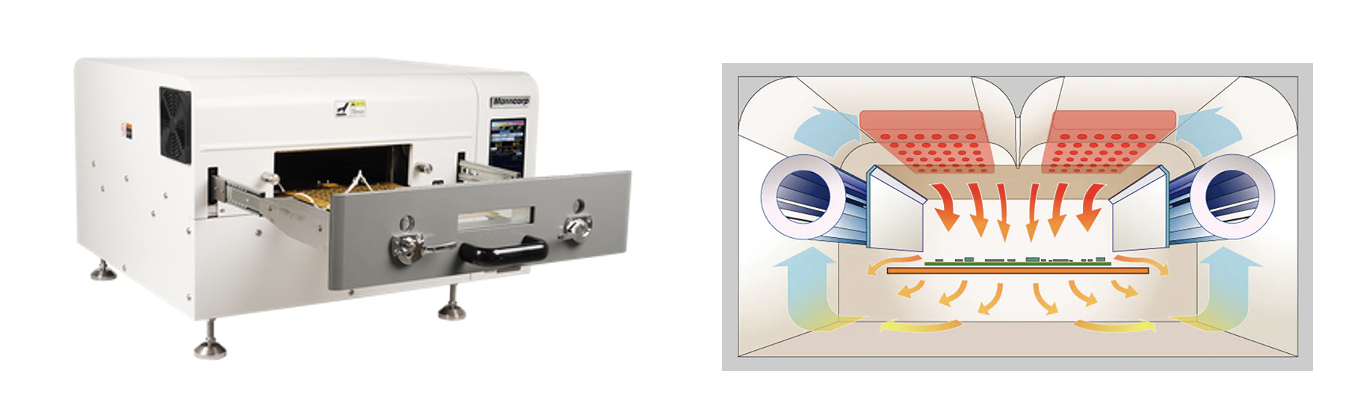
Manncorp Reflow Oven

Compact nitrogen-capable reflow oven for precise thermal cycling and solder joint reliability testing on PCBs.

Precise Thermal Profiling: Supports temperature-controlled reflow cycles with programmable profiles and real-time thermal monitoring, critical for replicating soldering conditions and assessing PCB/component thermal fatigue. Nitrogen-Assisted Atmosphere: Operates with adjustable nitrogen flow and pressure to reduce oxidation during reflow, enabling evaluation of solder joint integrity under inert processing conditions Compact PCB Handling: Accommodates moderate PCB sizes with a benchtop footprint and offers effective thermal coverage for experimental assembly reliability studies in a lab environment.