Where 3D-printed Metal Meets the Sea: The Journey of Brigos Malleum
A collaboration between Purdue mechanical engineers and French artist Véronique Hennebelle transforms a 3D-printed stainless steel part into a living experiment in art, corrosion and the sea.
A metal part created through additive manufacturing is taking an unusual journey through the coastal waters of France, where art, engineering and nature are shaping its evolving story.
The work, named Brigos Malleum, is a 420 stainless steel part manufactured using laser directed energy deposition, a metal additive manufacturing process that builds objects layer by layer with powders. Purdue mechanical engineering professor Michael Sealy provided the part to French artist Véronique Hennebelle, who is immersing it in seawater, exposing it to the coastal environment and documenting how its surface changes over time.
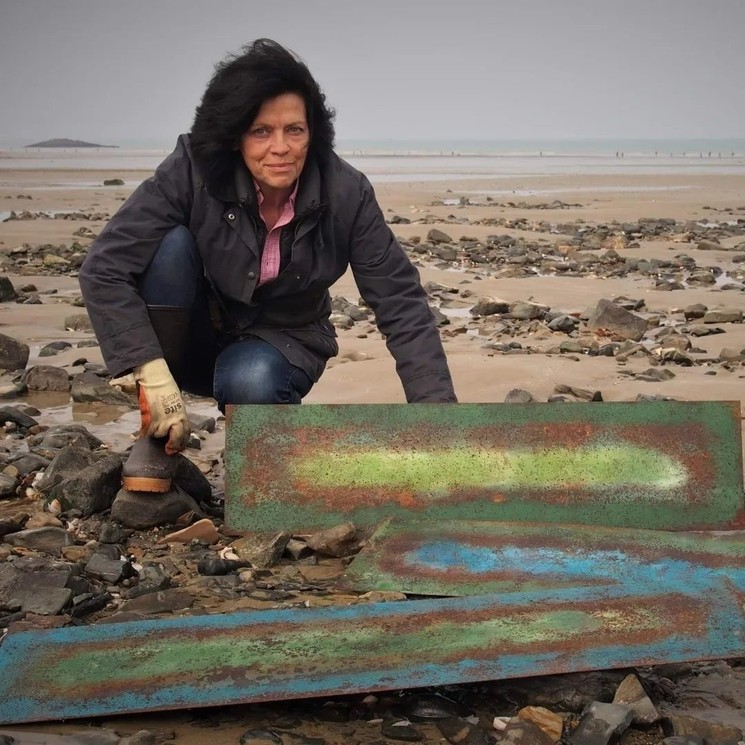
Hennebelle is known for creating works from rusted steel and allowing rain, air, sunlight, seawater and time to participate in the artistic process. She describes her work as a conversation among nature, metal and the artist, with corrosion creating unpredictable textures and colors that reflect transformation, memory and resilience.
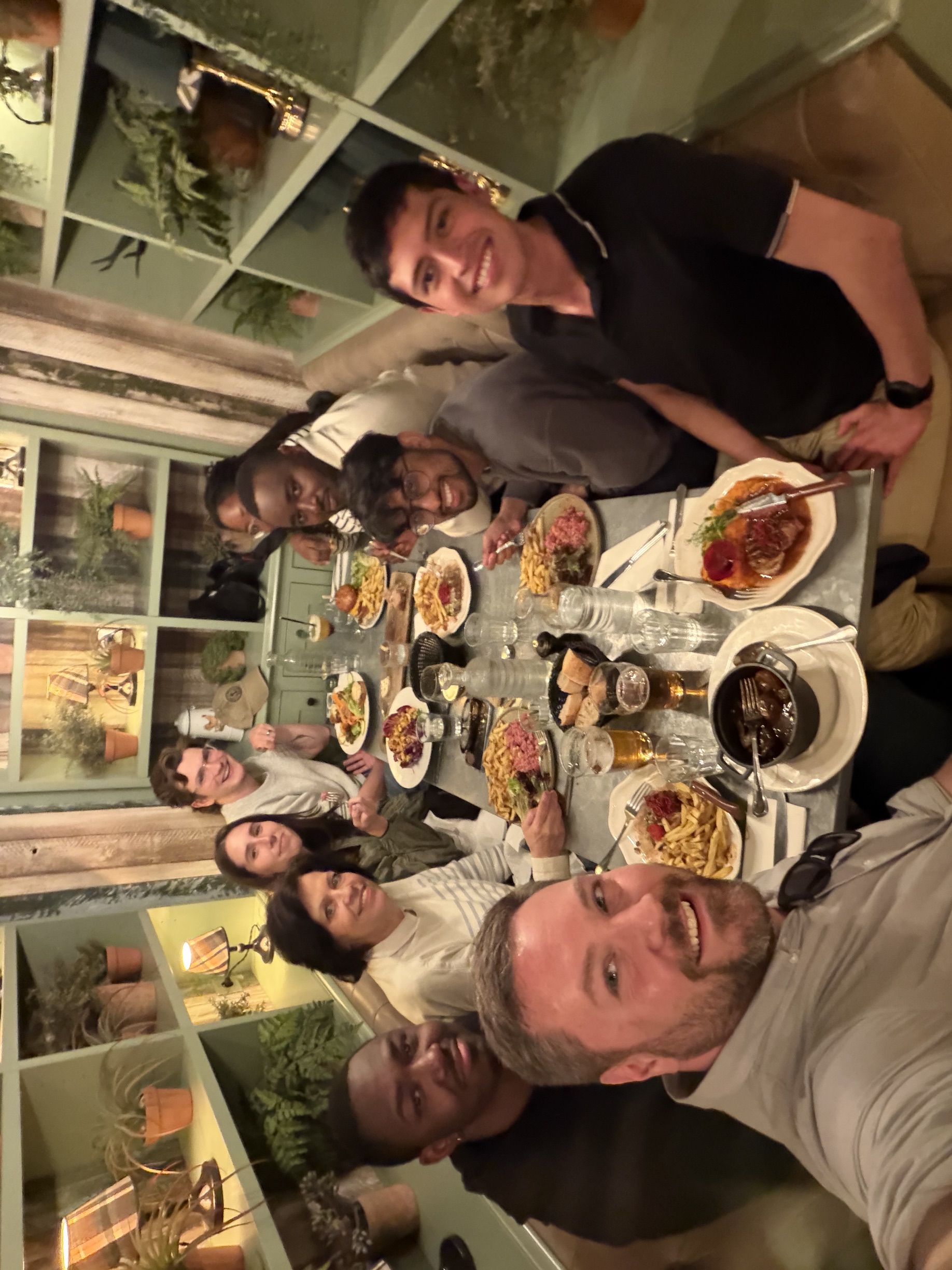
The collaboration grew from Purdue’s Additive Manufacturing and Art in France Maymester program, a three-credit study abroad experience connecting engineering, manufacturing, art and design. The program takes students from Paris to Normandy to study how artists used light to create visual meaning and how engineers now use layers to create functional meaning.
Students study additive manufacturing processes and design before creating their own 3D-printed lithophanes based on works of art. The program also includes travel throughout Paris and Normandy, with stops in Rouen, Giverny, Honfleur and other locations that connect French art, culture and engineering.
A name linking two worlds
Hennebelle initially named the piece Brigos, drawing from a Celtic word associated with strength. The name also echoes Saint-Brieuc, the Breton bay and coastal region where the piece would spend much of its time immersed in seawater.
Sealy wondered whether the name could also recognize the object’s connection to Purdue and its “Boiler Up, Hammer Down” tradition. Purdue mechanical engineering doctoral student Albert James “AJ” Patrick suggested adding malleum, the Latin word for hammer.
Together, Brigos Malleum can be understood as “the hammer of strength.” The name combines Celtic and Latin influences while linking Brittany’s maritime culture with Purdue’s hammer tradition.
“What I especially love is the way it combines scientific research with an artistic dimension,” Hennebelle wrote as the project began. “Usually, we think of science as something that inspires or supports art, but here, it almost feels like the reverse: art helping science.”
A stubborn resistance to rust
Since May, Hennebelle has immersed Brigos Malleum in coastal waters, left it outdoors in wind, rain and sunlight, and carried it on walks along the shore. During one outing, she placed the heavy part inside a scallop-fishing net tied around her waist so it could experience the sea more directly.
Despite repeated exposure, the steel part has developed surprisingly little visible corrosion.
That resistance is of particular interest to Sealy and Patrick, whose research examines corrosion in additively manufactured metals. Sealy studies the performance of additively manufactured materials through projects supported by the National Science Foundation and the U.S. Department of Defense. Patrick’s doctoral research focuses on corrosion behavior in additively manufactured metals.
“Brigos Malleum creates a rare opportunity for an artist, engineers and the marine environment to participate in the same experiment,” Sealy said. “The artwork is not simply representing the science. Véronique’s process, including where she takes the piece, how she exposes it and how she records its journey, is helping create the scientific questions.”
For Hennebelle, science has now joined what she calls a conversation among the sea, the metal and herself.
“The possibility of unexpected results emerging from this dialogue between art, materials and marine science is truly fascinating,” she wrote. “Science is joining the discussion as a fourth voice, although the sea may still have the final word.”
Brigos Malleum will continue its coastal immersions and outdoor exposure ahead of a planned exhibition opening on Oct. 20 in Paris, France. Whether it eventually develops the richly oxidized surface Hennebelle anticipated—or continues resisting corrosion—its journey demonstrates how art can open new ways of observing materials and asking scientific questions.
Learn more about Purdue’s GEARE program, the Additive Manufacturing and Art in France experience, and Hennebelle’s artistic practice.
Photos by Véronique Hennebelle.
Image Gallery