Research
Hybrid additive manufacturing
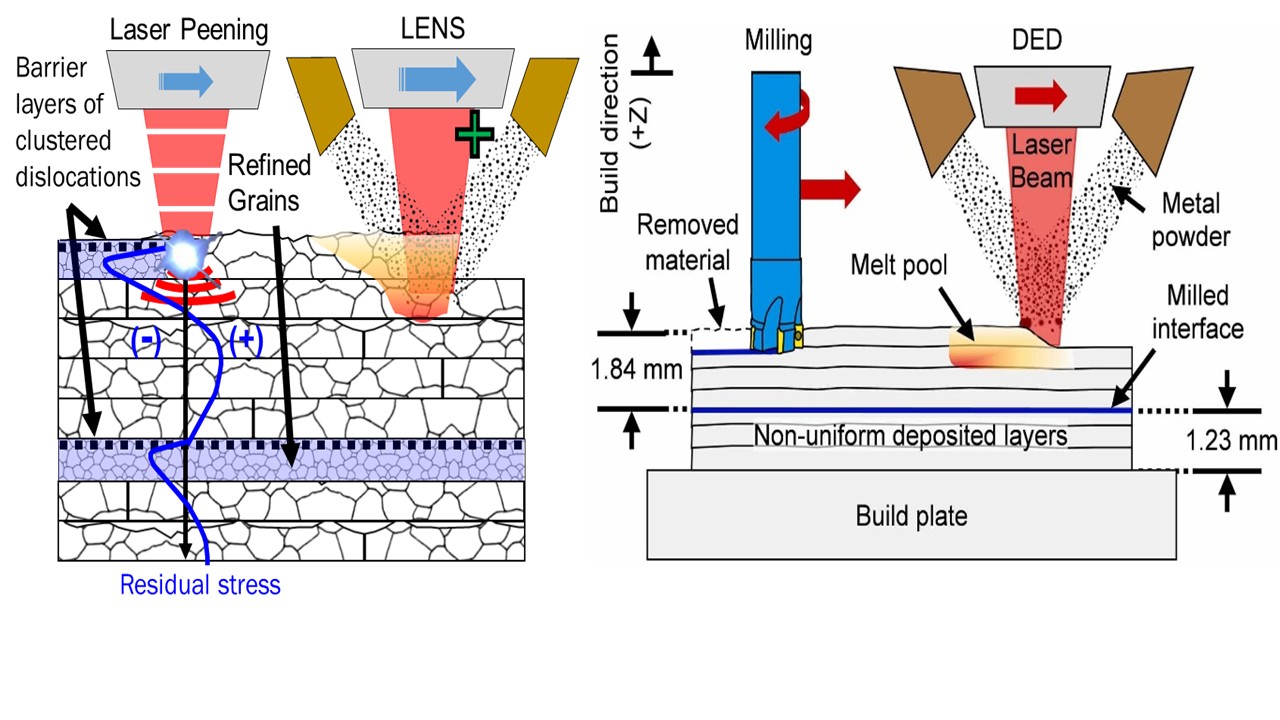
We develop hybrid AM methods that integrate metal printing with interlayer and post-process treatments (e.g., shot peening, ultrasonic peening, laser shock peening, and machining) to tailor surface/glocal integrity and improve part performance (fatigue, corrosion, wear, residual stress, and microstructure). A key focus is linking process signatures (energy, force, temperature, acoustic/ultrasonic signals) to property evolution for faster design and qualification.
Cultured meat manufacturing
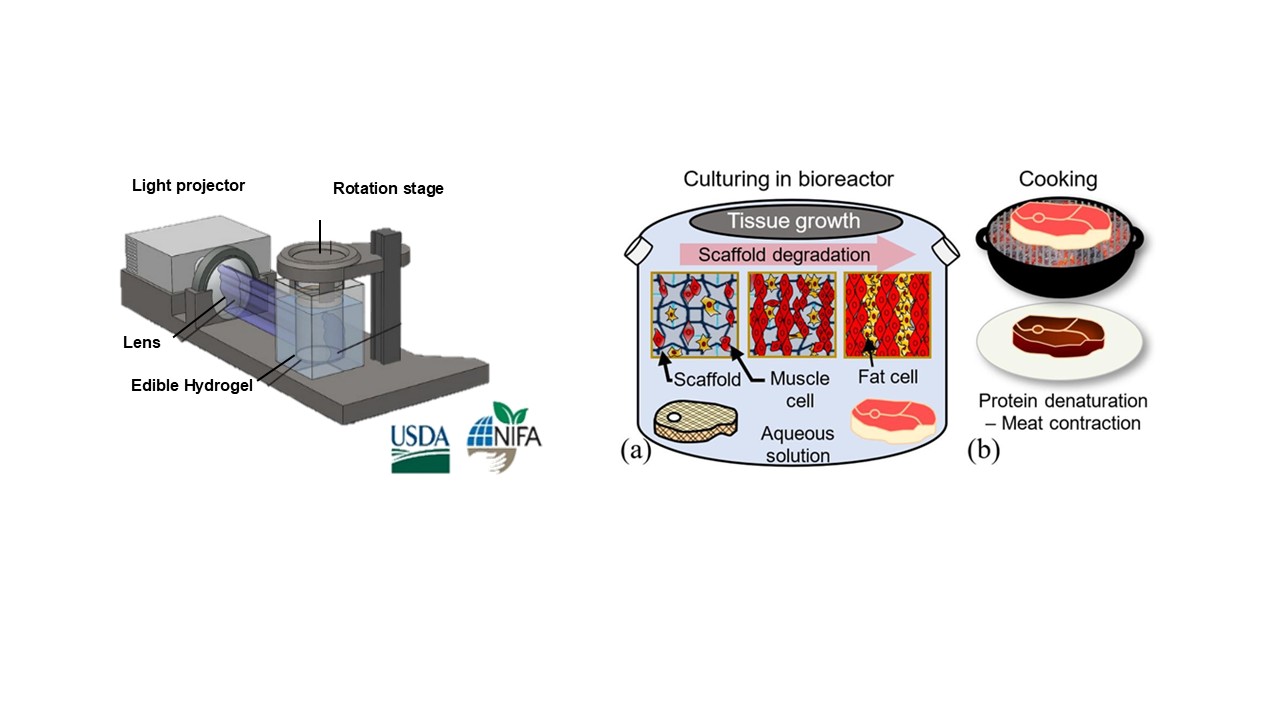
We create scalable biomanufacturing processes for cell-cultured meat by using photolithography-based fabrication (e.g., computed axial lithography and rotational UV approaches) to rapidly form edible, cell-laden scaffolds with controlled architecture and texture. The goal is to improve speed, cost, and texture formation beyond conventional cell-ag manufacturing routes.
Magnesium additive manufacturing
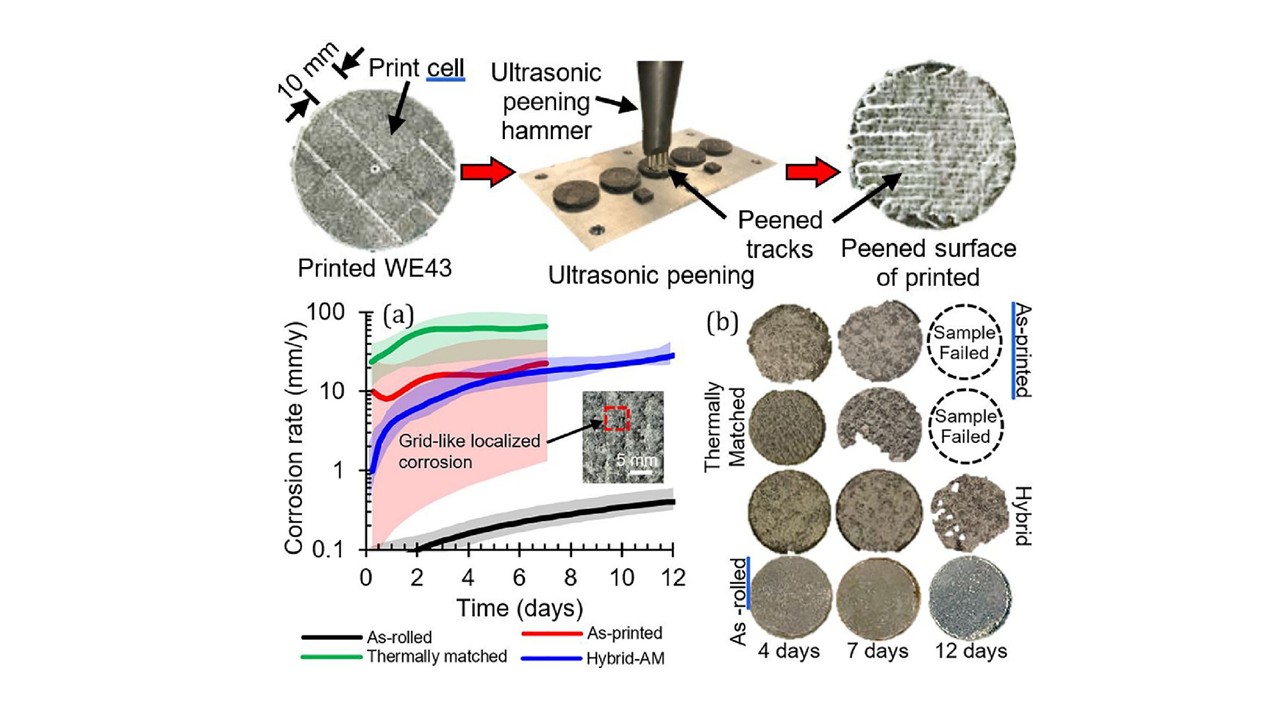
We advance additive and hybrid processing of biodegradable magnesium alloys for medical devices by combining AM with interlayer treatments that improve corrosion resistance while maintaining mechanical integrity. This work targets the core barrier to Mg implant adoption: achieving predictable degradation without sacrificing strength and ductility.
In-space manufacturing and sustainability
We explore manufacturing concepts for lunar/Martian environments, including approaches such as directed energy deposition of regolith-derived feedstocks and process designs that support durability under extreme conditions. The broader goal is sustainable manufacturing for remote and resource-constrained settings, linking materials, processing, and performance.
Powders characterization for additive manufacturing
We study AM powder systems through practical workflows that include powder handling and characterization, pre/post-build analysis, and operational best practices. This supports repeatable processing and enables stronger connections between feedstock quality, process conditions, and final part behavior.
Energy consumption in manufacturing
We investigate energy consumption as both a sustainability metric and a sensing signal, especially in machining and hybrid manufacturing. A central theme is using power/energy signatures during milling to infer material state and reduce the measurement gap in qualifying heterogeneous AM builds.