
Purdue–IIT Bombay Team Wins Indo-U.S. Award to Advance Patient-Specific Magnesium Implants
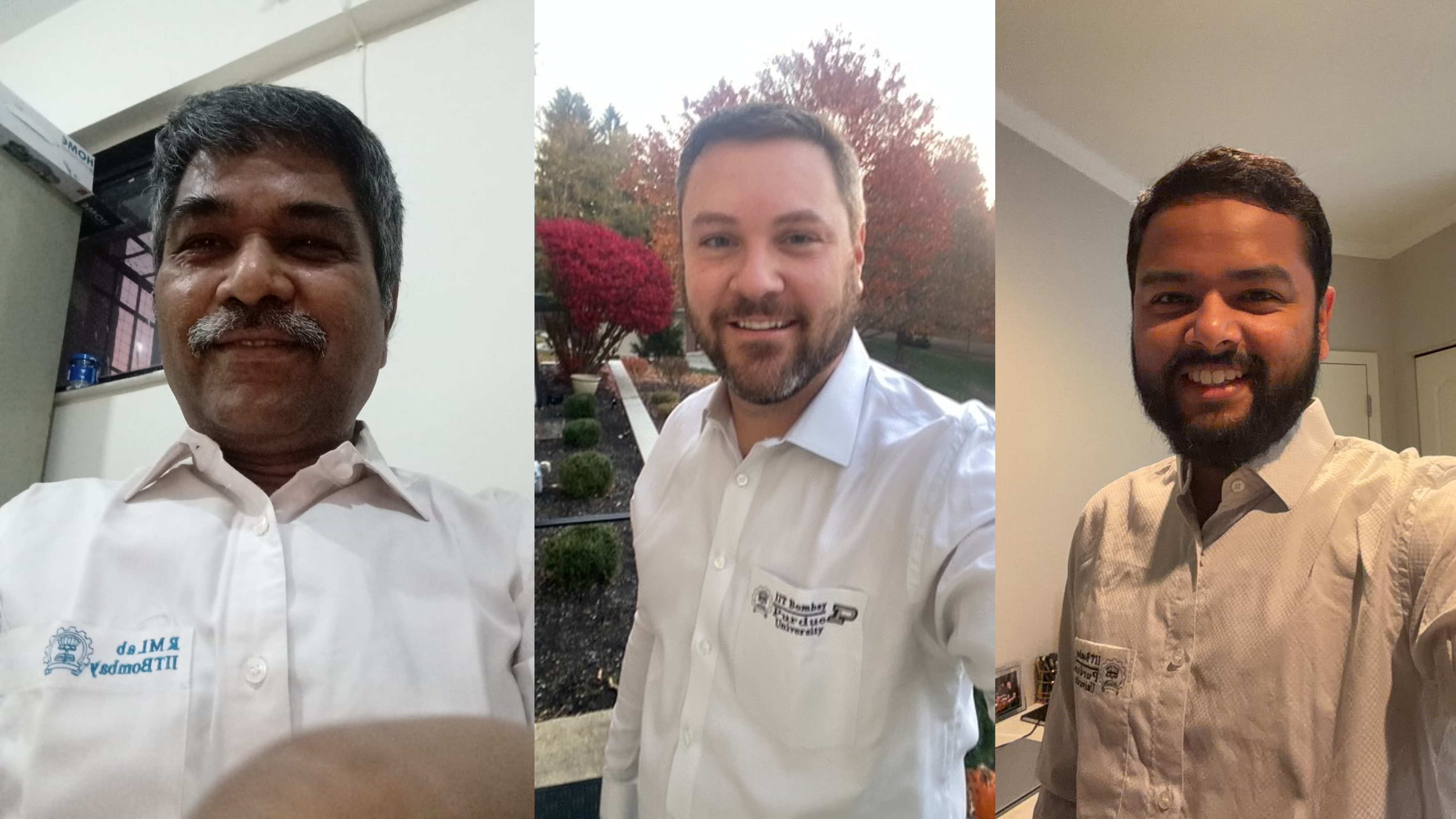
A collaborative team from Purdue University and the Indian Institute of Technology Bombay (IIT Bombay) has received support from the United States–India Science & Technology Endowment Fund (USISTEF) for a new project aimed at transforming how orthopedic fracture fixation devices are designed and manufactured.
The project, “Neural Network-Based Hybrid Additive Manufacturing Technology for Patient-Specific Orthopaedic Fracture Fixation Devices,” is co-led by Michael Sealy, Associate Professor in Purdue University’s School of Mechanical Engineering, and K.P. Karunakaran, Professor of Mechanical Engineering and Director of the Rapid Manufacturing Laboratory at IIT Bombay. Rakesh Karunakaran, whose research has contributed to the teams’ longstanding work in hybrid additive manufacturing, is also part of the collaborative effort. The 24-month project was selected through USISTEF’s call on Transforming Technology Solutions through Advanced Materials and Critical Minerals and seeks nearly 1 crore ($105k) in support.
The team will develop a new generation of patient-specific, bioresorbable magnesium fracture fixation plates. Unlike conventional permanent metallic implants, magnesium devices can gradually dissolve as bone heals. The challenge is controlling that degradation while an implant is carrying physiological loads. The project will combine hybrid additive manufacturing, interlayer mechanical treatments, and physics-informed neural networks to tailor the mechanical properties and corrosion behavior of magnesium within individual regions of an implant. The goal is to eventually manufacture fixation devices whose dissolution rates can be matched to the healing requirements of individual patients.
The collaboration brings together complementary technologies developed in the United States and India. Sealy’s team at the Purdue Additive Research and Technology (PART) Lab will lead development of physics-informed neural-network tools for predicting how interlayer treatments affect corrosion, residual stress, and implant performance. Karunakaran’s team will use IIT Bombay’s Multi-Station Multi-Axis Hybrid Layered Manufacturing (MSMA-HLM) platform, a wire-based system capable of additive deposition, machining, pneumatic hammering, induction heating, and other in-process treatments. Rakesh Karunakaran has previously worked with both investigators on hybrid manufacturing research, including studies of the MSMA-HLM platform and the use of interlayer processing to improve the ductility of additively manufactured Ti-6Al-4V.
The award builds on a Purdue–IIT Bombay research relationship that began in 2016, when Karunakaran visited Sealy at the University of Nebraska-Lincoln. Sealy subsequently visited the Rapid Manufacturing Laboratory at IIT Bombay in 2017, and the partnership expanded through joint research, visiting scholars, and continued work on hybrid additive manufacturing. The new project is intended to move the magnesium implant technology from laboratory proof-of-concept toward prototype validation in a simulated biological environment, with longer-term plans for commercialization and clinical translation.
The team was recognized at the USISTEF Award Ceremony for Transforming Technology Solutions through Advanced Materials and Critical Minerals on May 15, 2026, in New Delhi. The event, organized by the Indo-U.S. Science and Technology Forum together with the U.S. Embassy in New Delhi and India’s Department of Science and Technology, celebrated technologies with the potential for both societal impact and stronger scientific collaboration between the United States and India.