Additive Manufacturing Course Turns Undergraduates into Researchers
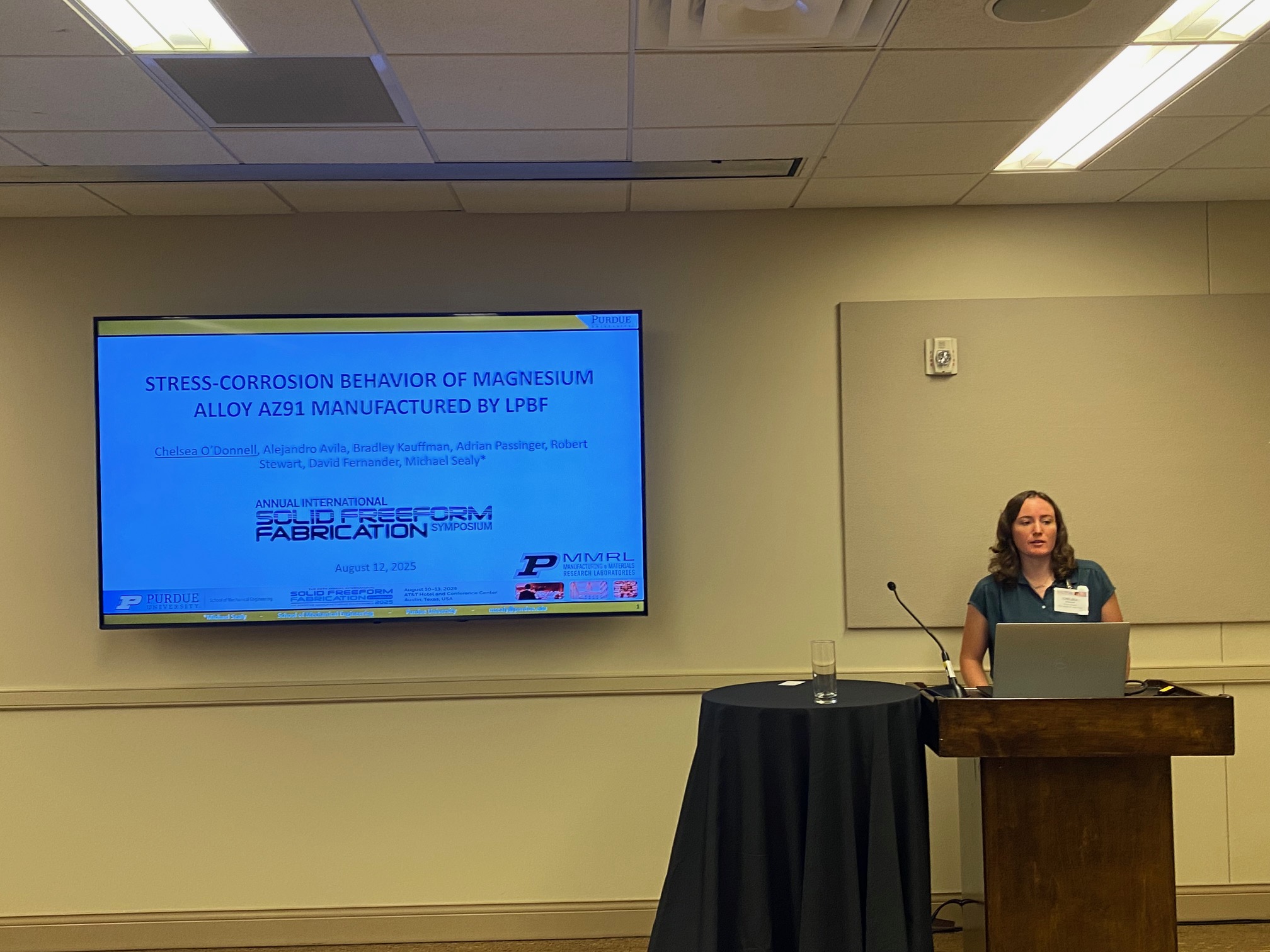
Research-centered course supported by NSF CAREER activities asks students to trade flashy prints for open-ended questions, experiments and scientific discovery
For students learning additive manufacturing, the temptation is obvious: fire up a 3D printer and make something interesting to put on a desk.
Michael Sealy takes a different approach.
In his undergraduate additive manufacturing course, students spend much of the semester printing decidedly less glamorous objects—cubes, cylinders, tensile specimens and other simple geometries. That simplicity is intentional.
“The goal isn’t to see who can print the coolest object,” Sealy said. “Sometimes the best research sample is a boring cube. I want students thinking about why something happens, how they can test it, and whether the evidence actually supports what they thought would happen.”
The approach is part of Sealy’s effort to incorporate research-based education into additive manufacturing instruction through activities associated with his National Science Foundation CAREER award. Rather than making a traditional design project the centerpiece of the course, students work in teams on open-ended research questions related to active additive manufacturing research.
It represents a fundamental shift in what a project means.
Engineering students receive considerable experience solving design problems, where the objective is generally to develop a product or system that satisfies a defined set of requirements. Research presents a different intellectual challenge: the answer is not known in advance - and sometimes the original hypothesis turns out to be wrong.
“That uncertainty is important,” Sealy said. “Students need opportunities where there isn’t an answer in the back of the book. They have to decide what question is worth asking, determine what evidence they need, deal with experiments that don’t behave the way they expected and then make a defensible conclusion.”
That emphasis reflects Sealy’s broader teaching philosophy, which identifies communication and critical thinking as particularly important skills for engineering students and uses interactive learning to develop them.
Turning a classroom into a research group
The course combines conventional instruction in additive manufacturing with what Sealy calls “Deep Dive” days devoted to research.
During those sessions, students receive equipment training, learn experimental design and research methods, plan experiments, collect and analyze data, give progress presentations or learn how scientific publications are prepared.
Undergraduate teams are paired with graduate students who serve as research mentors. The arrangement creates two levels of learning: undergraduates experience research firsthand, while graduate students develop skills in mentoring, advising and technical leadership.
The structure remains central to the current additive manufacturing course. The Spring 2025 syllabus describes the class as project-driven, with hands-on work spanning experimentation, process optimization and materials testing. One explicit course objective is for students to be able to “identify, explain, and prioritize” important research challenges in additive manufacturing.
Teams progress through proposal, fabrication and testing milestones before preparing a final report formatted like a refereed scientific publication. Students are expected to evaluate their working hypothesis and draw conclusions from their experimental results.
That final requirement is deliberate. Students are not merely reporting that they successfully made a part. They must explain what they learned.
Why simple shapes can produce difficult questions
The research-first philosophy can lead to projects that look deceptively simple from the outside.
A cylinder might be printed only to determine how processing conditions change fatigue life. A rectangular specimen might be machined to determine whether cutting power can reveal variations in material properties. Another sample might be interrogated with ultrasound to determine whether wave propagation can detect residual stress or changes in microstructure.
The Spring 2025 course includes projects examining fatigue of powder-bed-fusion 316 stainless steel under different orientations and laser powers, residual stress in hybrid-manufactured stainless steel, ultrasonic measurements of hybrid materials, corrosion of additively manufactured WE43 magnesium and the mechanical behavior of peened polymer components.
Those topics closely intersect with Sealy’s research in convergent and hybrid additive manufacturing, where his group studies relationships among manufacturing processes, material characteristics and part performance.
For students, that means the classroom problem can be connected to a question that researchers are actively trying to answer.
“It changes the motivation,” Sealy said. “They aren’t repeating an experiment where I already know what the graph should look like. There is a possibility that they find something we didn’t know before.”
Research—with all the frustration that comes with it
That authenticity also means students encounter one of the defining characteristics of research: uncertainty.
Earlier course surveys illustrate both sides of the experience. When students were asked about their favorite part of the course, responses repeatedly identified research, hands-on work, data analysis and working with graduate students. One student wrote that “the research aspect of the class was my favorite part,” while another highlighted working with graduate peers on new discoveries.
But when asked about their least favorite part, students cited uncertainty in the research objective, experimental setbacks, and the difficulty of completing experiments within a semester.
For Sealy, those frustrations are not necessarily failures of the educational model. They are part of learning what research actually is.
“There is value in struggling with a problem when the path forward isn’t obvious,” he said. “That is where students have to exercise judgment and critical thinking rather than simply follow instructions.”
The student outcomes also suggest that the experience changes how students view both additive manufacturing and research. In a 2020 survey of 13 students, average self-reported confidence in additive manufacturing knowledge increased from 2.08 before the course to 4.00 afterward on the survey’s five-level scale.
Students also reported greater interest in advanced study in manufacturing: the average response increased from 2.77 before the course to 3.46 afterward.
Each cohort produced results that extended beyond the classroom. Since 2017, more than 75 undergraduate students have produced 10+ peer-reviewed conference papers and 10 conference posters/presentations at the Solid Freeform Fabrication (SFF) Symposium and SME North American Manufacturing Research Conference (NAMRC). Further, these activities helped establish more than 5 student exchanges with France.
Those outcomes reinforce the larger purpose of the course.
“The measure of success isn’t that every student decides to get a Ph.D.,” Sealy said. “It’s that they leave knowing what research actually feels like. Then, when they decide whether graduate school or a research career is right for them, they are making an informed decision from experience.”
And if that discovery begins with a plain metal cylinder instead of a 3D-printed trinket, that is precisely the point.
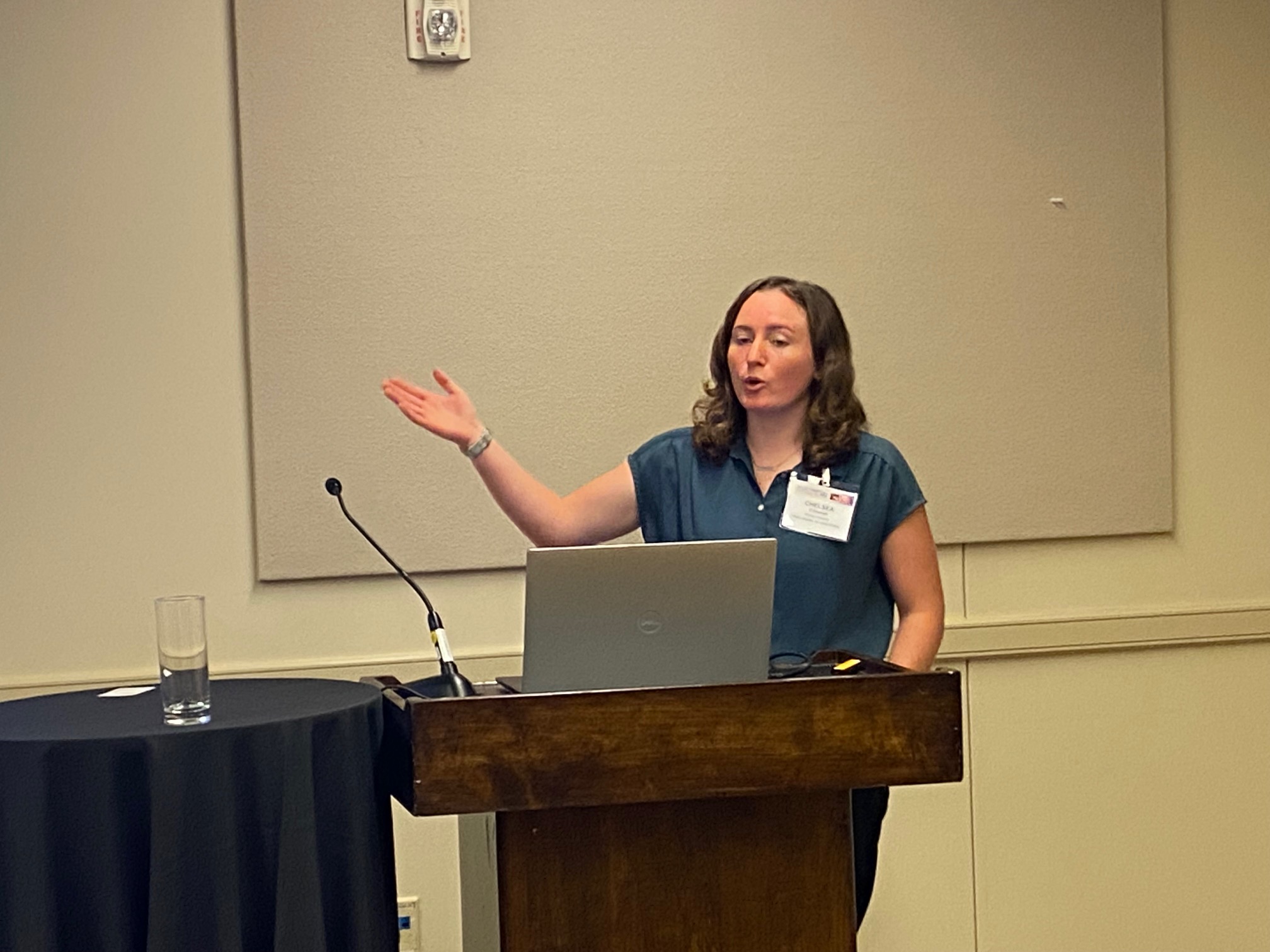
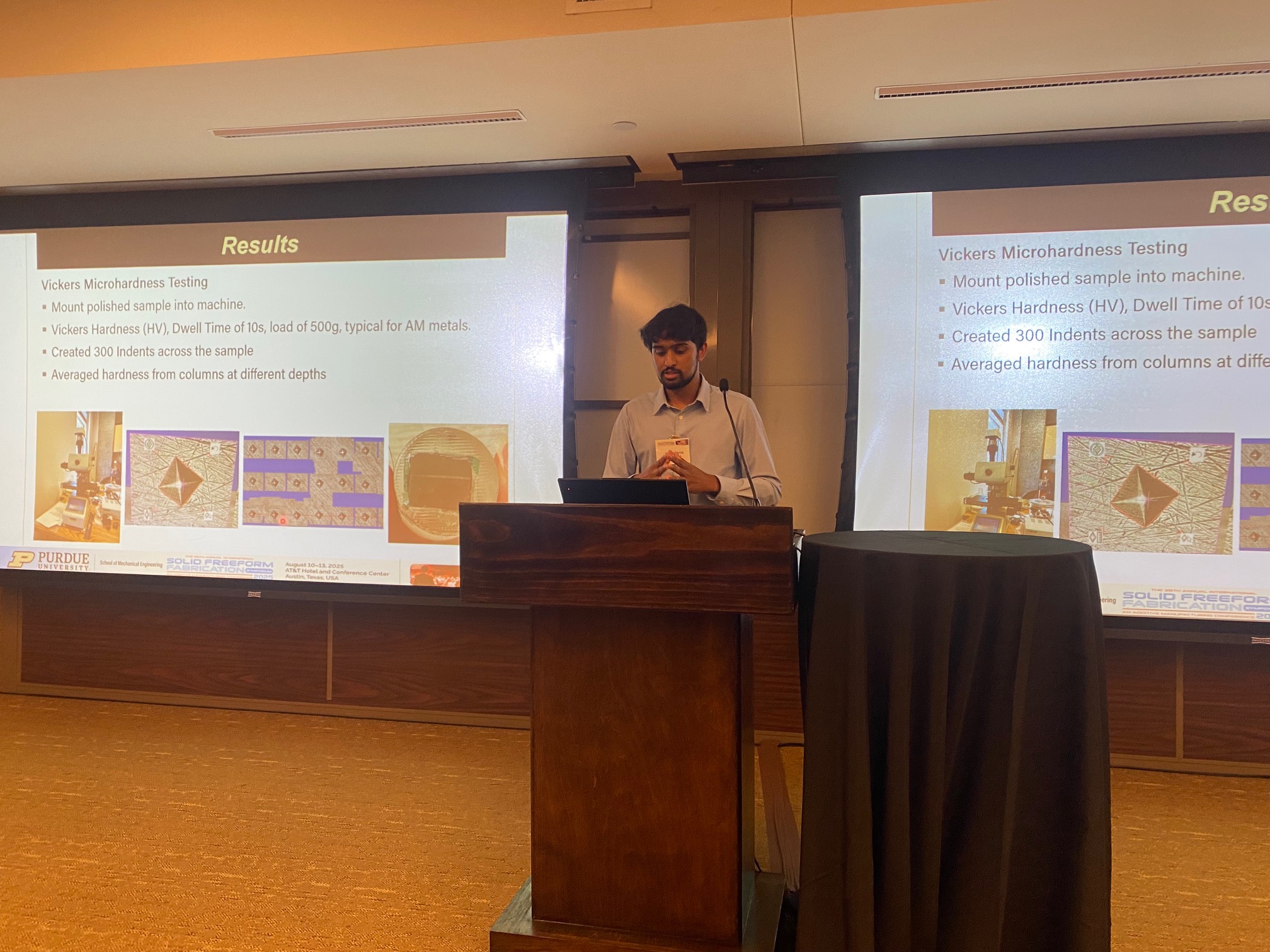
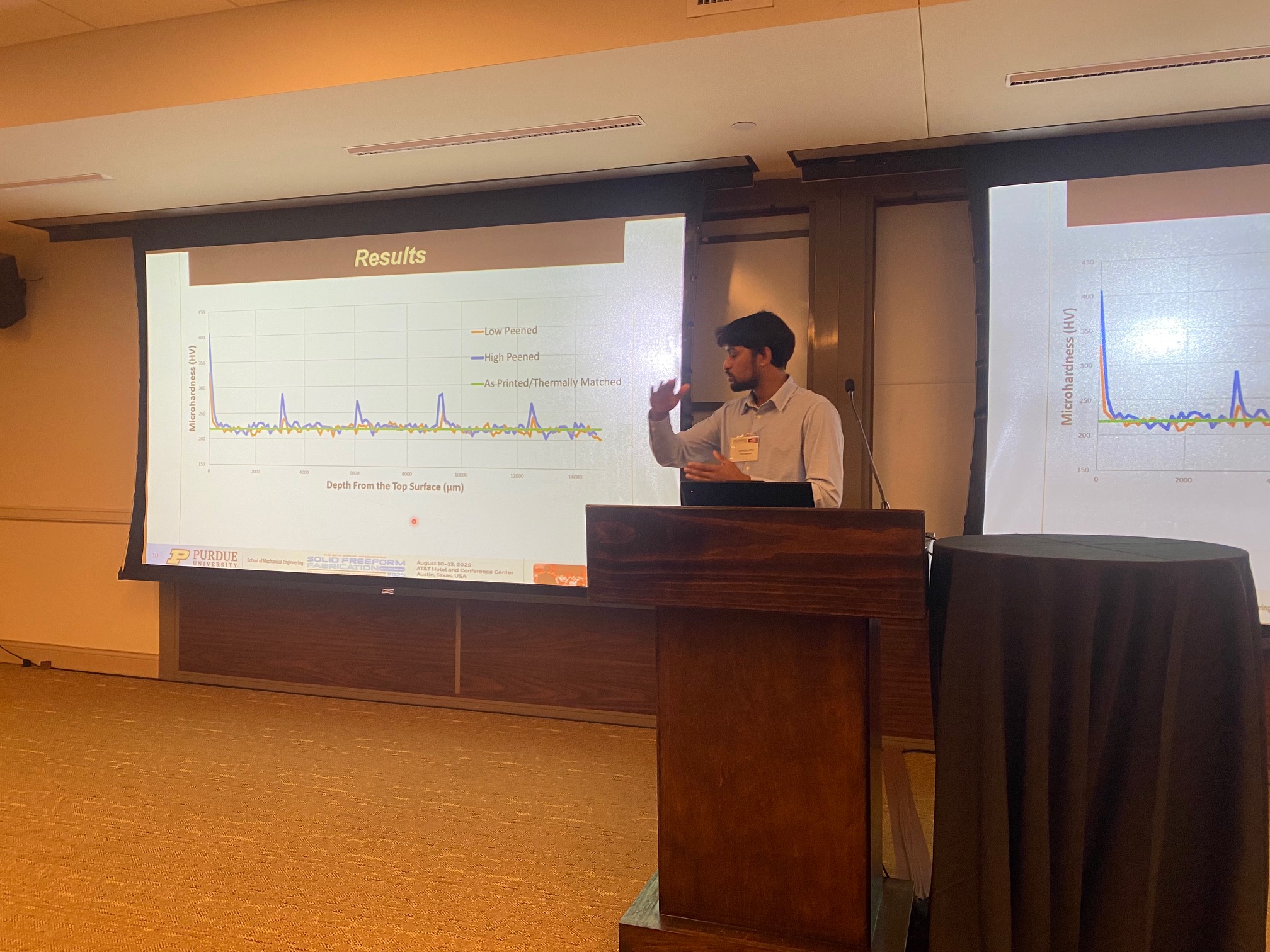
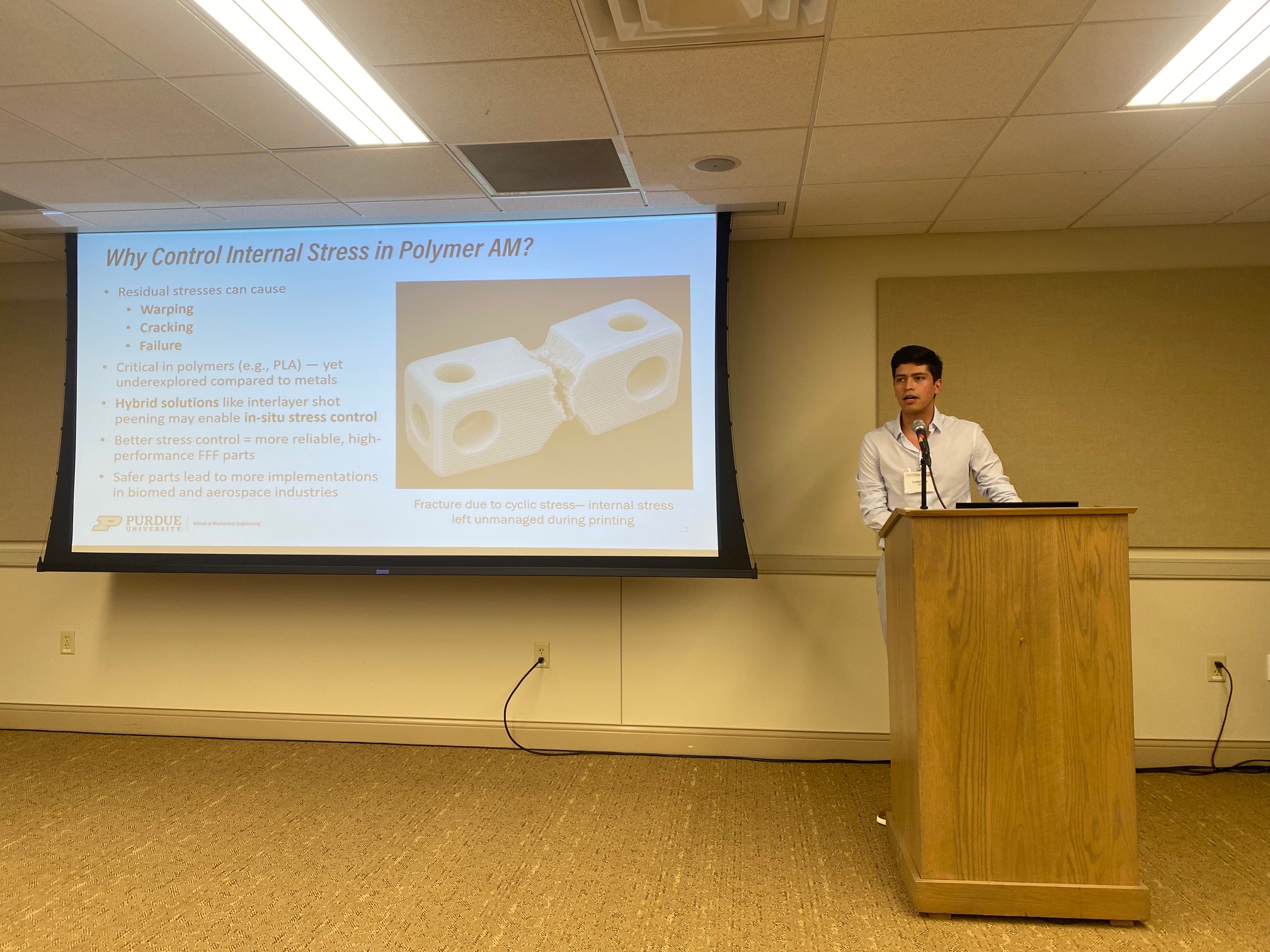
Images show Spring 2025 students Chelsea O'Donnell (graduate school at CMU), Shreejith Ravisankar (graduate school at Purdue), and Christian Sosa (graduate school at Purdue) presenting at the 2025 Solid Freeform Fabrication Symposium in Austin, TX.
Sealy is expected to offer the advanced AM course Spring 2027.
Image Gallery