PART Lab’s first ASEE publication highlights near-peer mentorship as a pathway to research discovery
New study finds that authentic, team-based additive manufacturing projects help undergraduates understand engineering research and make informed decisions about graduate education.
The PART Lab has published its first paper through the American Society for Engineering Education, marking an important expansion of the laboratory’s contributions to the engineering-education community.
The paper, “Undergraduate Research Discovery through Manufacturing Education: Assessing Near-Peer Mentorship as a Pathway to Graduate Research,” was published in the proceedings of the 2026 ASEE Annual Conference & Exposition. The study examines how authentic research experiences and graduate-student mentorship embedded within an additive manufacturing course can help undergraduates understand engineering research and determine whether graduate education aligns with their goals.
The publication represents the culmination of several years of course development, student mentoring, research and data collection conducted as part of Professor Michael P. Sealy’s National Science Foundation CAREER award. Although the formal analysis centers on the Spring 2025 course cohort, the educational model was developed and refined across multiple semesters.
For many undergraduate engineering students, graduate research remains abstract until they have an opportunity to experience it firsthand. The PART Lab’s research-based course addresses that gap by allowing students to participate in semester-long additive manufacturing investigations while working closely with master’s and doctoral student mentors.
Experiencing research rather than hearing about it
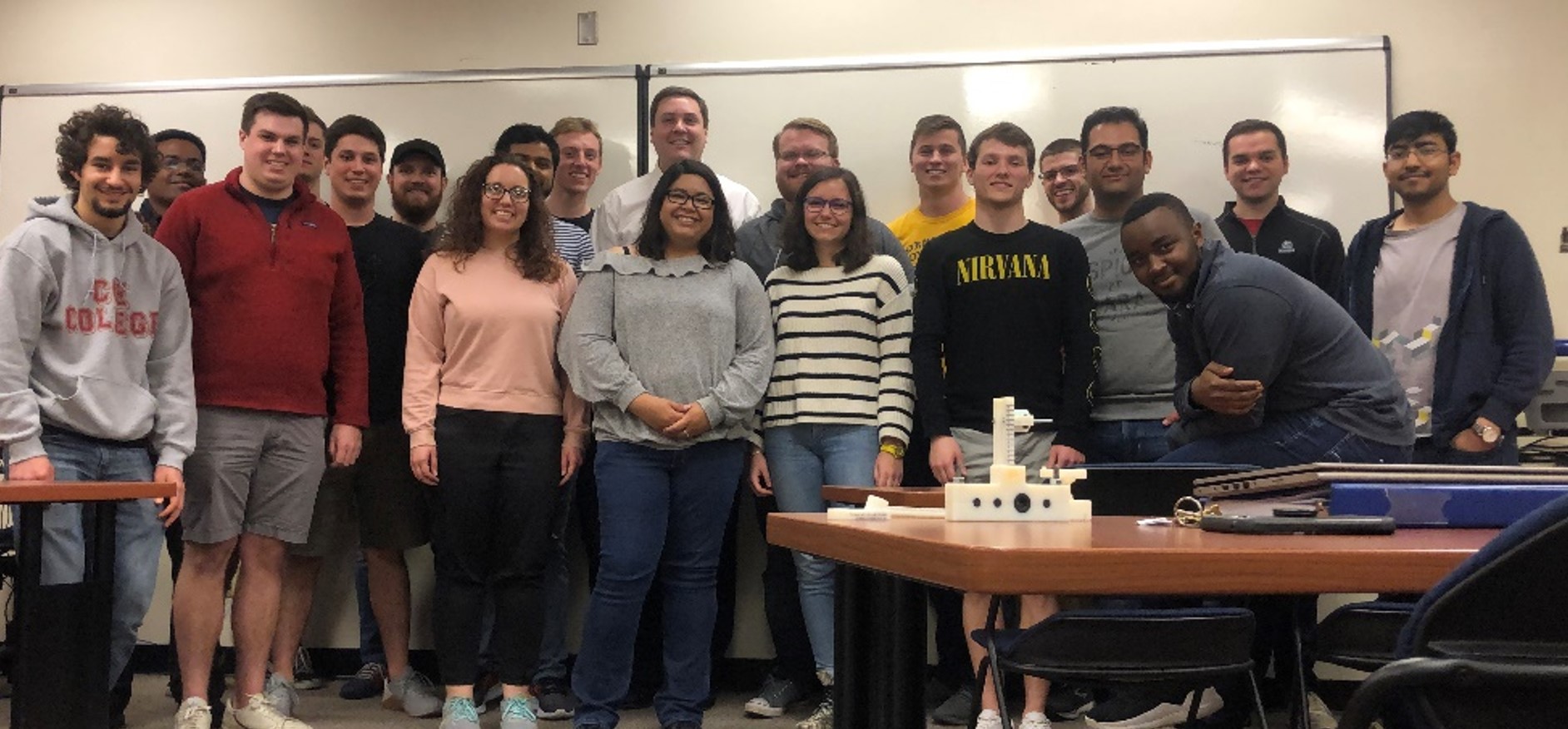
The course moves beyond conventional lectures and predetermined laboratory exercises. Undergraduate students work in teams on semester-long additive manufacturing research projects connected to active laboratory investigations. Students help define research questions, establish objectives, review the literature, plan and conduct experiments, interpret data, and communicate their findings.
Each team works closely with a master’s or doctoral student who serves as a near-peer mentor. These mentors provide technical guidance and research training while also giving undergraduates a more accessible view of graduate education and daily life in a research laboratory.
The projects introduce students to the uncertainty that distinguishes research from conventional coursework. Experiments may not behave as expected, results can be difficult to interpret, and students must make decisions without knowing the correct answer in advance. At the same time, graduate mentors help students navigate those challenges without taking ownership of the project away from them.
Students have subsequently converted course projects into posters and conference papers presented at the Solid Freeform Fabrication Symposium. Since its inception, the course model has also contributed to multiple refereed journal and conference publications coauthored by undergraduate researchers and their graduate mentors.
Students developed a clearer understanding of engineering research
The study analyzed survey responses from 34 undergraduate students enrolled in the Spring 2025 course. The survey combined scaled and open-ended questions addressing course rigor, students’ understanding of engineering research, their interest in graduate education and the influence of near-peer mentorship.
The results showed that 94% of respondents believed the course improved their understanding of how engineering research is conducted. For many, it was their first opportunity to participate in authentic research rather than follow a prescribed laboratory procedure.
Students reported learning how to formulate research questions, conduct literature reviews, design experiments and interpret findings. They also emphasized the value of working alongside graduate researchers, who helped demystify laboratory culture and made graduate research appear more understandable and attainable.
As one student explained, the experience provided “a good sense of what it might be like full-time.”
The course was demanding: 56% of respondents considered it more rigorous than their other mechanical engineering electives. However, the findings suggest that rigor did not necessarily discourage students when it was paired with guidance, regular feedback and a sense of belonging within the research group.
Career clarity—not simply graduate-school recruitment
One of the study’s most important conclusions is that a successful research experience does not need to persuade every participant to pursue graduate school.
Approximately 73.5% of respondents indicated that the course influenced their decision about graduate education. For some students, the experience increased or confirmed their interest in research and graduate study. For others, it clarified that research was not consistent with their interests or preferred career path. A third group enjoyed the research experience but remained hesitant about committing to additional years of formal education.
In each case, the course gave students direct evidence on which to base an important career decision. Rather than treating increased graduate enrollment as the only desirable outcome, the study frames informed decision-making as the broader measure of success.
Early exposure can help students recognize an interest in research before entering the workforce. It can also prevent students from entering a graduate program based on an incomplete understanding of what research entails.
Why near-peer mentorship matters
The researchers interpreted the findings using Self-Determination Theory, which connects motivation with three psychological needs: autonomy, competence and relatedness.
Undergraduates developed autonomy by helping direct their projects and make research decisions. They built competence through technical training, experimentation and feedback. Regular interaction with graduate mentors strengthened relatedness by helping them feel connected to a research community.
Near-peer mentors were particularly important because they occupied a space between undergraduate students and faculty. They could provide advanced technical guidance while remaining approachable role models whose experiences with graduate school were immediate and relatable.
The model also created professional-development opportunities for the graduate students. Mentoring undergraduate teams required them to explain difficult concepts, guide students through uncertainty, provide constructive feedback and develop their own leadership and communication skills.
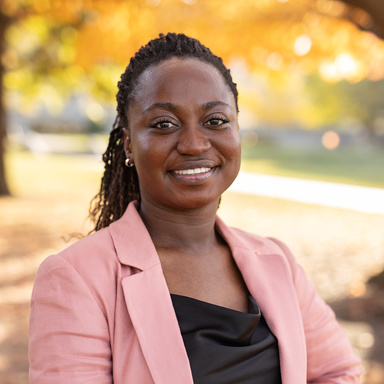
Mavis Ama Gyesi leads the study to publication
Special recognition goes to first author Mavis Ama Gyesi, a doctoral candidate in Educational Policy and Leadership Studies at the University of Iowa. Gyesi’s expertise in STEM and engineering education helped transform several years of course experiences and collected data into a systematic study of research identity, mentorship and graduate-school decision-making.
Gyesi led the effort to synthesize the results and carry the manuscript through publication. Her persistence, educational-research expertise and leadership were instrumental in establishing the PART Lab’s first ASEE publication. The laboratory sincerely thanks her for bringing this multi-year educational research effort to completion and helping introduce the PART Lab’s work to the broader engineering-education community.
The paper was coauthored by Emmanuel Kweku Mensah, Guru Madireddy, Rakeshkumar Karunakaran, Kossi Loic Avegnon, David Scott Fernander, Elena S. Parial, Albert John Patrick and Michael P. Sealy. Together, the authors represent several generations of researchers who contributed to the course, mentored undergraduate teams and helped refine the educational model.
The PART Lab also gratefully acknowledges all undergraduate students who participated in the course and shared their experiences, as well as the graduate students who invested their time in mentoring successive research teams.
A model for research-centered engineering education
The authors note that the current study measures students’ short-term perceptions and intentions rather than their long-term educational and career outcomes. Future research will require follow-up with former participants to determine how many ultimately pursue graduate education, research positions or careers in advanced manufacturing.
The model is also resource-intensive. Meaningful implementation depends on sustained faculty involvement, access to research facilities and a sufficient number of graduate mentors. Nevertheless, the researchers argue that the approach can be adapted to other engineering disciplines, particularly in focused elective courses where students can receive regular, individualized mentorship.
The broader lesson is that undergraduate research does not always need to occur outside the curriculum or through a small number of selective research positions. By integrating authentic projects and near-peer mentorship directly into coursework, universities can expose more students to research while simultaneously preparing graduate students to become better mentors, educators and research leaders.
Image Gallery