2026 PART Lab students expand their research through summer internships in the United States and Europe
Five Purdue students advanced research in additive manufacturing, corrosion, power transmission, volumetric bioprinting, and architected materials while working with industry, national laboratory, and international research partners.
During summer 2026, four graduate researchers — Christian S. Sosa, Albert James “AJ” Patrick, Farshad Samadpour, and E. Kweku Mensah — and undergraduate researcher Sophia Perevozchikov extended their Purdue experiences through internships in the United States and Europe.
Their projects ranged from studying the fracture and corrosion behavior of additively manufactured metals to developing a portable volumetric bioprinter, automating electrical transmission planning and evaluating the durability of polymer metamaterials. Just as importantly, the internships allowed the students to learn from experienced mentors, work in new research environments and strengthen the PART Lab’s relationships with international institutions, national laboratories, and industry.
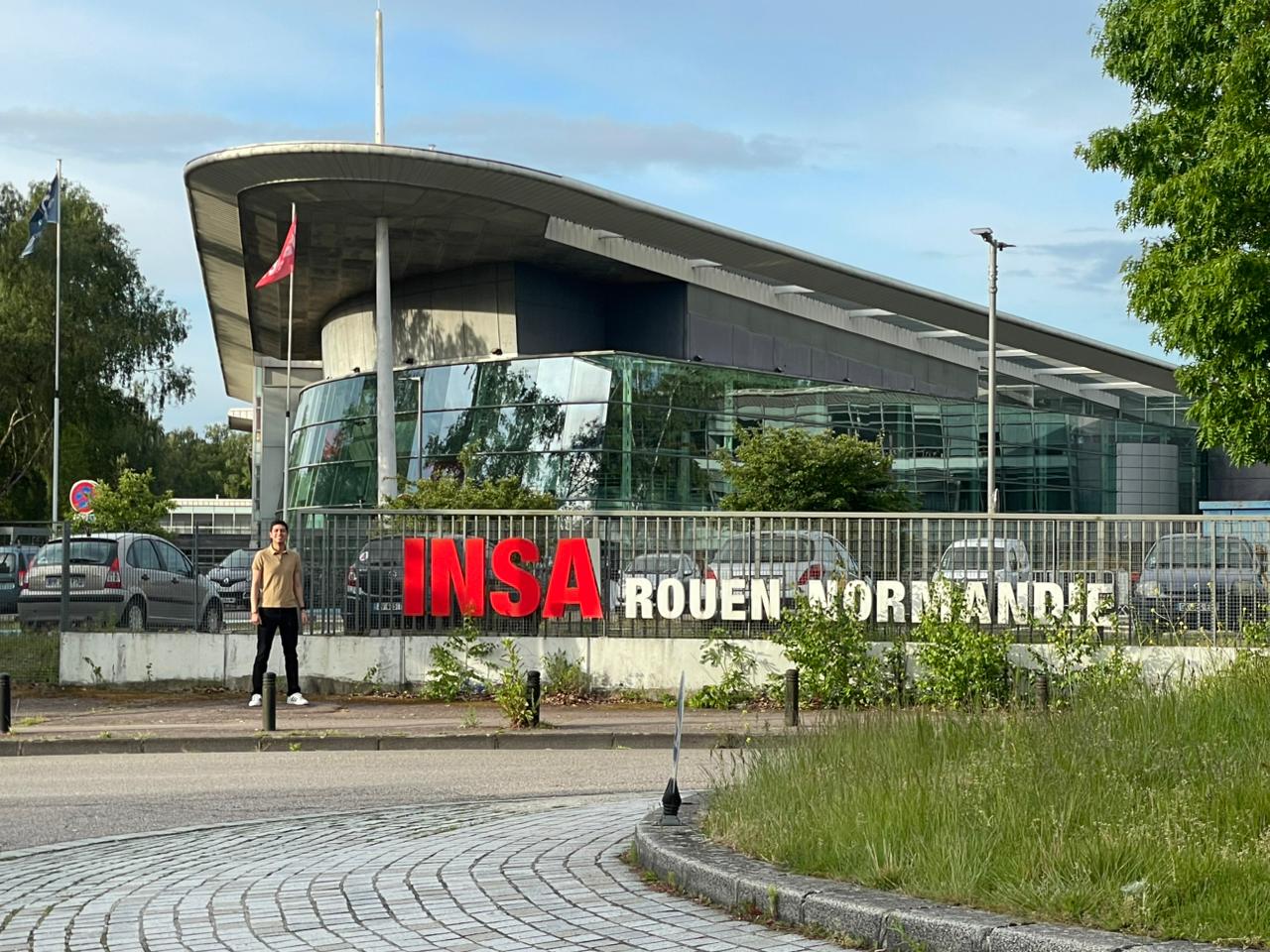
Christian S. Sosa investigates fracture and residual stresses at INSA Rouen Normandie
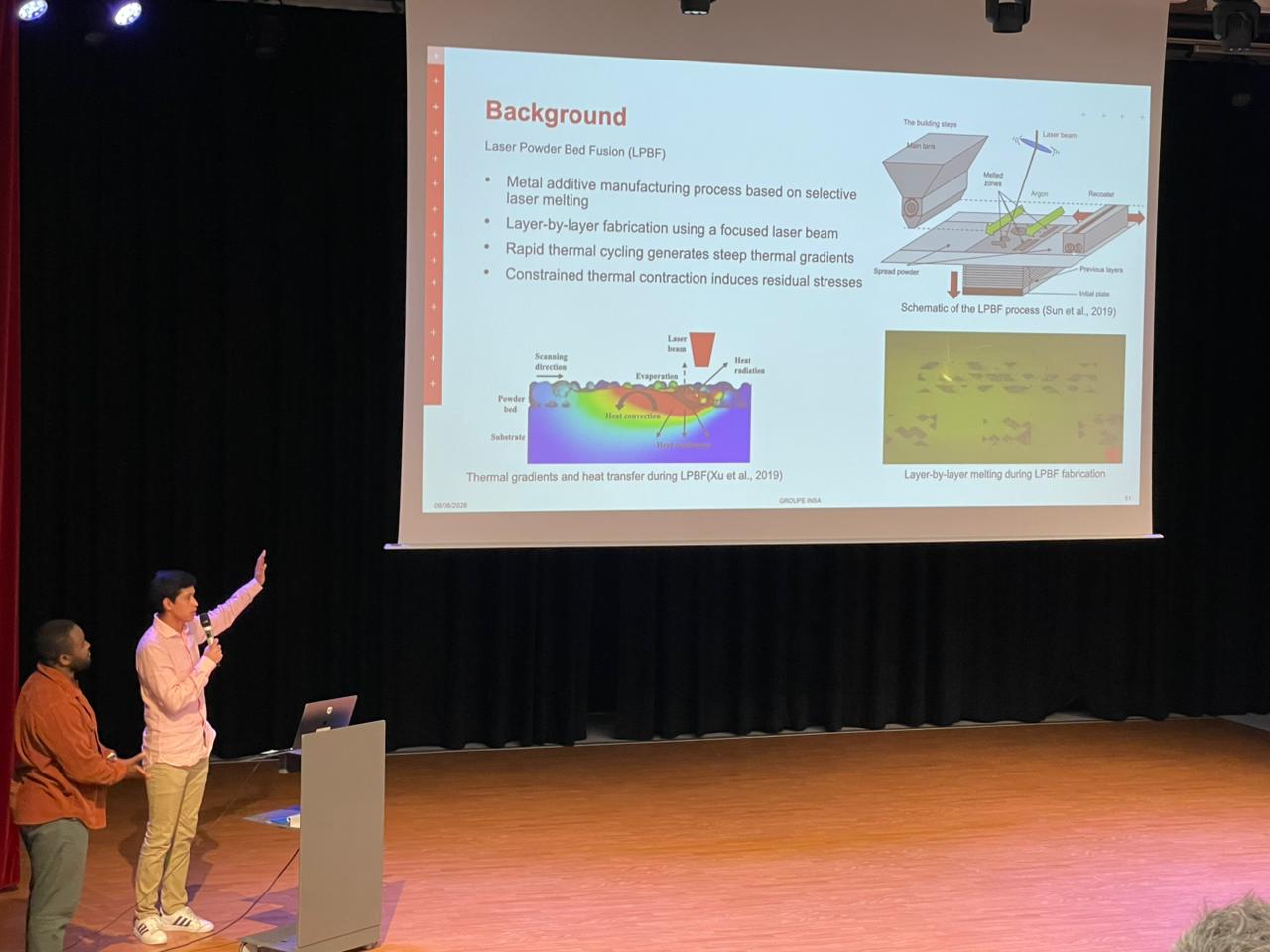
Christian S. Sosa completed a research internship with the Groupe de Physique des Matériaux (GPM), a CNRS-affiliated research laboratory at INSA Rouen Normandie in France. Working under the supervision of Prof. Benoît Vieille and co-supervision of Kossi Loïc Avegnon, Sosa studied the fracture behavior and residual stresses of laser powder bed fusion (LPBF) 316L stainless steel.
His principal project examined how LPBF processing conditions, porosity and residual stresses influence fracture resistance. Sosa evaluated specimens produced using different volumetric energy densities and developed an inherent strain method to estimate residual stresses from the deformation released when specimens were sectioned using wire electrical discharge machining. He then evaluated fracture behavior through three-point bending and J–R curve analysis, supported by stress-relief experiments and electron backscatter diffraction characterization.
Sosa also studied whether laser rescanning strategies could reduce the loss of fracture resistance associated with porosity. In a complementary investigation, he used X-ray diffraction to examine residual-stress changes in LPBF 316L plates exposed to hydrogen flames at different heat fluxes.
The principal residual-stress and fracture-toughness study is now being developed into a journal manuscript. The PART Lab gratefully acknowledges GPM, CNRS and INSA Rouen Normandie for hosting Sosa, as well as Vieille and Avegnon for their mentorship and collaboration. The internship was jointly supported by the PART Lab and GPM.
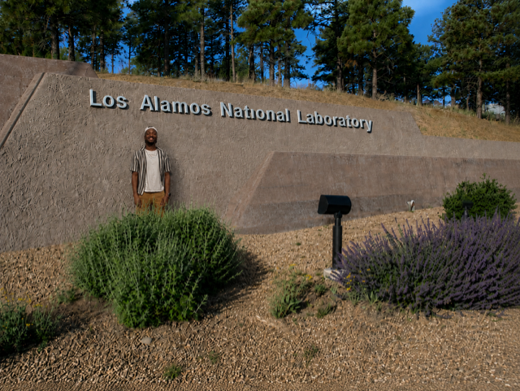
AJ Patrick examines corrosion across the LPBF build plate at Los Alamos
Albert James “AJ” Patrick continued his doctoral research at Los Alamos National Laboratory, where he investigated whether the location of a stainless steel specimen on an LPBF build plate affects its susceptibility to localized corrosion.
Patrick used electrochemical testing to initiate localized corrosion and pitting, followed by microscopy to characterize the morphology and distribution of the resulting pits. His results identified regions in which pits preferentially initiated and propagated, providing evidence that corrosion susceptibility can vary with build location.
The observed differences were associated with changes in melt-pool size and depth created as the laser scanned across different regions of the build plate. The research contributes to a broader understanding of how spatial variations introduced during additive manufacturing can produce material heterogeneity and influence the subsequent performance of a component.
Patrick conducted the work under the guidance of Tommy Rockward, manager of the Materials Physics and Applications Group at LANL. Patrick credits Rockward’s mentorship with strengthening his knowledge of electrochemistry and accelerating his development as a researcher. The work will be described in greater detail in an upcoming publication on the corrosion behavior of additively manufactured stainless steel.
The PART Lab thanks Los Alamos National Laboratory and Rockward for providing Patrick with this research opportunity and for supporting his professional development.
Farshad Samadpour brings automation and machine learning to transmission planning
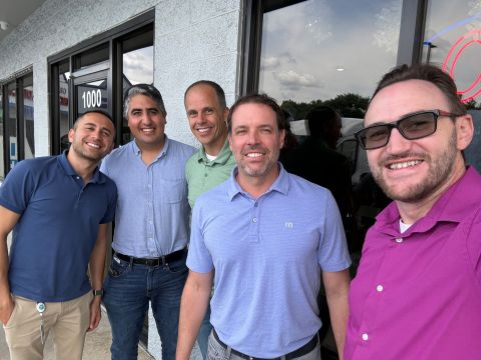
Farshad Samadpour completed an engineering internship with ACES Power in Carmel, Indiana, where he worked with Arash Zafari and the Transmission Planning team.
Although trained as a mechanical engineer, Samadpour applied his experience in computational modeling, automation, optimization, and machine learning to a challenge in electrical transmission planning. He developed a scalable tool that automates several stages of system-capability analysis, including preparing load-increment cases, running contingency analyses, reviewing results, and producing heat maps.
The resulting workflow significantly reduced repetitive manual work and made the analysis process faster and more scalable. Its value extended beyond an internal internship exercise: ACES demonstrated the workflow to multiple external companies, illustrating its potential for broader industry use. Samadpour also presented the automation framework to a professional audience that included OOC members and Mike Steff.
The PART Lab thanks ACES Power for hosting Samadpour and acknowledges Zafari and the entire Transmission Planning team, including Ryan Gross and Andrew Smith, for their guidance, technical insight and support throughout the internship.
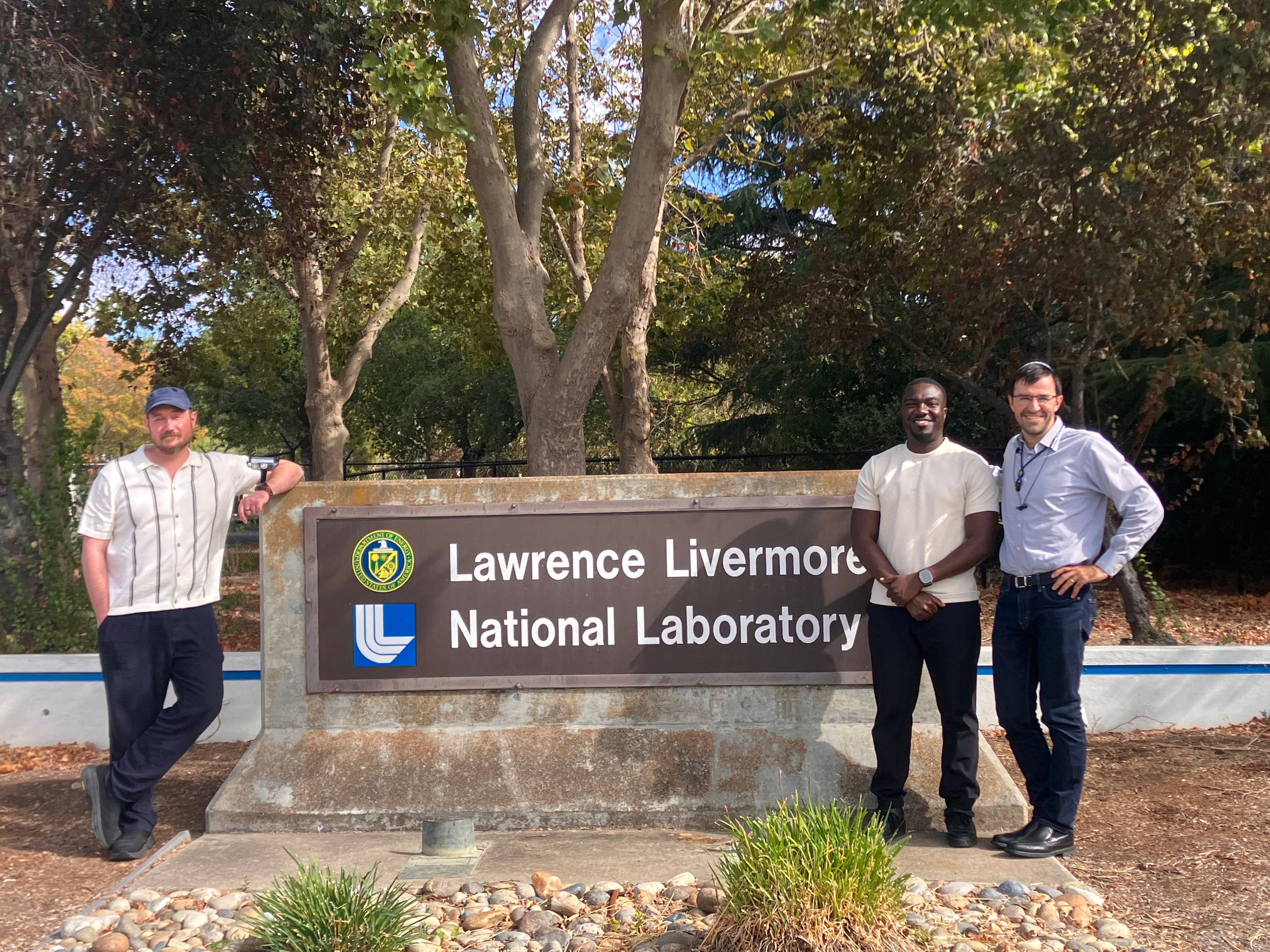
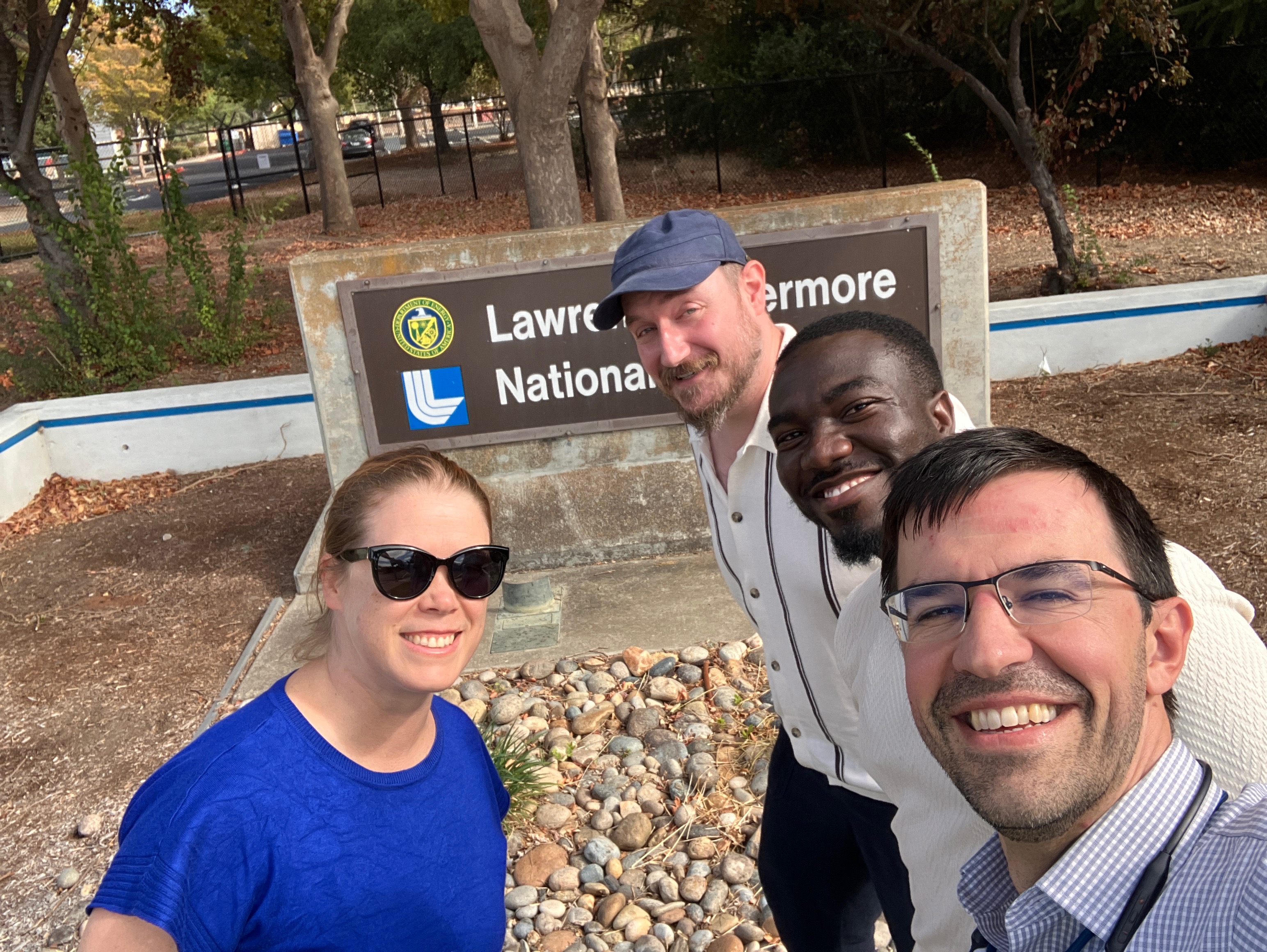
Kweku Mensah develops a portable volumetric bioprinting system at LLNL
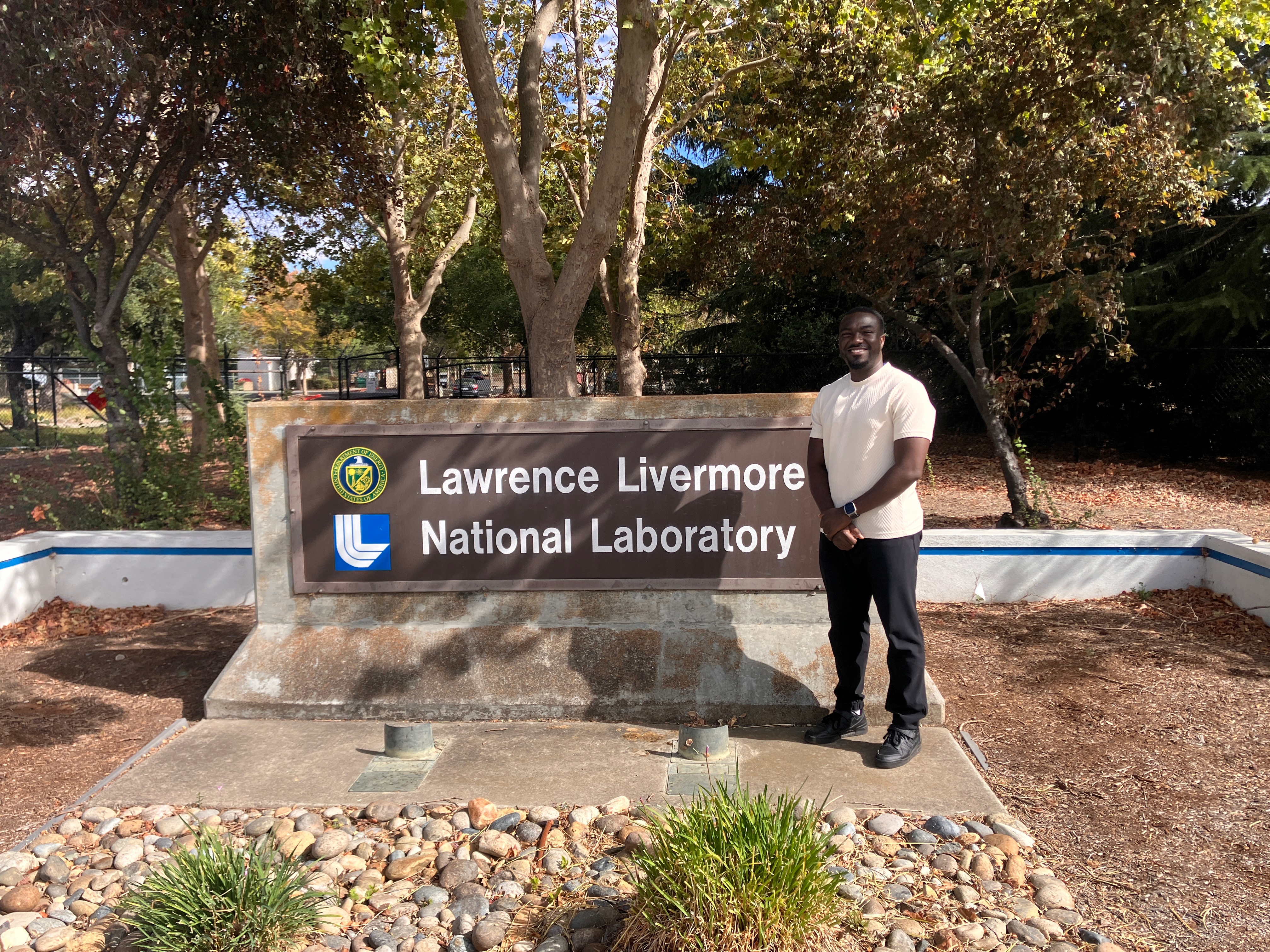
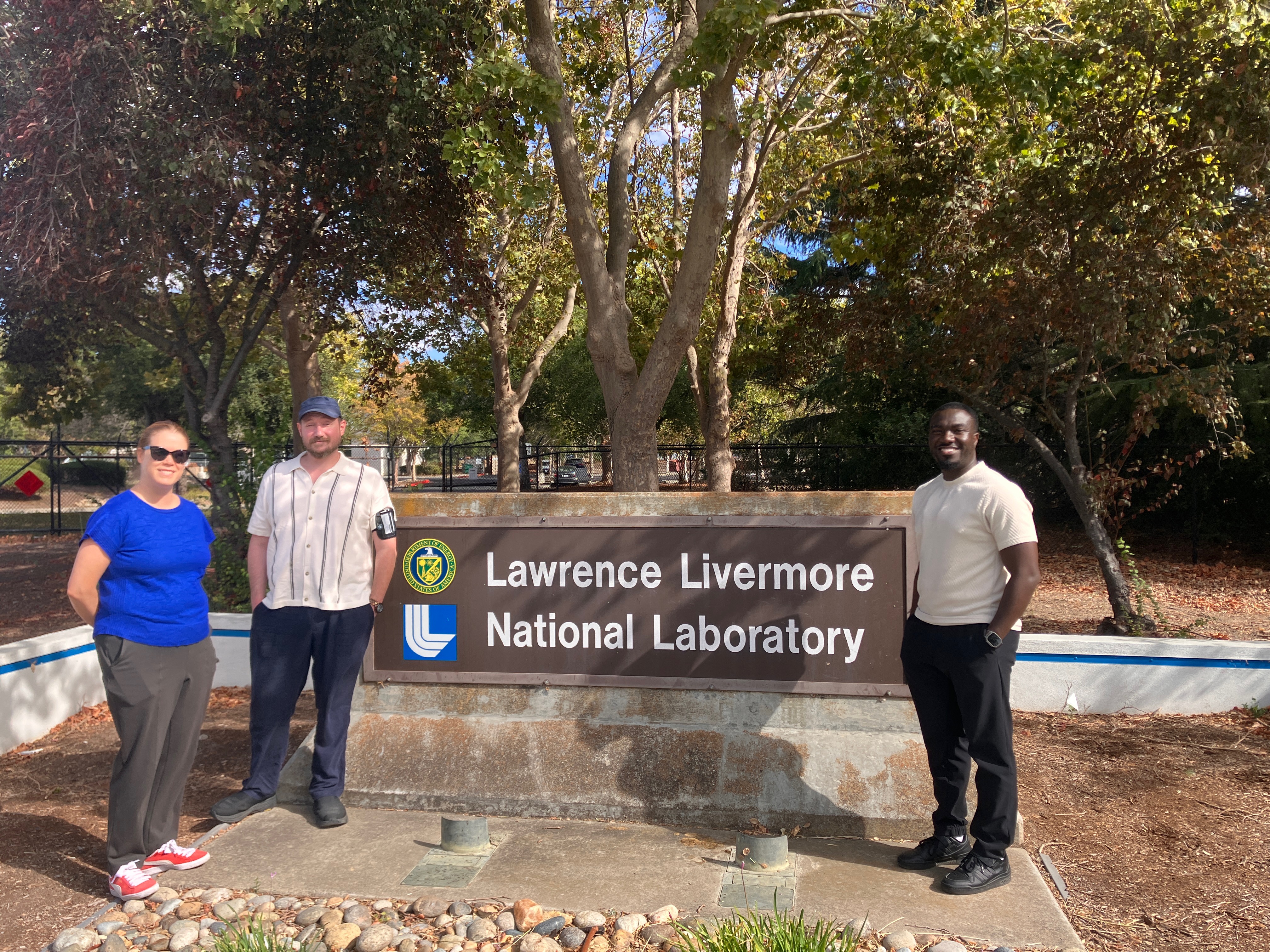
E. Kweku Mensah completed a Grad-MED internship in the Materials Engineering Division at Lawrence Livermore National Laboratory in Livermore, California. His project focused on developing a portable tomographic volumetric additive manufacturing system capable of printing cell-laden hydrogels in a biological safety level 2 laboratory.
TomoVAM is a light-based additive manufacturing technique pioneered at LLNL. Instead of building an object one layer at a time, it projects a computed sequence of two-dimensional light patterns into a rotating vial of photosensitive resin. Polymerization occurs where the accumulated light dose exceeds a threshold, allowing an entire three-dimensional structure to form within seconds. Its speed and low mechanical loading make the process particularly promising for bioprinting, where conventional extrusion can expose living cells to damaging shear forces.
Working with mentors Dr. Maxim Shusteff, Dr. Monica Moya, and Dr. Rick Hynes, Mensah addressed three connected challenges: constructing the printer, developing a suitable bio-resin, and evaluating the resin with living cells.
Mensah adapted the open-source OpenCAL platform developed by Prof. Hayden Taylor’s group at the University of California, Berkeley, with Taylor Waddell leading the platform’s development. He redesigned its optical system for 405-nanometer photopolymerization and worked through the precise alignment challenges associated with the projector, optics, and rotating vial. Dr. Martin DeBeer, Dr. Aftab Bhanvadia, and Hazel Rose Galven provided additional technical guidance as the modified platform was transformed into a working TomoVAM printer.
For the bio-resin, Mensah evaluated formulations containing gelatin methacryloyl, a photoinitiator, and phosphate-buffered saline. With guidance from Hynes, Dr. Claire Robertson, and Dominique Henry Porcincula, he used photorheology, ultraviolet-visible spectroscopy and refractometry to connect resin composition with curing behavior, stiffness, light absorption, and refractive index.
After completing BSL-2 certification, Mensah learned aseptic techniques and began evaluating resin formulations containing C2C12 myoblast cells. Moya, Hynes, Robertson, Dr. Javier Antonio Alvarado, and graduate intern Edith Chen supported this portion of the project.
By the conclusion of the internship, the team had made substantial progress toward a portable platform for rapidly printing three-dimensional, cell-laden constructs. Mensah also credited Dr. Nicholas Watkins, Dr. Christopher Spadaccini, and Dr. Donn McMahon for their encouragement and for broadening his perspective on research careers at national laboratories.
The PART Lab thanks LLNL and the many researchers who shared their expertise with Mensah. His internship was supported by the Department of Energy’s Laboratory Directed Research and Development program under Contract DE-AC52-07NA27344.
Sophia Perevozchikov characterizes snap-through metamaterials at Fraunhofer IZFP in Germany
Undergraduate researcher Sophia Perevozchikov completed a DAAD RISE internship at the Fraunhofer Institute for Nondestructive Testing (IZFP) in Germany. As part of Dr.-Ing. Sarah Fischer’s research team and under the guidance of Bashar Ibrahim, Perevozchikov experimentally characterized the behavior of mechanical metamaterials subjected to cyclic loading.
She began by reviewing the literature on mechanical metamaterials, particularly bistable and snap-through structures, to establish the project’s technical foundation and identify important characteristics of their mechanical response. Perevozchikov then developed and conducted an experimental test plan using FDM-printed bistable structures made from TPU, PLA+, and PETG. Cyclic compression testing allowed her to investigate how the mechanical response of each material changed over repeated loading cycles.
Perevozchikov processed the experimental results using data filtering, statistical analysis, and visualization to identify and compare material-dependent trends. She was also introduced to COMSOL Multiphysics and began exploring how computational simulations could complement experimental testing of bistable structures. She concluded the internship by presenting her findings to the Fraunhofer IZFP research team.
Through the experience, Perevozchikov developed skills in literature review, experimental planning, mechanical testing, data analysis and computational simulation while contributing to a broader effort to understand the behavior and potential applications of bistable metamaterials.
The PART Lab thanks the German Academic Exchange Service for supporting Perevozchikov through the DAAD RISE program and Fraunhofer IZFP for hosting her. It also gratefully acknowledges Fischer, Ibrahim, and Yash Mittal for their mentorship and support throughout the internship.
Partnerships create opportunities beyond campus
Together, these internships demonstrate the range of settings in which PART Lab students can apply their skills. The students worked across disciplinary and geographic boundaries, contributed to ongoing research and engineering programs, and returned to Purdue with new technical capabilities and broader perspectives on careers in academia, industry, and national laboratories.
The PART Lab sincerely thanks INSA Rouen Normandie, GPM, CNRS, Los Alamos National Laboratory, ACES Power, Lawrence Livermore National Laboratory, Fraunhofer IZFP, and the DAAD program. These experiences would not have been possible without the mentors, researchers, and engineering teams who invested their time and expertise in Purdue’s students.
Image Gallery