
Professional Practice Hall of Fame Inductee: Brian Hazel

Brian Hazel is one of eight Co-op alums recognized in the 2026 Professional Practice Hall of Fame.
Brian Hazel was no typical intern at Howmet Casting in LaPorte, Indiana.
He was a five-rotation Cooperative Education (Co-op) Program student in the 1990s. Hazel worked in a high-temperature metallurgy lab, preparing samples for experiments. The summer after, he was a paid and full-time member of the process development team.
Not even a year later, Hazel was filling another full-time role as a lab ceramist.
Being a ceramist meant “high-tech pottery” — investment casting, designing molds and creating sample materials for metal testing.
It didn’t take long to confirm this was exactly what Hazel wanted to do for the rest of his career.
“Once I demonstrated I could handle the job, they kept leaning on me, which was nice,” said Hazel (BSME ’00). “I got a lot more experience than I had planned.”
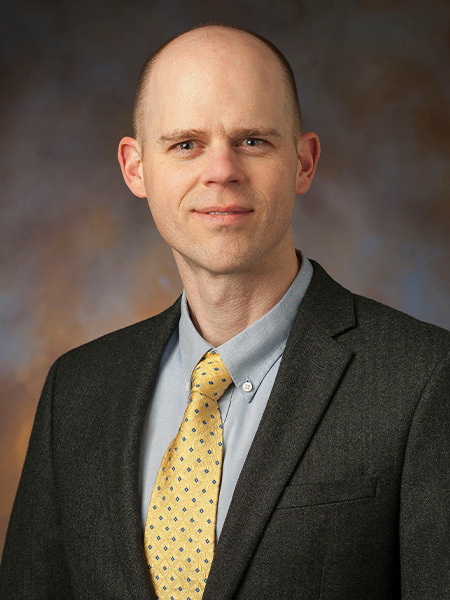
Hazel
Now a renowned expert in aerospace materials engineering, Hazel’s impactful career and continued involvement with the Office of Professional Practice (OPP) have earned an induction into the Professional Practice Hall of Fame. On Oct. 23, 2026, Hazel and seven other Purdue alumni who have influenced the program or have achieved unparalleled excellence in their field will be honored.
The in-depth experience, Hazel speculated, was why GE Aerospace invited him to the Technical Leadership Development Program (now the Edison Engineering Development Program) in 2000.
“I wasn’t just a BS student coming out of school with a degree: I was a BS student coming out with two-plus years of practical experience,” he said.
Hazel spent 10 years in GE Aviation in Evendale, Ohio, holding lead engineer roles in airfoil materials development and coatings. Hazel also served as team lead on the GE Honda HF120 airplane prototype in 2010.
Hazel’s interest gradually moved from aviation to aerospace. He relocated to Pratt & Whitney in East Hartford, Connecticut in 2010. His research gravitated toward metallurgy’s extremes, testing coatings and engine components against molten volcanic ash and sand. Hazel also built an extensive multidisciplinary network for collaboration. His connections include the Department of Defense, NASA, the American Ceramic Society, the Thermal Spray Society and other major research entities.
“Everything we do requires many folks and larger teams, multiple disciplines,” Hazel said. “Knowing that you need essentially an army of people to work through these complex problems is just as important as the technical skills.”
It is through his friendship with Michael Titus, associate professor of materials engineering at Purdue, that Hazel regularly returns to West Lafayette. Hazel reminisces of good times and the exciting future that was ahead. What strikes him the most, however, is memories of his co-ops.
Without the multi-rotation experience at Edison — and the Co-op Program leading him there — Hazel is certain figuring out his career would have taken much longer.
“I never appreciated what Co-op really did for me until I started looking back on it,” he said. “The Hall of Fame honor is nice, but I should really be thanking the Co-op Program. It should be the other way around.”