ICON Seminar in Robotics: Dr. Tao Pang (RAI)
Time: 3-4 pm Eastern Time, Oct 31 (Friday), 2025
Location: MSEE 112
Zoom Link: https://purdue-edu.zoom.us/j/98798335169
Coffee and snacks will be provide.
Efficient Planning and Learning for Contact-rich Manipulation via Structured Exploration
Abstract:
The success of Reinforcement Learning (RL) in dexterous, contact-rich manipulation has left much to be understood from a model-based perspective, where key challenges include (i) locally, the hybrid, non-smooth contact dynamics renders planning and control methods for smooth dynamical systems ineffective, and (ii) globally, the non-convex cost landscape requires non-trivial global exploration strategy. This talk first demystifies RL’s success, attributing it to the implicit randomized smoothing provided by its stochastic nature. I will then present how smoothing, the primary insight from RL, can be incorporated into classical planning and control algorithms to efficiently and explicitly address the local and global challenges introduced by contact dynamics. Finally, I will demonstrate how the efficiency gained from model-based insights can empower prevailing robot learning paradigms, serving as a powerful data generation engine for Behavior Cloning (BC) and RL, especially on robot embodiments for which teleoperation-based data collection is challenging.
Speaker:
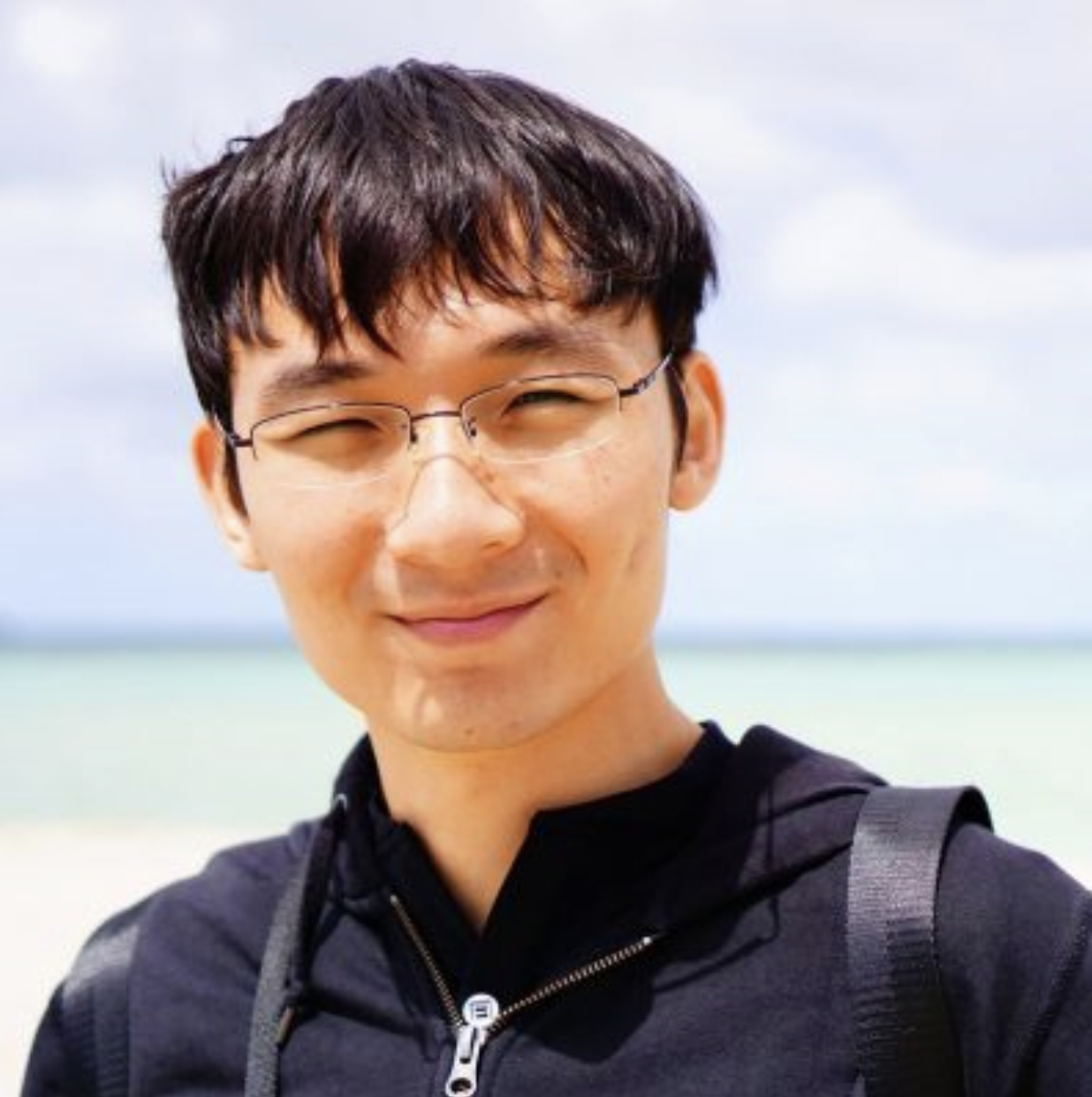
Dr. Tao Pang is a research scientist from the Robotics and AI Institute (formerly Boston Dynamics AI Institute). He received his Ph.D. from the Massachusetts Institute of Technology, where his work on global planning for contact-rich manipulation earned an Honorable Mention for the IEEE T-RO King-Sun Fu Memorial Best Paper Award. His research interests lie at the intersection of robotics, optimization and machine learning, with a focus on building robots with human-level dexterity.
Organizers: Ziran Wang (ziran@purdue.edu), Yan Gu (yangu@purdue.edu), Yu She (shey@purdue.edu)