Lombardo named EPICS at Purdue director
Chris Lombardo has to be honest.
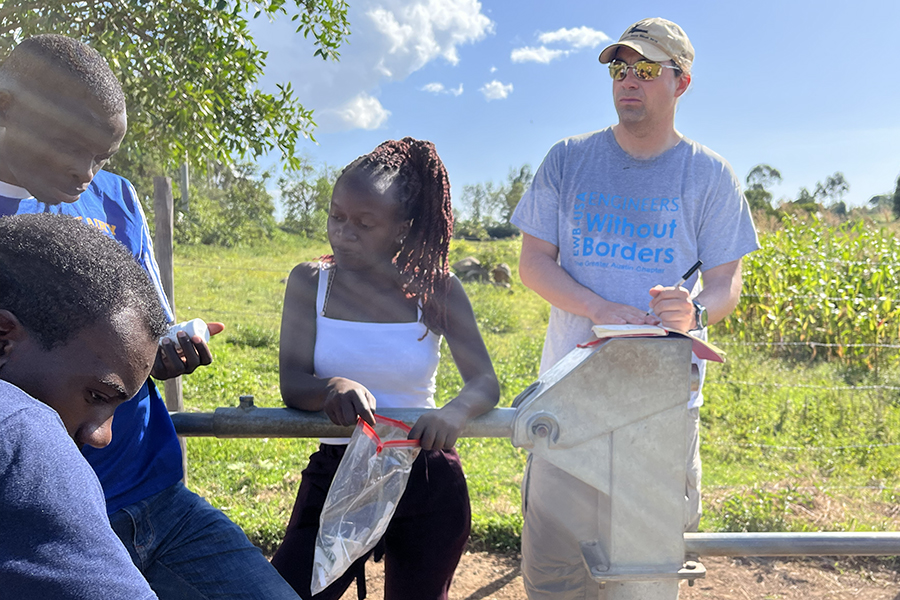
The initial attraction to joining Engineers Without Borders (EWB) was absolutely about the travel.
And then he made his first trip to Ecuador as an undergraduate electrical engineering student at the University of Maryland.
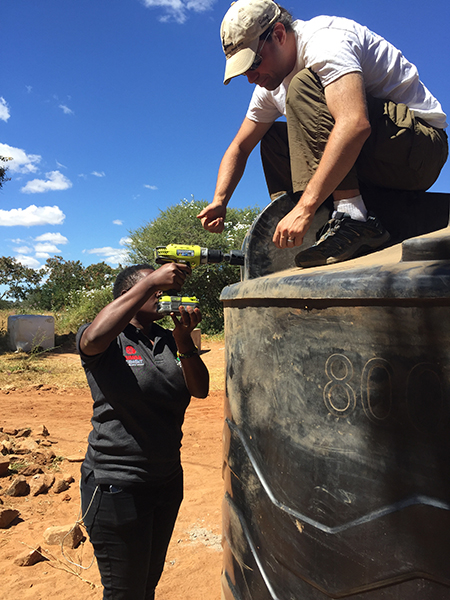
Lombardo didn’t just have a change in perspective.
The trip altered the course of a career, and, even, a life.
After 20 years of experience in community-engaged learning, Lombardo will start as the new director of EPICS at Purdue University on July 1, 2026, now able to do full time what previously had been either through volunteer work or a small percentage of official job responsibilities.
“The ability to dedicate almost full time to this is very exciting,” Lombardo said, “and I foresee it being one of the highlights of my career — even though I haven’t even started yet — but really being able to concentrate on this full time and see how we can increase the impact for both the students and the community partners.”
Lombardo was one of the first students in Maryland’s EWB chapter, and he won’t soon forget that first trip.
Like many people who do community-based work, the first time traveling and meeting community partners and seeing how community infrastructure projects impact their lives can be eye-opening. It started Lombardo on a path that included a teaching-focused academic career over a more traditional research-focused one, and it spurred him to build programs to model his positive experiences.
When he started at Harvard University as assistant director of undergraduate studies and lecturer in electrical and mechanical engineering in 2012, he was motivated to create a program to show what experiential learning could and should look like. He built up the EWB chapter, which started as a volunteer student group and grew into an academic credit-bearing experience.
Lombardo modeled part of that EWB program off EPICS at Purdue, where EPICS was founded and has celebrated 30 years of success in local and global community-engaged learning. EPICS at Purdue enrolls more than 1,000 students per semester on more than 200 projects in West Lafayette and Indianapolis.
“When Bill (Oakes) was the (Purdue EPICS) director, he and I would talk a lot about what worked for each program based on the number of students involved, based on the community partners involved, and we each had our own takes on it that we would iterate off each other in moving the programs forward,” Lombardo said. “So when the opportunity came around to be in charge of a program at Purdue that has a much larger impact in terms the number of students participating in the program, as well as the number of community partners, I was really excited about taking the next step in career advancement to be able to lead a program of that size and it’s respected as easily the No. 1 program in the U.S. if not the world.”
The EPICS university consortium engages more than 30 institutional partners globally adapting community-engaged learning into curriculum, and EPICS K-12 has connected more than 100 middle and high schools in local projects.
Lombardo’s experience being “in the weeds” building Harvard’s EWB chapter certainly will be valuable at Purdue — he understands how to gather resources, whether those are financial or space — but he also pursued a larger role with the EWB-USA organization that could be a boon for EPICS in West Lafayette and Indianapolis.
Actively involved in EWB-USA since 2004 in several chapters throughout the U.S., Lombardo has been a leader in engineering community engagement. He has served in several regional and national leadership positions, including chair of the faculty leadership council, curriculum chair of the EWB-USA / ASCE Global Leadership Program and as president of the board of directors.
Through those roles, Lombardo gained strategic planning and operations experience. He saw how creating and executing strategic goals laid foundations for big changes to make in five years, not in six months or a year.
“Dr. Lombardo brings a wealth of experience and leadership in undergraduate education and community engagement,” Oakes said. “With many opportunities for impact on students and communities locally and globally, we look forward to his leadership taking the EPICS program into a new season of engagement and success.”
Lombardo received bachelor’s degrees in electrical engineering and physics from the University of Maryland and MS and PhD degrees in electrical engineering from The University of Texas at Austin.