Bruce Alstrom has always been drawn to the space where theory meets practice. As an assistant professor of engineering practice, he thrives on showing students how aerodynamic principles work not just on paper, but in the real world.
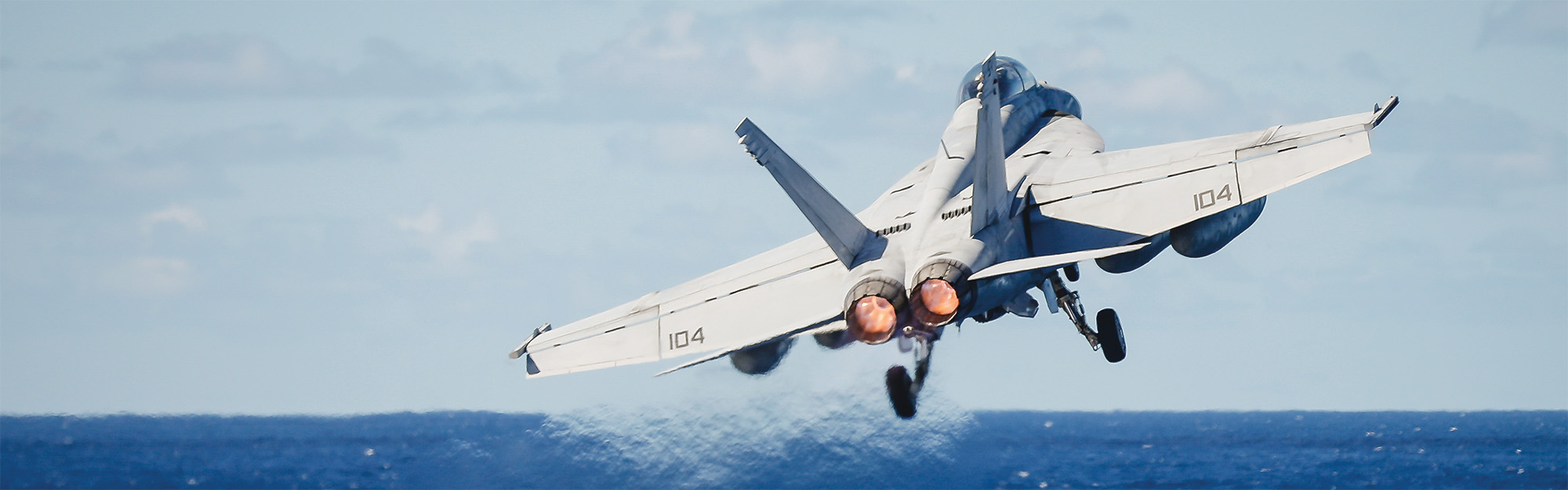
That’s what made him a natural fit for a new partnership between Purdue and the U.S. Naval Test Pilot School. The program allows military pilots and civilian engineers to earn a Purdue master’s degree while completing the rigorous 11-month test pilot curriculum at Naval Air Station Patuxent River in Maryland.
Alstrom’s role is central: he teaches the aerodynamics course custom-designed for the program. While rooted in the fundamentals of aerodynamics, the class is built with the military’s unique needs in mind. “The Navy wanted more applied, real-world examples,” Alstrom said. “The assignments need to reflect the challenges they’ll actually face.”
While the course itself is delivered fully online, collaboration with the test pilot school is anything but distant. Teams from Purdue, including Alstrom, visit Pax River twice a year to meet with Navy leadership and ensure the program continues to align with the school’s evolving needs. “It’s a true partnership,” Alstrom said. “We’re always working together to make sure what we teach directly supports what they do in the air every day.”
Alstrom’s own background prepared him perfectly for the role. He is an experienced flight sciences engineer who earned a PhD in experimental active flow control from Clarkson University. Prior to Purdue, Alstrom was a research engineer at Georgia Tech with a focus on experimental aerodynamics, flight mechanics and human factors. “I’ve been fortunate to bridge that gap between theoretical work and hands-on experimentation,” he said. “That experience translates directly into what these students need — helping them see how the math applies when they’re in the cockpit.” His mix of scholarly expertise and applied problem-solving made him a natural choice when Purdue created a faculty line specifically to support the Navy partnership.
Behind the scenes, the partnership itself represents a milestone for Purdue. John Fassnacht, principal managing director for online in the College of Engineering and the Purdue Polytechnic Institute, helped shepherd the agreement from idea to reality.
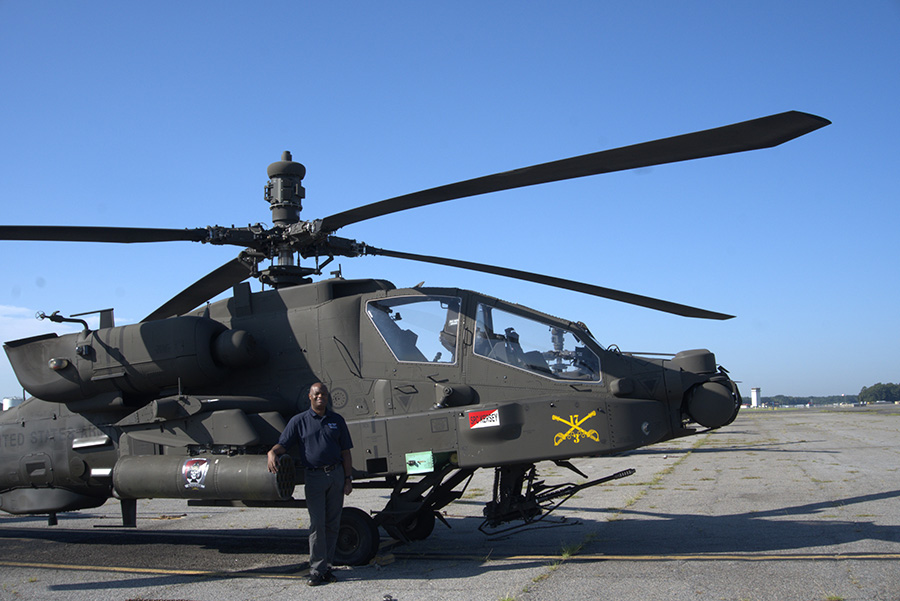
Bruce Alstrom, assistant professor of engineering practice
“The Navy had a real challenge,” Fassnacht said. “Its test pilot school isn’t an accredited university, so graduates couldn’t earn a degree directly from the program. Previously, students would earn an MS after attending test pilot school, but that meant doing the 11-month program first, then going back for possibly two or more years of school. They wanted a way to make it concurrent.”
In 2023, Navy leadership visited West Lafayette to explore a possible partnership. Over the next year, Purdue worked with six different university departments and the Navy to craft a flexible solution. Students could earn credit for parts of the test pilot school curriculum, take online Purdue courses tailored to their needs concurrent with the test pilot curriculum, and complete foundational online courses in math and mechanics through Purdue Online before arriving in Maryland.
The result was a one-of-a-kind master’s degree from the Purdue School of Engineering Technology with a major in developmental testing and innovation. Additional pathways into the online MS programs in aeronautics and astronautics or interdisciplinary engineering are available for students who wanted deeper specialization. “We were willing to step back from our traditional structures and ask, How do we make this work?” Fassnacht said. “That flexibility is what made Purdue the right fit.”
For Alstrom, teaching in the program is both a professional challenge and a point of pride. The students bring years of flight experience, engineering knowledge and military discipline into the classroom. “These are highly motivated professionals,” he said. “They know what’s at stake in the work they do, and they’re eager to connect theory with practice. That makes teaching them incredibly rewarding.”
The impact reaches beyond the Navy. International partners — including test pilot schools from the UK and France as well as pilots from allied nations — participate each year, strengthening Purdue’s role on the global stage. Roughly 70 to 72 students move through the program annually, building a network of advanced training that stretches across borders.
Alstrom’s faculty line was created specifically to support the program, underscoring its importance to Purdue’s future. “This is the most unique program I’ve ever worked on,” Fassnacht said. “It brings together custom course design, cross-department collaboration and a true partnership with the Navy. It’s unlike anything else we’ve done.”
For Alstrom, the appeal is simple: helping pilots and engineers bridge the gap between theory and application, between classroom and cockpit. “At the end of the day,” he said, “it’s about giving them tools they can use immediately. When I see a student connect the dots between an aerodynamic principle and the aircraft they’re testing — it doesn’t get much better than that.”
