
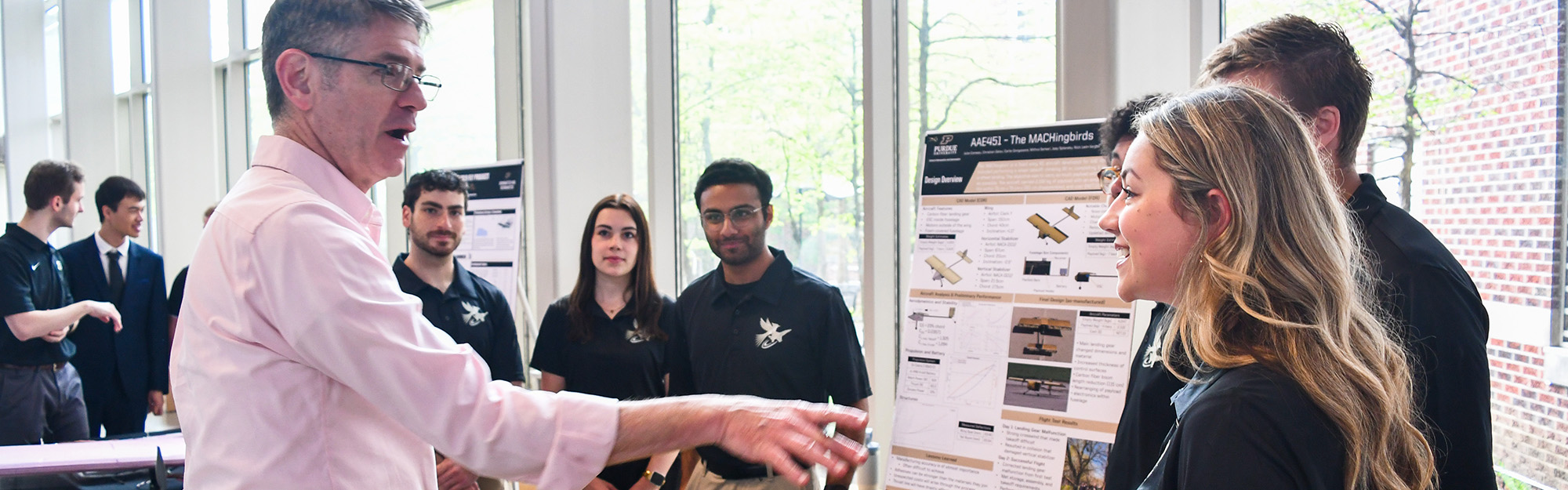
Students taking AAE’s senior design course now have a milestone celebration near the end of each semester, in the form of a poster session.
All semester, their technical skills are tested as they design and build an aircraft from the wheels up. They sweat the details under the examination of professors, aiming to meet strict performance and payload requirements.
After weeks of craftsmanship, their planes endure a flight test — often in biting cold and heavy crosswinds. Some succeed. Many crash. There are smiles nonetheless.
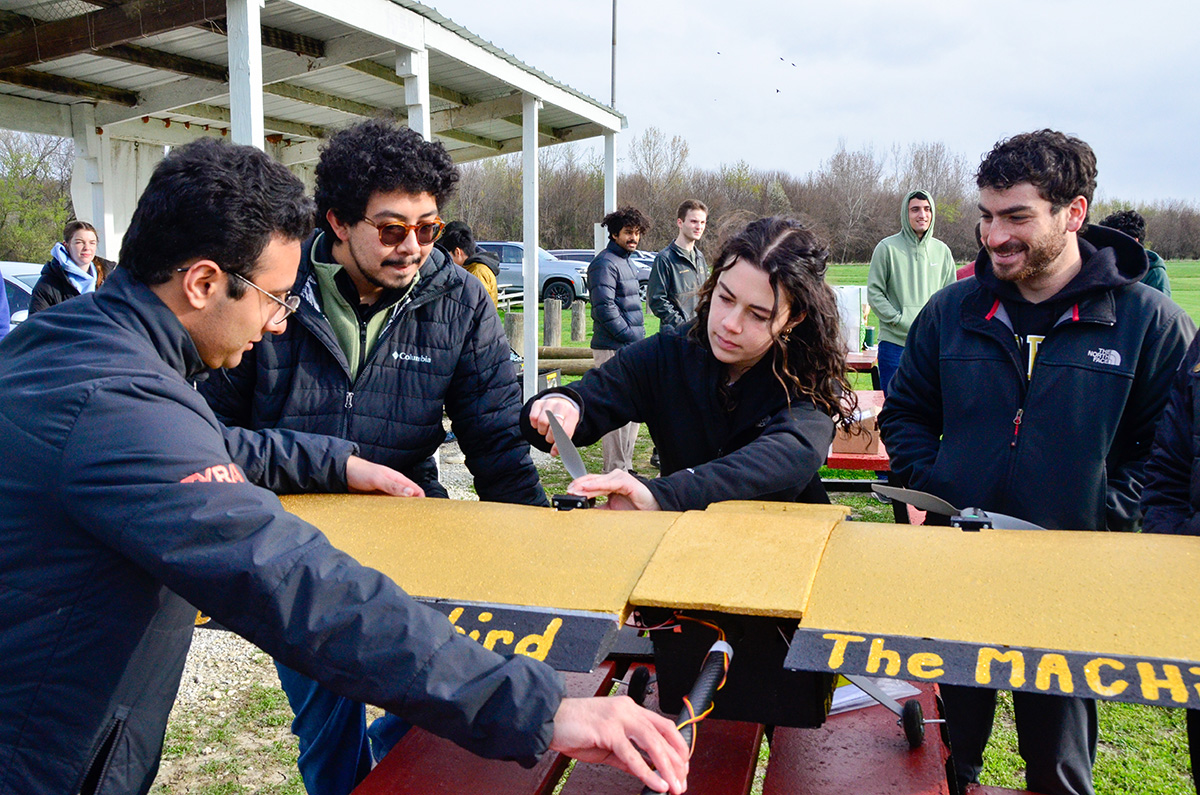
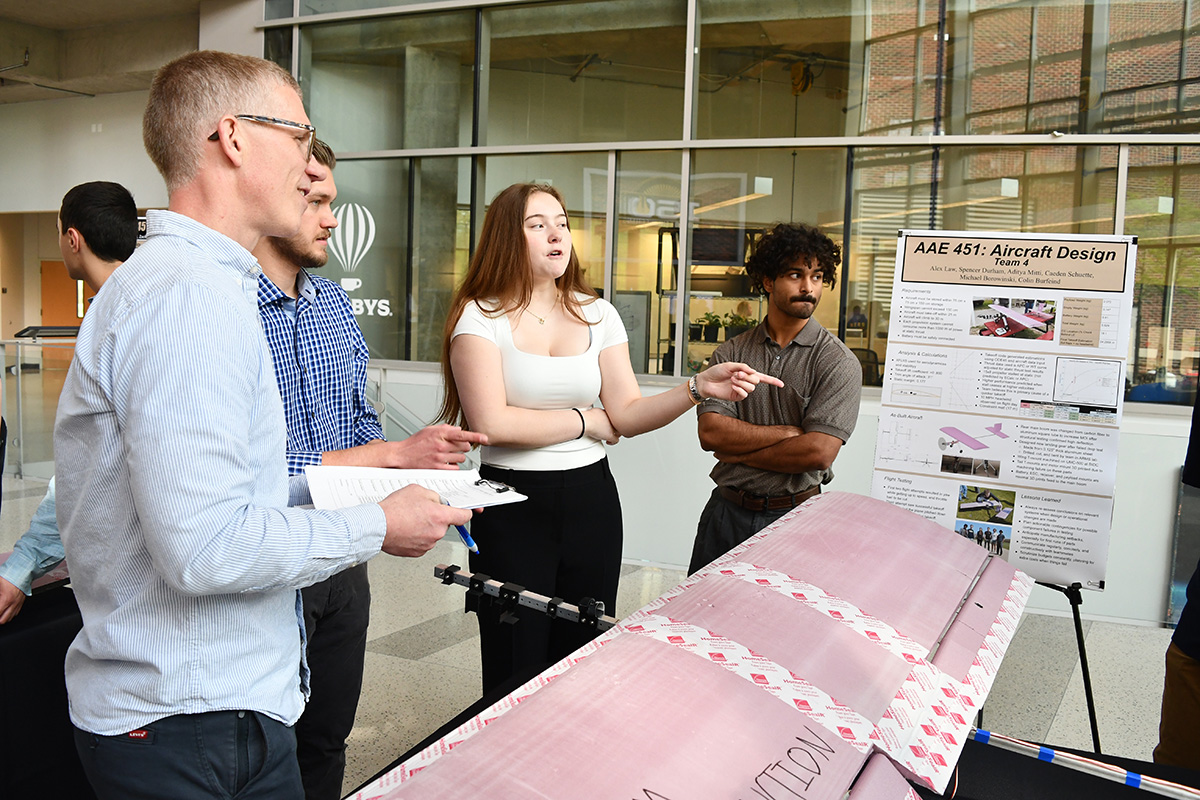
For Fall 2024 and Spring 2025, faculty members Thiago Guimarães and Leifur Leifsson, along with lab manager Tom Bietsch, piloted a new element to the course: a post-flight poster session. Teams must stand by their aircraft, complete or otherwise, and defend their designs to professors armed with clipboards and rubrics.
That included the kind but firm scrutiny of Bill Crossley, AAE department head, and a brevity challenge from Jamie Canino, associate professor of engineering practice. Canino, whose ready cheer makes him a student favorite, made teams sweat by asking for a one-minute synopsis before grilling them on the details.
Bietsch emphasized why this matters: “When you’re working with the Department of Defense and you have $50 billion to build the next fighter jet, you still have to do all these same things,” he said. “You still have cost limitations and performance requirements and payload and so on. It’s just scaled up.”
The challenge has new design requirements as well, requiring landing gear for a ground takeoff instead of hand-launching. Students leaned on Bietsch’s expertise throughout the semester, since his office is adjacent to the build lab. “Having Tom right there was incredible,” one student said. “Instead of searching online or waiting for an email, we could just walk into his office and get answers.”
The poster session brought a buzz to the atrium of Neil Armstrong Hall. Teams shared stories of crashes and triumphs, explaining design decisions to classmates, professors and visitors. Some planes were pristine; others bore scars of hard lessons learned.
But thanks to this new tradition, every team now leaves with something more than an aircraft. They carry the experience of defending their ideas under pressure.
