ISC↗Intelligent Software
& Systems Center
PURDUE UNIVERSITY
PURDUE ISC · INTELLIGENT SOFTWARE & SYSTEMS CENTERSoftware lifecycle × AI × Evolution

Software development.
Continuous evolution.
In the AI era.

Bringing industry and Purdue faculty together to rethink how software is designed, built, validated, deployed, and continuously evolved as AI changes both software and its development.

Explore our research ↗
OUR FOCUS · THE AI-ERA SOFTWARE LIFECYCLE
HUMAN EXPERTISE + AIDevelop.
Learn.
Evolve.

Software, models, and development practices change together.

  1. Define & design
  2. Build & integrate
  3. Validate & deploy
  4. Operate & evolve
↶ Feedback informs the next iteration
Supported by foundations of software intelligence
Connected to expertise across Purdue and industry
An emerging consortium for industry–university researchDiscover the vision ↓

A clear focus.
A shared opportunity.

Advance the software development lifecycle and continuous software evolution in the AI era.

AI is changing who builds software, how it is created, and how it behaves after deployment. Requirements, code, models, data, and operating environments can all change. Understanding how to develop and evolve dependable software across these changes is the central focus of Purdue ISC.

As an emerging industry–university consortium, ISC brings practitioners and Purdue faculty together to define research questions, explore approaches, and develop solutions around this shared challenge.

We aim to connect Purdue’s strengths in software, cybersecurity, Physical AI, and computing systems. ISC contributes a software lifecycle perspective to joint work with centers and research groups, drawing on their complementary expertise.

Software developmentContinuous evolutionCollaborative discovery

The software lifecycle.
Reimagined for the AI era.

Our central question: how should people and AI develop, maintain, and continuously evolve software that remains dependable as its capabilities and context change?

ISC’S CENTRAL RESEARCH FOCUS

From the first requirement to the next evolution

Study the full lifecycle of software developed with AI and software that incorporates AI—connecting engineering methods, human responsibility, and evidence from real use.

  1. Define & designRequirements, intent, abstractions, and architecture
  2. Build & integrateHuman–AI collaboration, code, models, and dependencies
  3. Validate & deployTesting, assurance, evaluation, and release decisions
  4. Operate & evolveFeedback, maintenance, adaptation, and change

↶ Learning from operation reshapes requirements, development, and validation.

FOUNDATIONS THAT SUPPORT THE LIFECYCLE

Foundations of software intelligence

What concepts, abstractions, and reasoning methods are needed when software can learn, generate, and adapt? These foundational questions underpin our work on development and evolution, helping us understand software behavior and reason about change.

Focused contribution.
Complementary expertise.

Collaboration with other centers and groups brings depth in adjacent fields. Together, we can investigate lifecycle questions that cross disciplinary boundaries.

Security & cybersecurity

Connect secure development, software supply chains, and assurance with the challenges of AI-generated and continuously changing software.

Physical AI & physical systems

Collaborate with Physical AI researchers on how software is developed, validated, updated, and maintained when it interacts with the physical world.

Efficient AI & computing systems

Work with systems experts to understand how performance, energy, and resource constraints shape software design, deployment, and evolution.

Human expertise & application domains

Bring domain knowledge, human–AI interaction, and engineering education into the methods and practices of software development.

These are opportunities for joint research. Specific collaborations and projects will take shape through conversations with industry, Purdue centers, and faculty groups.

QUESTIONS TO SHAPE TOGETHER

An agenda defined with our community

These open questions invite discussion. Industry needs and faculty expertise will guide priorities and approaches.

How should people and AI build software together?

How do we express intent, divide responsibilities, and assess AI contributions across requirements, design, implementation, and testing?

How can assurance keep pace with change?

What evidence is needed as code, models, data, and dependencies evolve? How should that evidence guide deployment and maintenance?

How should software evolve after deployment?

How can operational feedback inform adaptation while preserving reliability, security, and human oversight?

Help shape the research agenda ↗

Different disciplines.
Connected expertise.

A hub connecting Purdue faculty across departments with industry practitioners to form research collaborations around shared challenges.

Center leadership

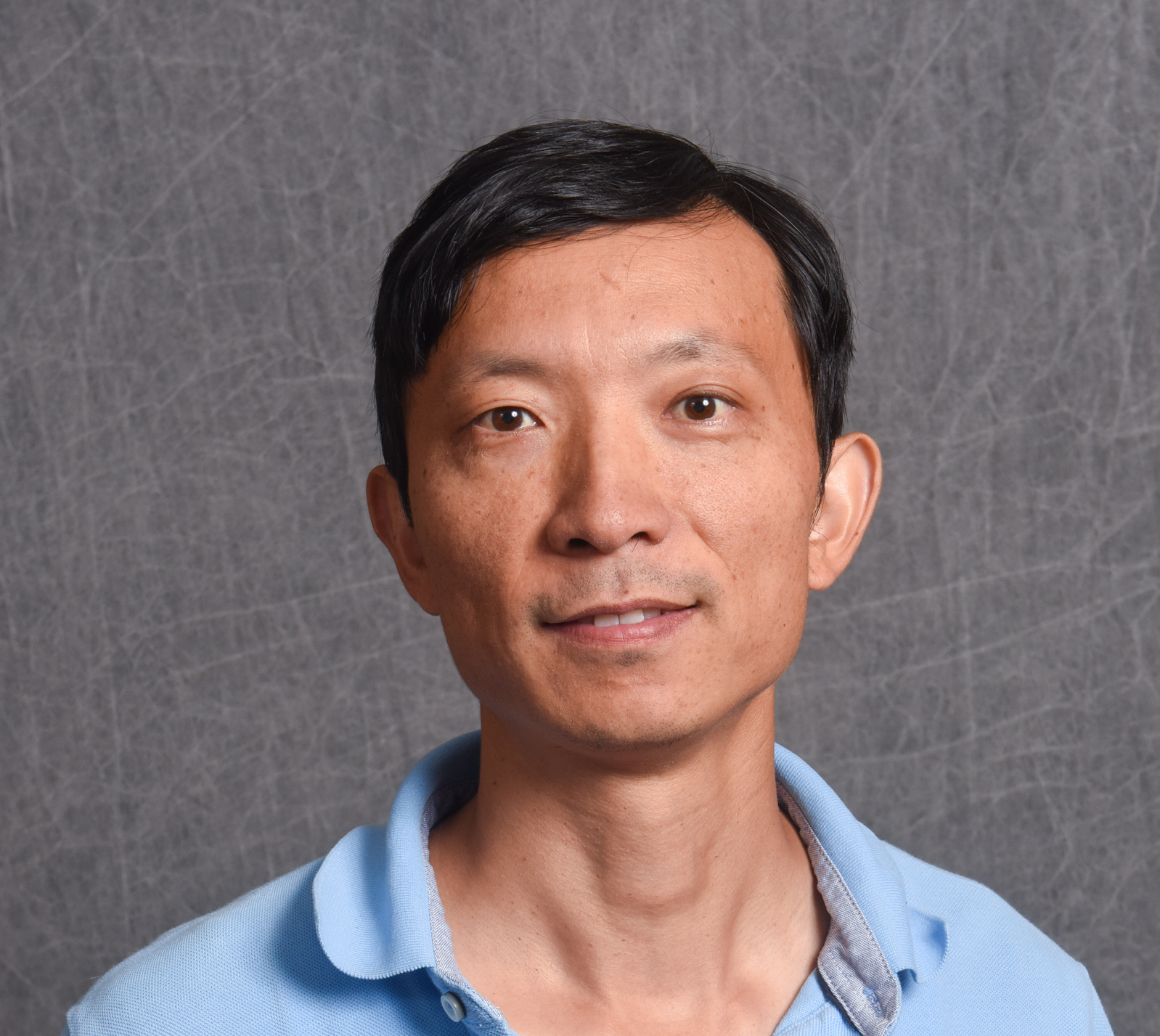
Xipeng Shen, Center Director
DIRECTOR

Xipeng Shen

Professor, Elmore Family School of Electrical and Computer Engineering
Purdue University

Compilers and runtime systems, GPU and heterogeneous computing, high-performance machine learning, and real-time AI.

IEEE Fellow · ACM Distinguished Member
NSF CAREER Award · DOE Early Career Award

Erin Britton, Center Manager
CENTER MANAGER

Erin Britton

Intelligent Software & Systems Center
Purdue University

THE COMMUNITY

A cross-disciplinary hub

Electrical & Computer Engineering
Computer Science
Industrial Engineering
Related engineering and computing fields

THE WORK

Three connected efforts

Foundational and applied research
Industry partnership and translation
Education and professional development

AFFILIATED FACULTY

Depth in every discipline.
Strength in the connections.

ISC brings together faculty with complementary expertise to investigate software development and evolution in the AI era, connecting lifecycle research with foundations, security, computing systems, physical applications, and engineering education.

Affiliated faculty
27
Academic homes
8

Meet the affiliated faculty

Listed alphabetically by last name. Complementary expertise supports our software lifecycle focus.

  • Santiago Torres Arias

    Assistant Professor

    Electrical & Computer Engineering

    Software supply-chain security, applied cryptography, and secure systems.

  • David J. Cappelleri

    Professor of Mechanical Engineering; Professor of Biomedical Engineering (By Courtesy)

    Mechanical Engineering; Biomedical Engineering (By Courtesy)

    Multi-scale robotic manipulation and assembly, mobile microrobotics, agricultural robotics, surgical robotics, and automation for the life sciences.

    Assistant Vice President for Research Innovation

  • Yaobin Chen

    Professor

    Electrical & Computer Engineering

    Intelligent transportation, automated vehicles, vehicle electrification, intelligent controls, and robotics.

    Director, Transportation & Autonomous Systems Institute · IEEE Fellow

  • James Davis

    Assistant Professor

    Electrical & Computer Engineering

    Software engineering, cybersecurity, and AI; software correctness, security, and usability.

  • Kirsten Davis

    Assistant Professor

    Engineering Education

    Experiential learning, systems thinking, and professional skills development.

    2025 Outstanding Experiential Education Research Award · NSF CAREER award

  • Yi Ding

    Assistant Professor

    Electrical & Computer Engineering

    Sustainable and trustworthy computing systems and AI.

    Lead, Software Water Intensity project hosted by Green Software Foundation

  • Steve France

    Assistant Professor of Engineering Practice

    Elmore Family School of Electrical and Computer Engineering

    Software engineering practices, processes, and management; quality assurance; system design and integration; unmanned systems; teaching and mentoring.

  • James Michael Goppert

    Research Assistant Professor

    Aeronautics & Astronautics

    Unmanned aerial systems, drone navigation and autonomy, and autonomous systems testing.

    Managing Director, Purdue UAS Research and Test Facility

  • Y. Charlie Hu

    Michael and Katherine Birck Professor

    Electrical & Computer Engineering

    AI/ML systems, mobile computing, and distributed systems.

    IEEE Fellow

  • David I. Inouye

    Associate Professor

    Elmore Family School of Electrical and Computer Engineering

    Robust and explainable AI, distribution shift, causal machine learning.

  • Xiao Jing

    Assistant Professor of Aviation

    Aviation & Transportation Technology

    Trustworthy AI for aviation safety, scheduling, operations, and decision support.

  • Changhee Jung

    Samuel D. Conte Associate Professor of Computer Science

    Computer Science

    Compilers and computer architecture, with an emphasis on performance, reliability, and security.

    NSF CAREER award · MICRO Hall of Fame

  • Younghyun Kim

    Associate Professor

    Electrical & Computer Engineering

    Edge AI, embedded computing, and cyber-physical systems.

    VLSI and Circuit Design area chair

  • Milind Kulkarni

    Professor; Michael and Katherine Birck Head of ECE

    Electrical & Computer Engineering

    Prog. Languages, compilers, and runtimes for emerging computing architectures.

    PECASE recipient · NSF CAREER award · DOE ECRP award

  • Feng Li

    Professor and School Head

    School of Applied and Creative Computing

    Trustworthy AI, cybersecurity, AI for cybersecurity, privacy, federated learning, and mobile, cloud, and distributed computing.

  • Ninghui Li

    Samuel D. Conte Professor

    Computer Science

    Security, privacy, and data protection.

    ACM Fellow · IEEE Fellow

  • Tao Li

    Assistant Professor

    Applied & Creative Computing

    AI security; security and privacy in mobile and distributed systems.

  • Tianyi Li

    Assistant Professor

    Applied & Creative Computing

    Human-computer interaction, human-AI collaboration, and AI-assisted technology creation.

  • Armin Moin

    Assistant Professor

    Applied & Creative Computing

    AI for Software Engineering, Quantum Software Engineering, Software Engineering for AI.

    Director, QCASE Lab

  • Xiaokang Qiu

    Associate Professor

    Electrical & Computer Engineering

    Programming languages and formal methods.

  • Xipeng Shen

    Professor

    Electrical & Computer Engineering

    Director, Intelligent Software & Systems Center

  • Qianqian “QQ” Song

    Associate Professor

    School of Applied and Creative Computing

    AI for drug discovery and precision medicine; multimodal biomedical data integration, single-cell and spatial omics.

  • Lin Tan

    Professor

    Computer Science

    AI-software synergy; software reliability.

    IEEE Fellow · University Faculty Scholar

  • Jingbo Wang

    Assistant Professor

    Elmore Family School of Electrical and Computer Engineering

    Software engineering and formal methods; program analysis and verification for software security, robustness, and fairness.

  • Ziran Wang

    Assistant Professor

    Lyles School of Civil and Construction Engineering; Electrical & Computer Engineering (by courtesy)

    Digital twins, autonomous driving, human-autonomy teaming, and personalized recommendation.

  • Xiangyu Zhang

    Samuel D. Conte Professor

    Computer Science

    Program analysis, automated debugging, and software security.

  • Xueling Zhang

    Assistant Professor

    Applied & Creative Computing

    Software testing, analysis, and privacy on mobile and emerging platforms.
Bring a challenge. Connect with the expertise to explore it.

Find a research connection

Real challenges.
Shared progress.

Help define the questions that matter. Purdue ISC brings industry experience and faculty expertise together to shape research on software development and continuous evolution in the AI era.

As the consortium takes shape, we invite industry and Purdue faculty, centers, and research groups to bring forward challenges, explore common interests, and identify opportunities to work together.

Consortium participation · In development
01

Shape research challenges

Bring practical challenges and open questions. Work with faculty to identify research needs, constraints, and opportunities shared across organizations.

02

Develop solutions together

Connect complementary expertise, explore alternative approaches, and shape collaborative research around jointly defined questions.

03

Develop the future workforce

Help connect emerging research with the knowledge and skills professionals need in the AI era.

THE CONSORTIUM MODEL

Bring challenges. Build connections. Create solutions.

Industry

Challenges & domain experience

Purdue faculty

Expertise & research ideas

PURDUE ISCA place to define what comes next

Connect people · Find common ground

01 / ASKShared questions

What matters—and what is unknown?

02 / EXPLORECollaborative research

Form teams and investigate approaches.

03 / LEARNDevelop & evaluate

Explore solutions and learn from evidence.

New insights inform the next questions

Start a conversation with Purdue ISC

Contact us to discuss research challenges, faculty participation, industry collaboration, or workforce development.

isc-info@purdue.edu

Xipeng ShenDirector
Professor, School of Electrical and Computer Engineering
Purdue University
Erin BrittonCenter Manager
Purdue University
APPLICATION HORIZONS

Software & Internet Platforms / Cloud & AI Infrastructure / Semiconductors & Accelerated Computing / Mobile & Edge Systems / Manufacturing / Energy / Transportation / Health / Agriculture / Aerospace

The next generation
of systems starts
with people.

Helping students and working professionals develop the skills to build and evolve software with AI.

ISC aims to connect research with learning opportunities across intelligent software and systems. Industry perspectives will help identify emerging skill needs and shape professional development alongside faculty expertise.

Graduate-level certificates

Planned

Focused learning in AI-era software development and evolution.

Professional training

Planned

Opportunities for professionals to update their knowledge across the software lifecycle.

Ideas in motion.

Conversations, research exchanges, and opportunities to connect with the ISC community.

UPCOMING

Events & community gatherings

Upcoming seminars, workshops, and other center activities will be announced here as schedules are confirmed.

Dates to be announced
RECENT

News & research highlights

Center updates, research milestones, and resources from recent activities will appear here.

Updates forthcoming