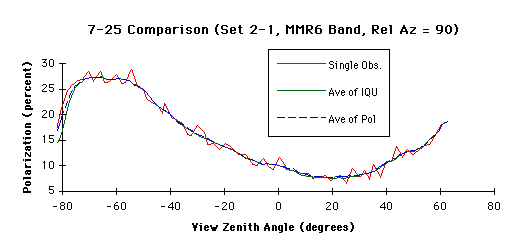
Comparison of Two Averaging Techniques
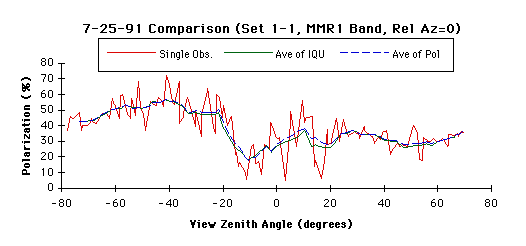
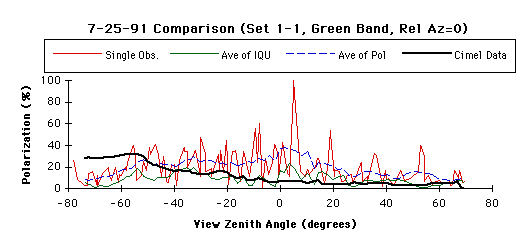
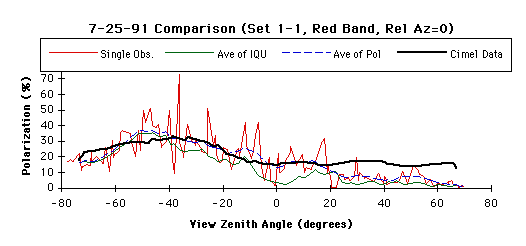
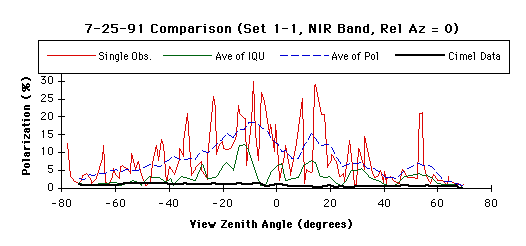
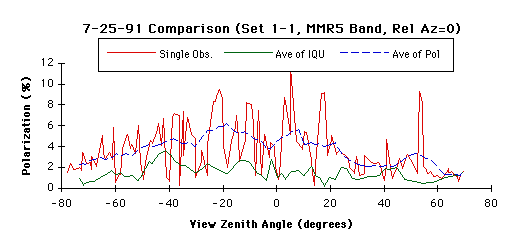
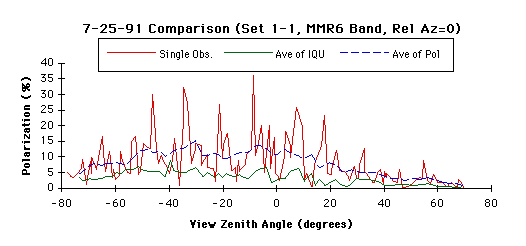
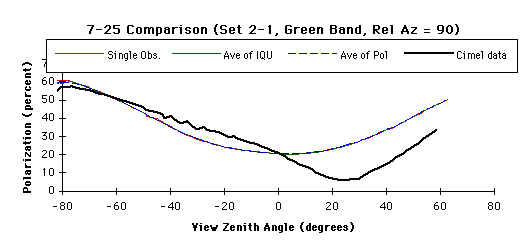
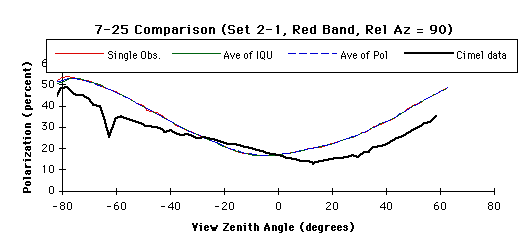
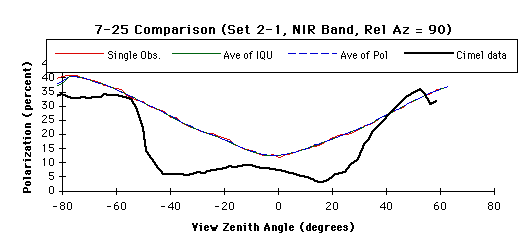
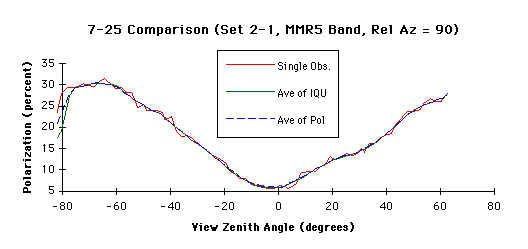
The following plots compare two techniques to average the percent polarization parameter into a simulated 1x12 degree FOV. The 1x12 degree FOV data are plotted against the single observation (1-degree FOV) percent polarization data. The first averaging technique is labeled as 'Average of I-Q-U data'. The I-Q-U data are first averaged using a box car method to simulated 1x12 degree FOV data that is sample every 2 degrees. The percent polarization for the 1x12 degree FOV data is then computed from the averaged I-Q-U data. The second averaging technique is labeled as 'Average of Percent Polarization'. The percent polarization parameter is computed from the single observation I-Q-U data and then averaged to simulate 1x12 degree FOV data using the same box car technique described above.
Note in the plots that the average percent polarization based on I-Q-U is always less than or equal to the average of the single observation percent polarization data. The I-Q-U averaged based data is more similar to, but far from being the same as, the Cimel data which represent 12x12-degree FOV data.
Also note that the two techniques produce the nearly the same results for the sky data. The sky represent a very uniform scene as compared to the sunflower canopy.
The color codes for the lines in the plots are:
- Red - Single Observation data
- Green - Average of I-Q-U data
- Blue - Average of Percent Polarization
- Black - Equivalent Cimel Band (12-degree FOV)
7/25 Set 1,Rep 1, Relative View Azimuth = 0 (Sunflower Canopy)
MMR Band 1 (blue band)
MMR Band 2 (green band)
MMR Band 3 (red band)
MMR Band 4 (NIR band)
MMR Band 5 (1.15-1.30 um)
MMR Band 6 (1.55-1.75 um)
7/25 Set 2, Relative View Azimuth = 90 (Sky)
MMR Band 1 (blue band)
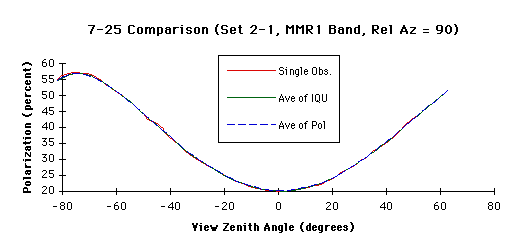
MMR Band 2 (green band)
MMR Band 3 (red band)
MMR Band 4 (NIR band)
MMR Band 5 (1.15-1.30 um)
MMR Band 6 (1.55-1.75 um)