
Fusing virtual and augmented reality with learning
Fusing virtual and augmented reality with learning
| Magazine Section: | Engagement |
|---|---|
| Article Type: | Feature |
Technology has brought advancements and efficiencies to many workplaces, and the construction site is no exception. The Construction Engineering and Management program at Purdue has adjusted its curriculum over the years to keep up with industry, including ensuring students have opportunities to gain exposure to virtual and augmented reality in the construction field.
The Computer Applications in Construction course, offered as an elective to seniors and graduate-level learners, provides students with advanced knowledge and skills to be able to effectively program and use computers to perform various construction project management and research tasks, focusing on building information modeling (BIM), four-dimensional modeling, and virtual construction.
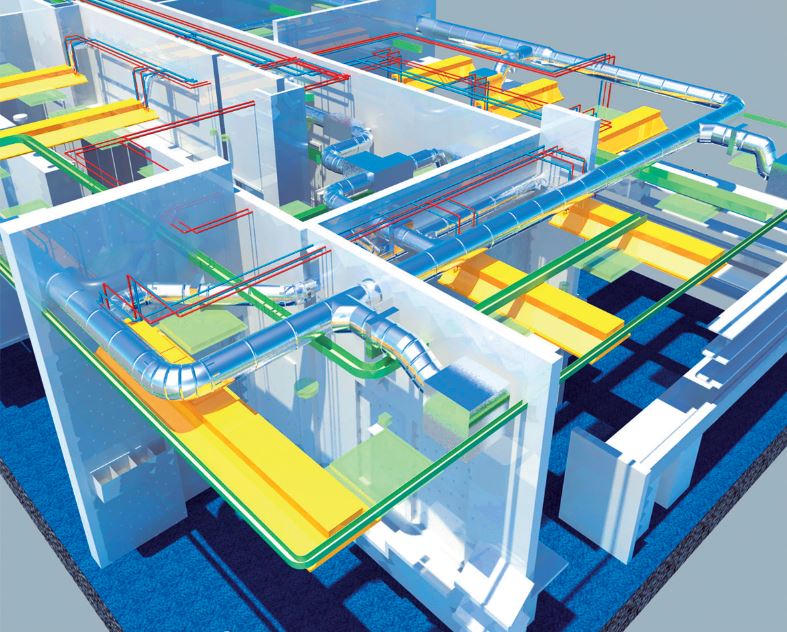
“BIM is becoming the industry standard for the AEC industry,” says Hubo Cai, associate professor of CEM and instructor for the course. “Despite BIM’s great benefits in improving productivity and enhancing safety in construction, a lack of BIM knowledge and skills is the biggest barrier to its effective deployment in practice.”
The importance of learning the technology can be seen as early as freshman year. McKinsey O’Neil, a student in the CEM program, completed his first internship with Pepper Construction over the summer at the end of his first year at Purdue.
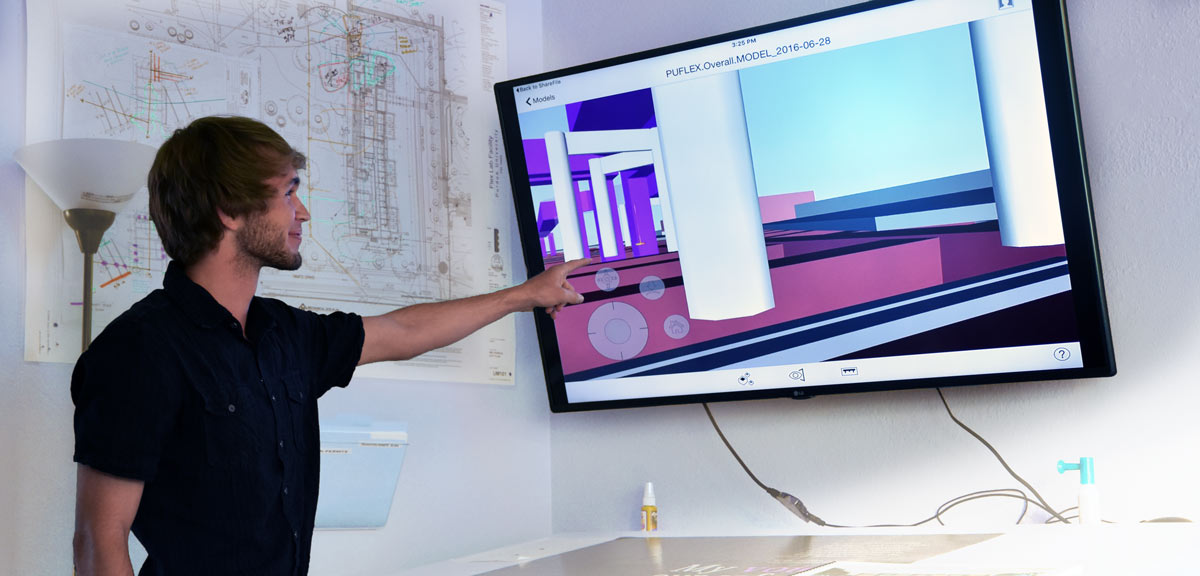
O’Neil used a few different technologies during his work as a project management intern on the Purdue Flex Lab Facility project. One of the technologies was a BIM program, which he says was used to make a 3D model of the project and its individual components.
“The model we have on the Flex Lab will be used to double check that everything is where it should be and that all of the components are actually built,” O’Neil explains. “This program allows someone who knows little about the specific tasks going on in the project to take an iPad out on the site and see where everything will be.”
During a site visit from Brandon Fulk, CEM’s Director of Internships, O’Neil walked Fulk (virtually) through the unfinished facility using the BIM model displayed on a large screen TV in the site’s office. He was able to demonstrate to Fulk his knowledge of the intricacies of the project and what he had learned about construction engineering and project management over the course of his first internship.
This was an important experience for a freshman entering the construction industry. When he joined the Flex Lab project, Pepper had just started excavation. He has seen much of the early building phase of the project, and using BIM helped him visualize it all throughout the process.
Internship experiences like O’Neil’s and courses like Cai’s give Purdue’s CEM graduates an even greater lead in industry. “Equipping our CEM students with advanced BIM knowledge and skills places them at an advantage in the market,” says Cai. “Purdue CEM students have always been highlighted and demanded [in industry], and we have to stay at the computing frontier to further this.”